Minnesota committee ties on proposal to ban SNAP purchases of taxed snack foods; bill laid over
March 25, 2026 | 2026 Legislature MN, Minnesota
This article was created by AI summarizing key points discussed. AI makes mistakes, so for full details and context, please refer to the video of the full meeting. Please report any errors so we can fix them. Report an error »
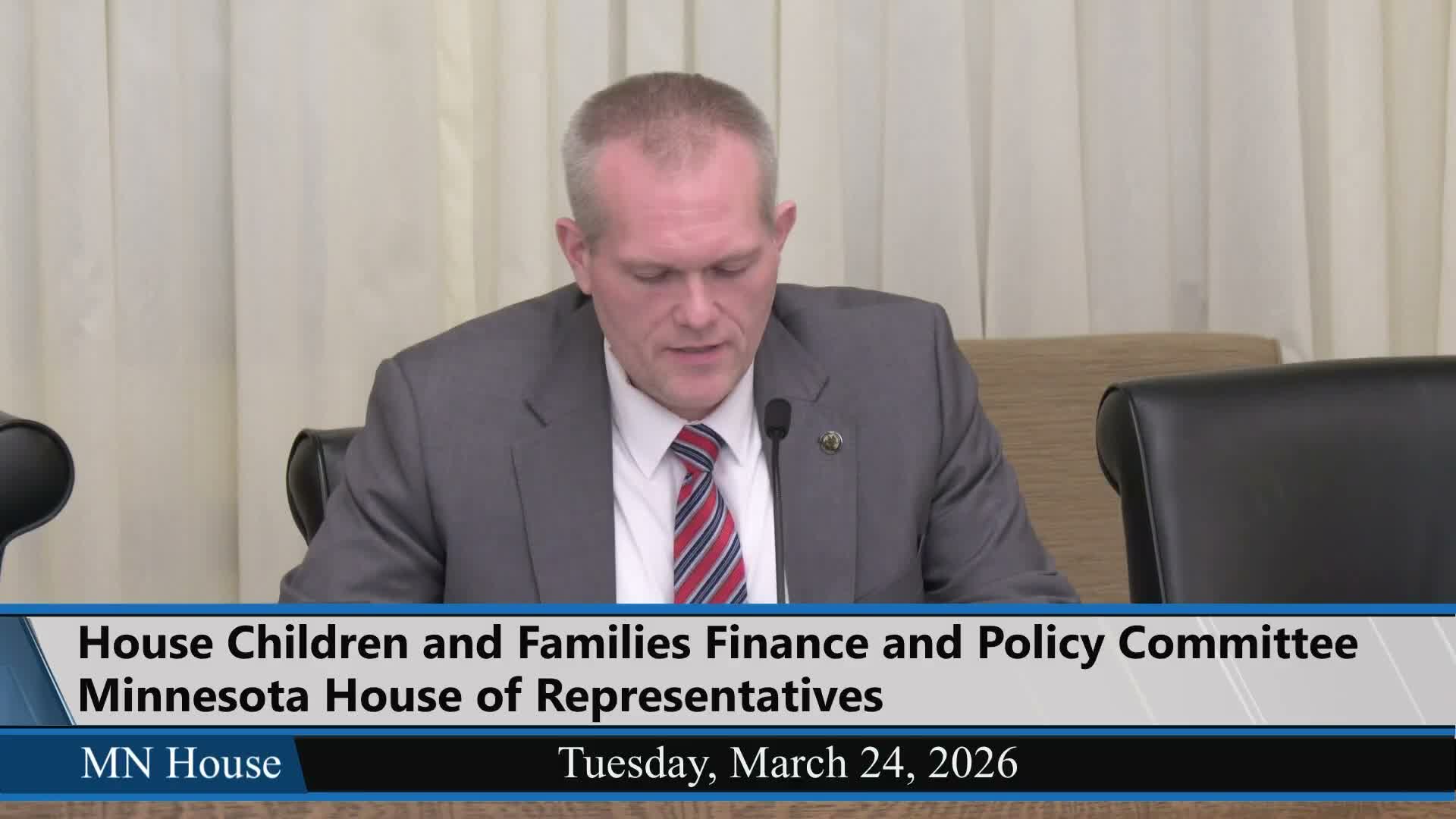
Representative Olson introduced House File 36‑03, saying the state should ask the U.S. Department of Agriculture for a waiver to prevent SNAP recipients from buying taxed food items with their benefits, arguing the change would promote nutrition and unlock federal rural health funds. "We're not hoping for them to have a sweet treat," Olson said, framing the proposal as preserving taxpayer dollars for nutritious foods.
Patrick Garofalo, president of the Minnesota Grocers Association, urged the committee to oppose the bill and warned of unintended consequences at the register. "Kit Kat is not candy because it has wheat in it," Garofalo said, using the example to illustrate how state tax rules would allow some items commonly viewed as candy to remain eligible while other healthier items could be excluded because of taxation classifications.
Retailers echoed those implementation concerns. Will Hagen of Minnesota Retailers said new restrictions would require substantial reprogramming at points of sale and could put frontline staff in the position of enforcing complicated eligibility rules. "Adding a new category of restricted items without clear, concise definitions means significant system changes," Hagen said.
Supporters focused on nutrition and program integrity. Matthew Schmidt of the America First Policy Institute said SNAP should prioritize nutritious food and argued state action could direct taxpayer subsidies away from ultra‑processed foods. Several Republican members also emphasized potential federal funding tied to states that adopt similar policies.
Democratic members and some Republicans raised equity and access concerns. Representative Lee said the proposal risks disproportionately affecting low‑income households and pointed to limited healthy‑food access in some neighborhoods. Others noted that many SNAP purchases are "split tender" (part SNAP, part cash), limiting the policy’s impact.
After extended debate and a members’ roll call, the vote was 7 ayes and 7 nays; the motion did not prevail. Chair announced the bill would be laid over for further consideration.
The committee record shows testimony from business, retail and policy groups on both sides, and members repeatedly asked the department for fiscal and operational analysis before taking further action.
Patrick Garofalo, president of the Minnesota Grocers Association, urged the committee to oppose the bill and warned of unintended consequences at the register. "Kit Kat is not candy because it has wheat in it," Garofalo said, using the example to illustrate how state tax rules would allow some items commonly viewed as candy to remain eligible while other healthier items could be excluded because of taxation classifications.
Retailers echoed those implementation concerns. Will Hagen of Minnesota Retailers said new restrictions would require substantial reprogramming at points of sale and could put frontline staff in the position of enforcing complicated eligibility rules. "Adding a new category of restricted items without clear, concise definitions means significant system changes," Hagen said.
Supporters focused on nutrition and program integrity. Matthew Schmidt of the America First Policy Institute said SNAP should prioritize nutritious food and argued state action could direct taxpayer subsidies away from ultra‑processed foods. Several Republican members also emphasized potential federal funding tied to states that adopt similar policies.
Democratic members and some Republicans raised equity and access concerns. Representative Lee said the proposal risks disproportionately affecting low‑income households and pointed to limited healthy‑food access in some neighborhoods. Others noted that many SNAP purchases are "split tender" (part SNAP, part cash), limiting the policy’s impact.
After extended debate and a members’ roll call, the vote was 7 ayes and 7 nays; the motion did not prevail. Chair announced the bill would be laid over for further consideration.
The committee record shows testimony from business, retail and policy groups on both sides, and members repeatedly asked the department for fiscal and operational analysis before taking further action.
Don't Miss a Word: See the Full Meeting!
Go beyond summaries. Unlock every video, transcript, and key insight with a Founder Membership.
✓
Get instant access to full meeting videos
✓
Search and clip any phrase from complete transcripts
✓
Receive AI-powered summaries & custom alerts
✓
Enjoy lifetime, unrestricted access to government data
30-day money-back guarantee
