Committee debates restoring asset test and tightening SNAP eligibility; HF3831 laid over after tie
March 25, 2026 | 2026 Legislature MN, Minnesota
This article was created by AI summarizing key points discussed. AI makes mistakes, so for full details and context, please refer to the video of the full meeting. Please report any errors so we can fix them. Report an error »
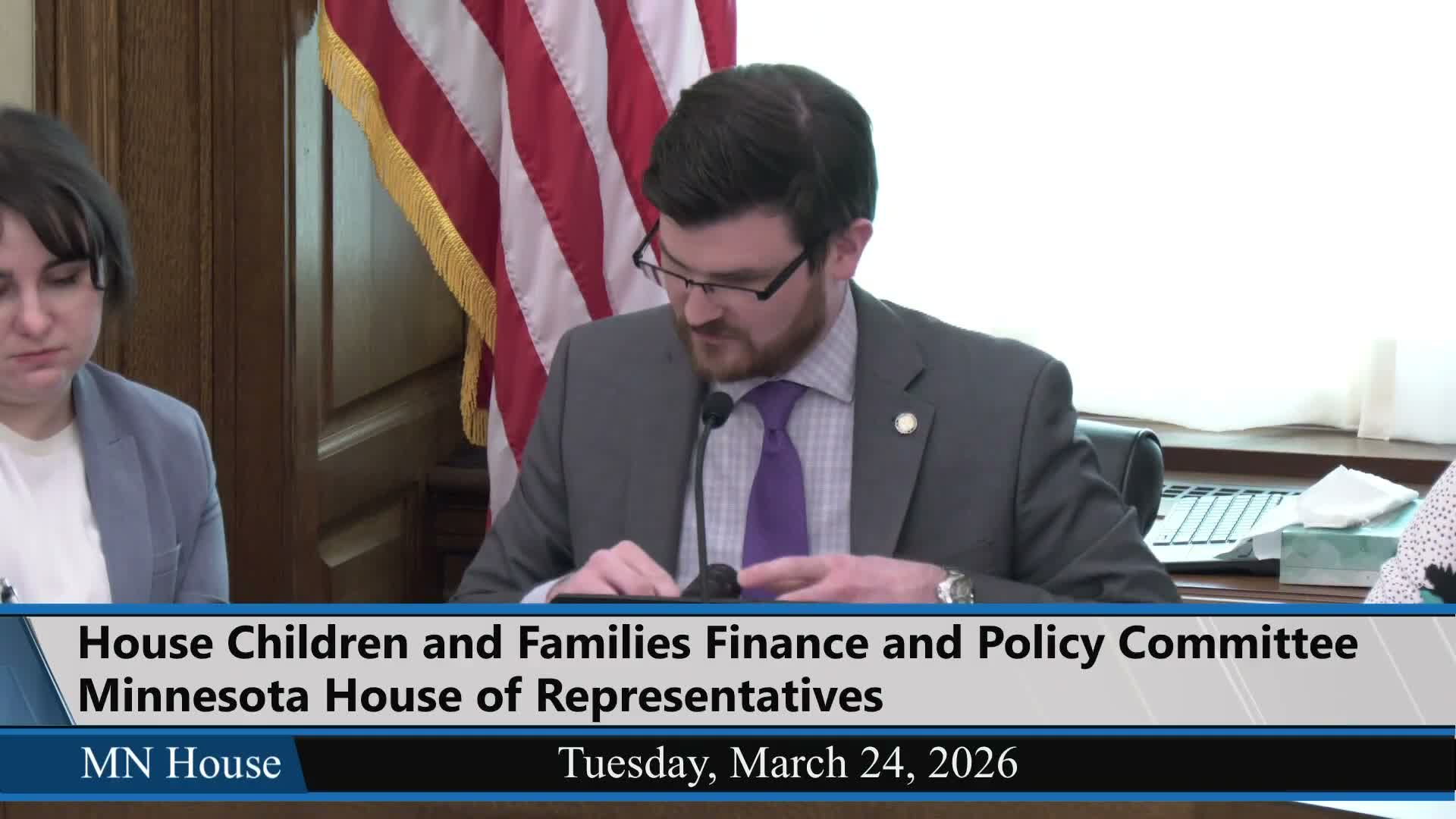
Representative Altendorf told the committee House File 38‑31 aims to move eligibility verification earlier in the SNAP application process and to restore an asset threshold to reduce the state’s payment error rate, which she said was nearly 9% in 2024. She said doing so could prevent Minnesota from becoming responsible for tens of millions of dollars in 2027 if the error rate is not lowered.
Rob Under Sander recounted participating in SNAP to demonstrate eligibility gaps and urged reforms to reduce "fraud by design," saying asset testing would reduce disparities in benefits. "I was 63 years old when I applied for SNAP benefits and could have applied for Social Security benefits," Under Sander said, describing how current rules can produce surprising outcomes.
Opposition testimony underscored potential harm to seniors and people with disabilities. Jessica Webster, a staff attorney with Legal Aid and the Disability Law Center, warned restoring a low asset test would be especially harmful to people who rely on modest savings and to those with fluctuating incomes. "Under the bill before you today, with inflation, [a vulnerable client] would again be at risk of losing his SNAP," Webster said, recounting a case from earlier advocacy work.
Members exchanged detailed questions about data and the administrative capacity of counties to perform more upfront verification. Some members argued the bill was a "good governance" measure to avert federal penalties; others said the change would reintroduce paperwork and barriers.
Several amendments to adjust asset thresholds and per‑diem rules were proposed and failed on divisions. After a roll call the tally was 7‑7; the motion did not prevail and the committee laid over the bill for further consideration and departmental analysis.
Testimony and discussion highlighted tradeoffs among program integrity, administrative capacity and protections for vulnerable populations; members requested additional analysis before taking further action.
Rob Under Sander recounted participating in SNAP to demonstrate eligibility gaps and urged reforms to reduce "fraud by design," saying asset testing would reduce disparities in benefits. "I was 63 years old when I applied for SNAP benefits and could have applied for Social Security benefits," Under Sander said, describing how current rules can produce surprising outcomes.
Opposition testimony underscored potential harm to seniors and people with disabilities. Jessica Webster, a staff attorney with Legal Aid and the Disability Law Center, warned restoring a low asset test would be especially harmful to people who rely on modest savings and to those with fluctuating incomes. "Under the bill before you today, with inflation, [a vulnerable client] would again be at risk of losing his SNAP," Webster said, recounting a case from earlier advocacy work.
Members exchanged detailed questions about data and the administrative capacity of counties to perform more upfront verification. Some members argued the bill was a "good governance" measure to avert federal penalties; others said the change would reintroduce paperwork and barriers.
Several amendments to adjust asset thresholds and per‑diem rules were proposed and failed on divisions. After a roll call the tally was 7‑7; the motion did not prevail and the committee laid over the bill for further consideration and departmental analysis.
Testimony and discussion highlighted tradeoffs among program integrity, administrative capacity and protections for vulnerable populations; members requested additional analysis before taking further action.
View the Full Meeting & All Its Details
This article offers just a summary. Unlock complete video, transcripts, and insights as a Founder Member.
✓
Watch full, unedited meeting videos
✓
Search every word spoken in unlimited transcripts
✓
AI summaries & real-time alerts (all government levels)
✓
Permanent access to expanding government content
30-day money-back guarantee
