Committee advances legislation criminalizing CMV operation by unlawfully present persons and imposing civil liability on employers and licensing officials; lawy
March 24, 2026 | 2026 Legislature TN, Tennessee
This article was created by AI summarizing key points discussed. AI makes mistakes, so for full details and context, please refer to the video of the full meeting. Please report any errors so we can fix them. Report an error »
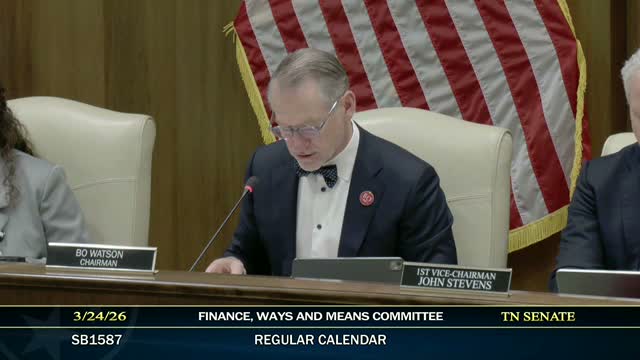
Senate Bill 15-87, as amended by the judiciary and finance committees and considered on March 24, would make it a Class A misdemeanor for a person unlawfully present in the United States to operate a commercial motor vehicle in Tennessee when operation requires a valid commercial driver's license. The bill also creates potential civil liability: direct employers who knowingly hire and permit such operation and state officials who recklessly issue a CDL to an unlawfully present person could be held strictly, jointly and severally liable for resulting personal injury or property damage in certain circumstances.
Committee debate centered on two legal issues. First, members and legal counsel discussed potential federal preemption because commercial driver's-licensing standards and eligibility can be governed by federal regulation (Office of Legal Services cited 49 CFR 383.71 and noted federal requirements tied to proof of lawful status). Megan Moore of the Office of Legal Services said federal law controls CDL issuance and that a conflict could raise preemption questions. Second, senators questioned whether the bill's strict-liability civil standard (identified in the bill text) departs from traditional negligence-based tort standards and what that would mean for liability when causation does not imply fault. Senator Yarbrough urged caution, saying the bill might create liability beyond usual tort law norms.
Sponsor proponents argued the bill aligns state policy with existing state practices that disallow issuing state CDLs to persons unlawfully present and seeks to raise enforcement stakes to deter noncompliant behavior and protect public safety. Opponents warned of legal vulnerability to federal preemption arguments and of imposing strict civil liability where negligence is not proven.
After extended legal discussion in committee, including an Office of Legal Services explanation of possible preemption and the statutory language on strict liability, the Finance Committee adopted the clarifying finance amendment. The bill as amended was recommended for passage to the committee on the calendar.
Committee debate centered on two legal issues. First, members and legal counsel discussed potential federal preemption because commercial driver's-licensing standards and eligibility can be governed by federal regulation (Office of Legal Services cited 49 CFR 383.71 and noted federal requirements tied to proof of lawful status). Megan Moore of the Office of Legal Services said federal law controls CDL issuance and that a conflict could raise preemption questions. Second, senators questioned whether the bill's strict-liability civil standard (identified in the bill text) departs from traditional negligence-based tort standards and what that would mean for liability when causation does not imply fault. Senator Yarbrough urged caution, saying the bill might create liability beyond usual tort law norms.
Sponsor proponents argued the bill aligns state policy with existing state practices that disallow issuing state CDLs to persons unlawfully present and seeks to raise enforcement stakes to deter noncompliant behavior and protect public safety. Opponents warned of legal vulnerability to federal preemption arguments and of imposing strict civil liability where negligence is not proven.
After extended legal discussion in committee, including an Office of Legal Services explanation of possible preemption and the statutory language on strict liability, the Finance Committee adopted the clarifying finance amendment. The bill as amended was recommended for passage to the committee on the calendar.
Don't Miss a Word: See the Full Meeting!
Go beyond summaries. Unlock every video, transcript, and key insight with a Founder Membership.
✓
Get instant access to full meeting videos
✓
Search and clip any phrase from complete transcripts
✓
Receive AI-powered summaries & custom alerts
✓
Enjoy lifetime, unrestricted access to government data
30-day money-back guarantee
