House passes cloud‑seeding resolution after sharp debate over evidence and health concerns
March 12, 2026 | Legislative, Idaho
This article was created by AI summarizing key points discussed. AI makes mistakes, so for full details and context, please refer to the video of the full meeting. Please report any errors so we can fix them. Report an error »
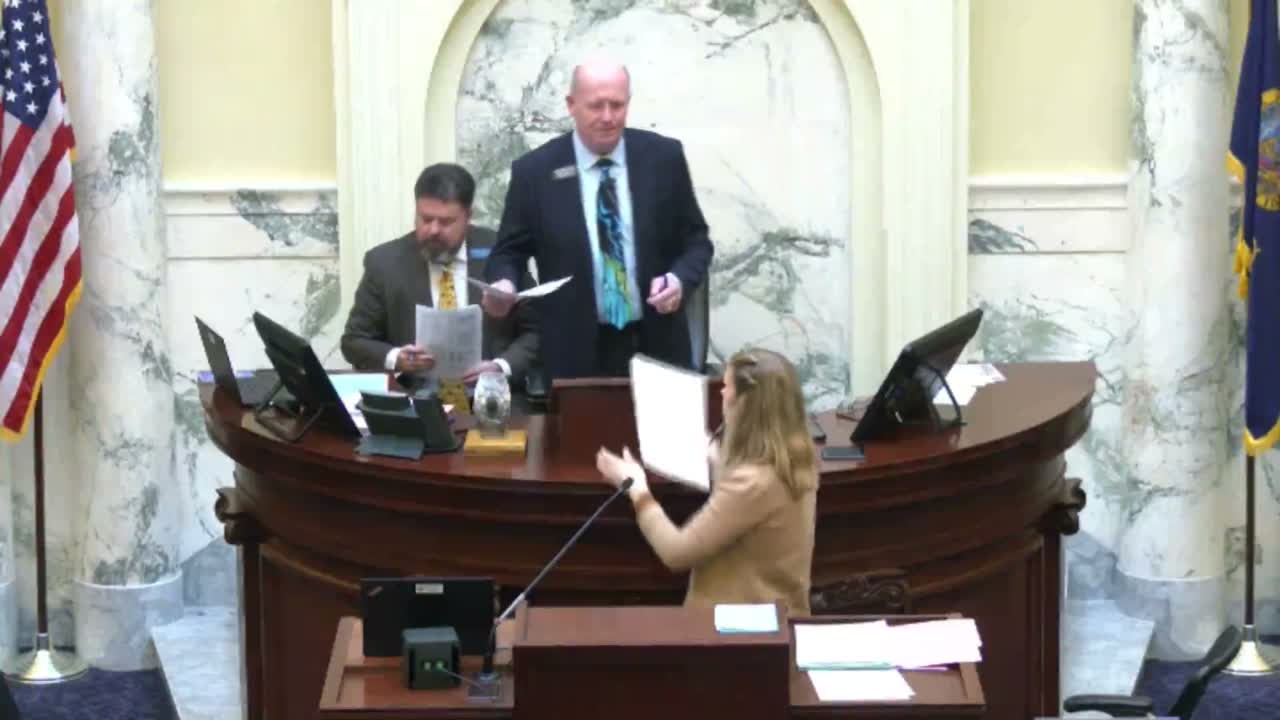
The Idaho House of Representatives on March 12 passed a concurrent resolution endorsing cloud‑seeding and managed recharge projects after a sustained floor debate that highlighted both scientific uncertainty and economic claims.
Representative 8, who sponsored the measure, framed the resolution as support for water projects and infrastructure that benefit statewide water management. Opponents and cautious members, led by Representative 29, urged a slowed approach, saying third‑party data is needed and citing a recent Government Accountability Office review that questioned the statistical certainty of some cloud‑seeding effectiveness estimates. Representative 29 said the data sometimes “casts dispersions upon the data that we receive from our cedars” and warned against giving false hope to communities that depend on reliable evidence.
Representative 31, speaking from personal experience, described longterm health concerns associated with historical airborne contaminant exposures and urged the House to consider possible downwind impacts. “I am a downwinder. I was exposed to that radioactive fallout…and I have had cancer in my life twice,” Representative 31 said, using that history to underscore calls for better transparency on the chemicals used in some seeding operations.
Supporters countered that cloud seeding is a longstanding, low‑cost method to bolster mountain snowpack and water supplies. Representative 33 said cloud seeding can deliver significant additional water — “1,240,000 acre feet additional water…10 to 15% additional water in a dry year” — and framed the practice as cost‑effective for agricultural communities. Representative 22 and other proponents stressed that cloud‑seeding programs typically operate at high elevation and argued the state has decades of operational experience.
The House moved to a recorded vote after debate. The Speaker announced the resolution passed; the clerk recorded the outcome as announced on the floor. Supporters said the resolution signals legislative backing for existing programs and for further investment, while several members urged follow‑on action to require independent data collection and transparency about chemical formulations and environmental monitoring.
The House later took up related water resolutions and referred or passed additional water and recharge measures. The resolutions do not themselves appropriate money; they express legislative findings and support for projects and studies that lawmakers said should continue to be informed by additional data.
What happens next: The resolution will be transmitted as recorded to the other chamber or to the file as required; lawmakers debating on the floor called for further technical study and third‑party evaluation in subsequent committee work.
Representative 8, who sponsored the measure, framed the resolution as support for water projects and infrastructure that benefit statewide water management. Opponents and cautious members, led by Representative 29, urged a slowed approach, saying third‑party data is needed and citing a recent Government Accountability Office review that questioned the statistical certainty of some cloud‑seeding effectiveness estimates. Representative 29 said the data sometimes “casts dispersions upon the data that we receive from our cedars” and warned against giving false hope to communities that depend on reliable evidence.
Representative 31, speaking from personal experience, described longterm health concerns associated with historical airborne contaminant exposures and urged the House to consider possible downwind impacts. “I am a downwinder. I was exposed to that radioactive fallout…and I have had cancer in my life twice,” Representative 31 said, using that history to underscore calls for better transparency on the chemicals used in some seeding operations.
Supporters countered that cloud seeding is a longstanding, low‑cost method to bolster mountain snowpack and water supplies. Representative 33 said cloud seeding can deliver significant additional water — “1,240,000 acre feet additional water…10 to 15% additional water in a dry year” — and framed the practice as cost‑effective for agricultural communities. Representative 22 and other proponents stressed that cloud‑seeding programs typically operate at high elevation and argued the state has decades of operational experience.
The House moved to a recorded vote after debate. The Speaker announced the resolution passed; the clerk recorded the outcome as announced on the floor. Supporters said the resolution signals legislative backing for existing programs and for further investment, while several members urged follow‑on action to require independent data collection and transparency about chemical formulations and environmental monitoring.
The House later took up related water resolutions and referred or passed additional water and recharge measures. The resolutions do not themselves appropriate money; they express legislative findings and support for projects and studies that lawmakers said should continue to be informed by additional data.
What happens next: The resolution will be transmitted as recorded to the other chamber or to the file as required; lawmakers debating on the floor called for further technical study and third‑party evaluation in subsequent committee work.
View the Full Meeting & All Its Details
This article offers just a summary. Unlock complete video, transcripts, and insights as a Founder Member.
✓
Watch full, unedited meeting videos
✓
Search every word spoken in unlimited transcripts
✓
AI summaries & real-time alerts (all government levels)
✓
Permanent access to expanding government content
30-day money-back guarantee
