House approves bill limiting DEI in health-care training; sponsor calls it "merit-based," critics warn it bans implicit-bias instruction
March 20, 2026 | Legislative, Idaho
This article was created by AI summarizing key points discussed. AI makes mistakes, so for full details and context, please refer to the video of the full meeting. Please report any errors so we can fix them. Report an error »
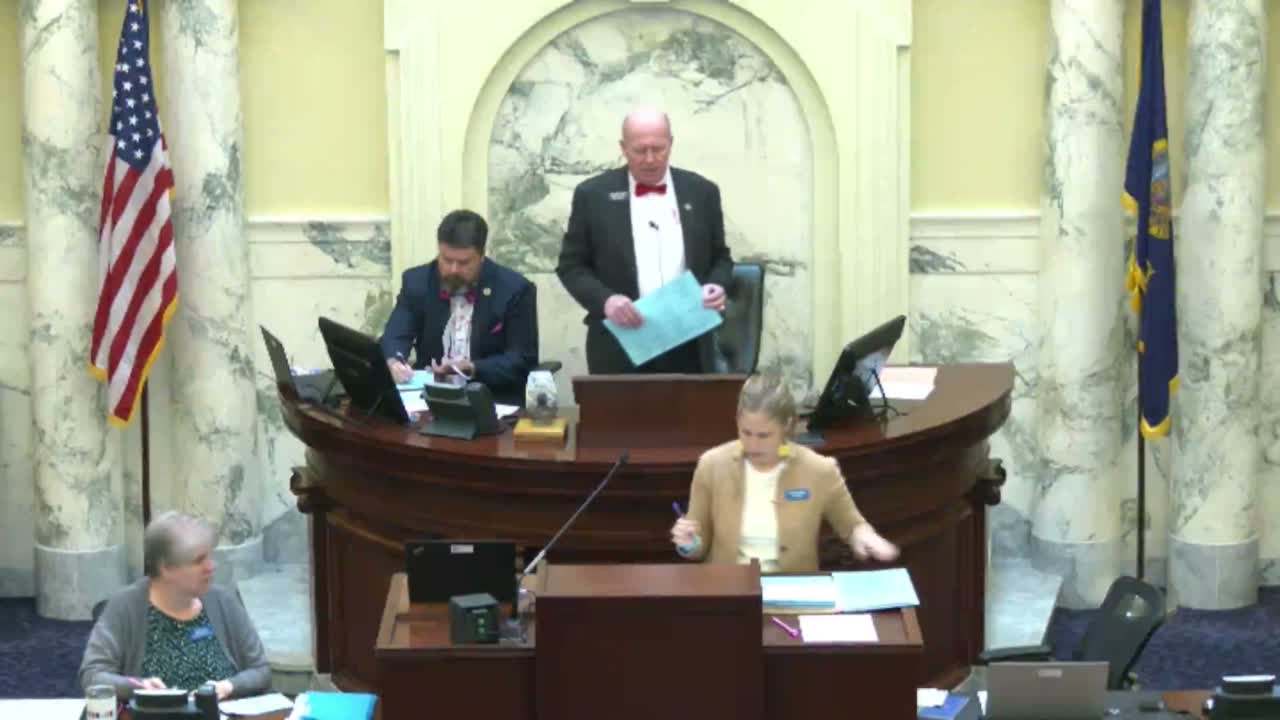
The Idaho House passed House Bill 9 28 on March 20, adopting a measure that defines prohibited DEI conduct in the health-care sector, ties compliance to provider agreements, and authorizes penalties and corrective action.
The bill’s sponsor, a lawmaker presenting the measure on the floor, said the intent is to “remove polarizing political ideology out of the health-care industry” and put “a merit-based approach” back into clinical practice. He described the measure as preserving ‘‘science, professional qualifications, clinical competency, and ... quality patient care.’’
Opponents urged a different view. A member who spoke against the bill argued that banning what the bill describes as DEI instruction would prohibit commonly used implicit-bias and anti‑racism trainings that medical educators and some accrediting bodies require. “Modern medicine recognizes that patient outcomes are heavily influenced by societal factors . . . It is reality that the maternal mortality rate is 3 and a half times higher for Black women than for white women,” the opponent said, urging colleagues to oppose the bill.
Supporters said the bill’s definitions are intended to avoid tensely worded confusion and that it contains a savings clause to preserve compliance with federal civil‑rights law and accreditation requirements. Floor remarks describe a tiered penalty structure tied to employer size (larger penalties for employers with 50 or more employees and smaller penalties for employers with 50 or fewer employees) and a limited private right of action. The sponsor also said the statute allows corrective action and that a federal preemption/savings clause would remove any conflicting state provisions.
Floor debate included assurances that data collection specifically related to patient care and ethnicity would not be banned. The sponsor said the bill ‘‘was cleanly written’’ and that the intent is to keep focus on patient care while avoiding changes to civil‑rights protections.
The motion to pass House Bill 9 28 carried by roll-call tally, 56 ayes to 14 nays. The bill will be transmitted to the Senate for its consideration.
What’s next: The bill will appear on the Senate calendar and may be subject to committee review there. If enacted at the Senate, sponsors said the measure would be implemented through updates to provider agreements and departmental enforcement provisions.
The bill’s sponsor, a lawmaker presenting the measure on the floor, said the intent is to “remove polarizing political ideology out of the health-care industry” and put “a merit-based approach” back into clinical practice. He described the measure as preserving ‘‘science, professional qualifications, clinical competency, and ... quality patient care.’’
Opponents urged a different view. A member who spoke against the bill argued that banning what the bill describes as DEI instruction would prohibit commonly used implicit-bias and anti‑racism trainings that medical educators and some accrediting bodies require. “Modern medicine recognizes that patient outcomes are heavily influenced by societal factors . . . It is reality that the maternal mortality rate is 3 and a half times higher for Black women than for white women,” the opponent said, urging colleagues to oppose the bill.
Supporters said the bill’s definitions are intended to avoid tensely worded confusion and that it contains a savings clause to preserve compliance with federal civil‑rights law and accreditation requirements. Floor remarks describe a tiered penalty structure tied to employer size (larger penalties for employers with 50 or more employees and smaller penalties for employers with 50 or fewer employees) and a limited private right of action. The sponsor also said the statute allows corrective action and that a federal preemption/savings clause would remove any conflicting state provisions.
Floor debate included assurances that data collection specifically related to patient care and ethnicity would not be banned. The sponsor said the bill ‘‘was cleanly written’’ and that the intent is to keep focus on patient care while avoiding changes to civil‑rights protections.
The motion to pass House Bill 9 28 carried by roll-call tally, 56 ayes to 14 nays. The bill will be transmitted to the Senate for its consideration.
What’s next: The bill will appear on the Senate calendar and may be subject to committee review there. If enacted at the Senate, sponsors said the measure would be implemented through updates to provider agreements and departmental enforcement provisions.
Don't Miss a Word: See the Full Meeting!
Go beyond summaries. Unlock every video, transcript, and key insight with a Founder Membership.
✓
Get instant access to full meeting videos
✓
Search and clip any phrase from complete transcripts
✓
Receive AI-powered summaries & custom alerts
✓
Enjoy lifetime, unrestricted access to government data
30-day money-back guarantee
