Missouri bill would create statewide sexual‑assault response task force to standardize survivors’ care
March 24, 2026 | 2026 Legislature MO, Missouri
This article was created by AI summarizing key points discussed. AI makes mistakes, so for full details and context, please refer to the video of the full meeting. Please report any errors so we can fix them. Report an error »
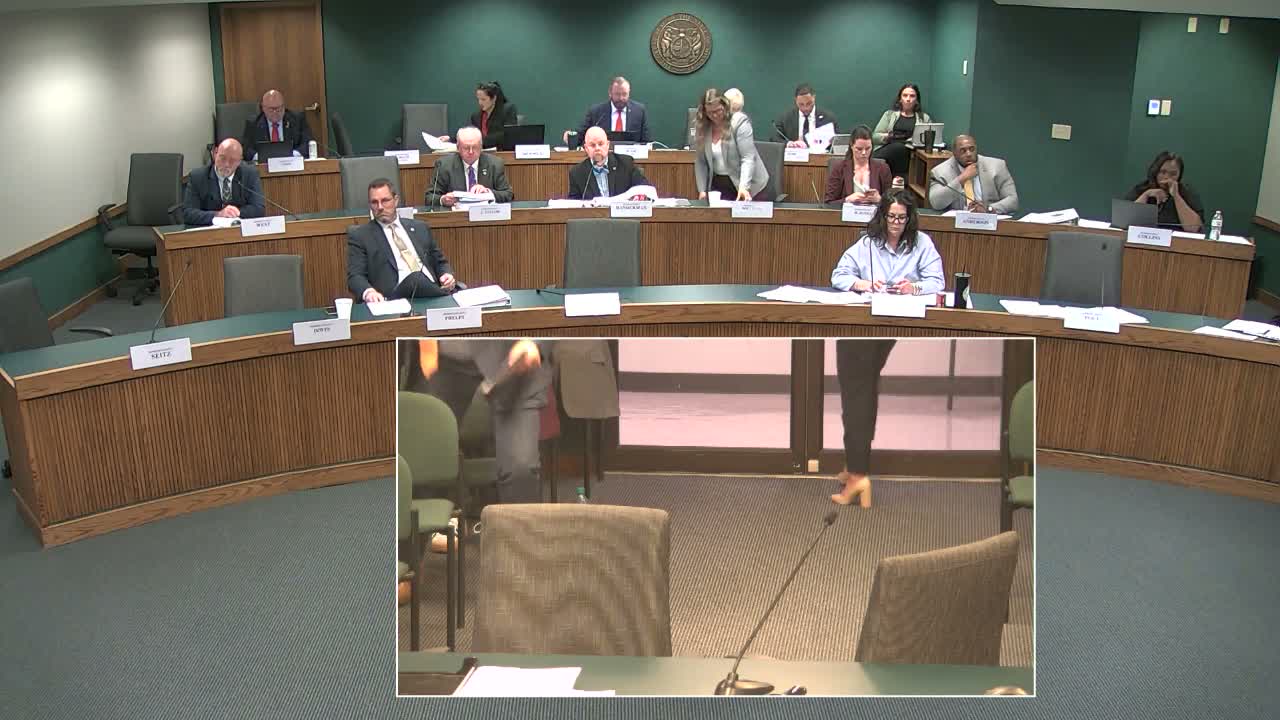
Representative Cecily Williams introduced House Bill 3434 to establish a Missouri Statewide Sexual Assault Response Task Force charged with examining reporting, investigation, medical response, advocacy and prosecution, and issuing a formal report to the governor and General Assembly by Dec. 31, 2028. The sponsor said the task force is intended to create consistent statewide standards and accountability after the state experienced a large backlog of untested forensic kits.
Advocates, service providers and medical representatives testified in support. Cheryl Rob Welch, CEO of the Missouri Coalition Against Domestic and Sexual Violence, described the history of the forensic‑kit backlog and the coalition’s role in convening stakeholders. In her testimony Ms. Welch said Missouri originally cataloged about 24,619 forensic kits that had been held in evidence inventories; tens of thousands were cleared for testing in recent years and thousands were sent for out‑of‑state testing, producing CODIS matches and identifying serial offenders. She and other witnesses said clearing the backlog exposed weaknesses: outsourcing increased litigation and witness costs, forensic analysts were drawn into prosecution as witnesses and smaller jurisdictions may lack capacity to manage evidence and court attendance costs.
Witnesses highlighted TeleSane, the Department of Health and Senior Services’ telemedicine model intended to support rural forensic exams, and cautioned it should supplement—not replace—local clinical capacity. Committee members raised questions about the task force’s composition and appointment authority, with several members suggesting adjustments to ensure balanced representation and avoid an unwieldy or ineffective body. Sponsor Williams said the bill includes a sunset and reporting requirement to focus work and accountability.
Witnesses urged the committee to pair the task‑force mandate with concrete recommendations on resources: lab staffing, advocate funding, analyst support and mechanisms to ensure evidence moves from hospitals into crime labs within statutory timeframes. Supporters said progress has been made on the backlog but that consistent, funded statewide capacity is still lacking.
The committee heard no recorded opposition during the hearing; testimony closed and the committee concluded the evening’s agenda.
Advocates, service providers and medical representatives testified in support. Cheryl Rob Welch, CEO of the Missouri Coalition Against Domestic and Sexual Violence, described the history of the forensic‑kit backlog and the coalition’s role in convening stakeholders. In her testimony Ms. Welch said Missouri originally cataloged about 24,619 forensic kits that had been held in evidence inventories; tens of thousands were cleared for testing in recent years and thousands were sent for out‑of‑state testing, producing CODIS matches and identifying serial offenders. She and other witnesses said clearing the backlog exposed weaknesses: outsourcing increased litigation and witness costs, forensic analysts were drawn into prosecution as witnesses and smaller jurisdictions may lack capacity to manage evidence and court attendance costs.
Witnesses highlighted TeleSane, the Department of Health and Senior Services’ telemedicine model intended to support rural forensic exams, and cautioned it should supplement—not replace—local clinical capacity. Committee members raised questions about the task force’s composition and appointment authority, with several members suggesting adjustments to ensure balanced representation and avoid an unwieldy or ineffective body. Sponsor Williams said the bill includes a sunset and reporting requirement to focus work and accountability.
Witnesses urged the committee to pair the task‑force mandate with concrete recommendations on resources: lab staffing, advocate funding, analyst support and mechanisms to ensure evidence moves from hospitals into crime labs within statutory timeframes. Supporters said progress has been made on the backlog but that consistent, funded statewide capacity is still lacking.
The committee heard no recorded opposition during the hearing; testimony closed and the committee concluded the evening’s agenda.
View the Full Meeting & All Its Details
This article offers just a summary. Unlock complete video, transcripts, and insights as a Founder Member.
✓
Watch full, unedited meeting videos
✓
Search every word spoken in unlimited transcripts
✓
AI summaries & real-time alerts (all government levels)
✓
Permanent access to expanding government content
30-day money-back guarantee
