Senate approves law requiring certain officers to identify themselves after heated debate over ICE safety and public protection
March 23, 2026 | 2026 Legislative Sessions, New Jersey
This article was created by AI summarizing key points discussed. AI makes mistakes, so for full details and context, please refer to the video of the full meeting. Please report any errors so we can fix them. Report an error »
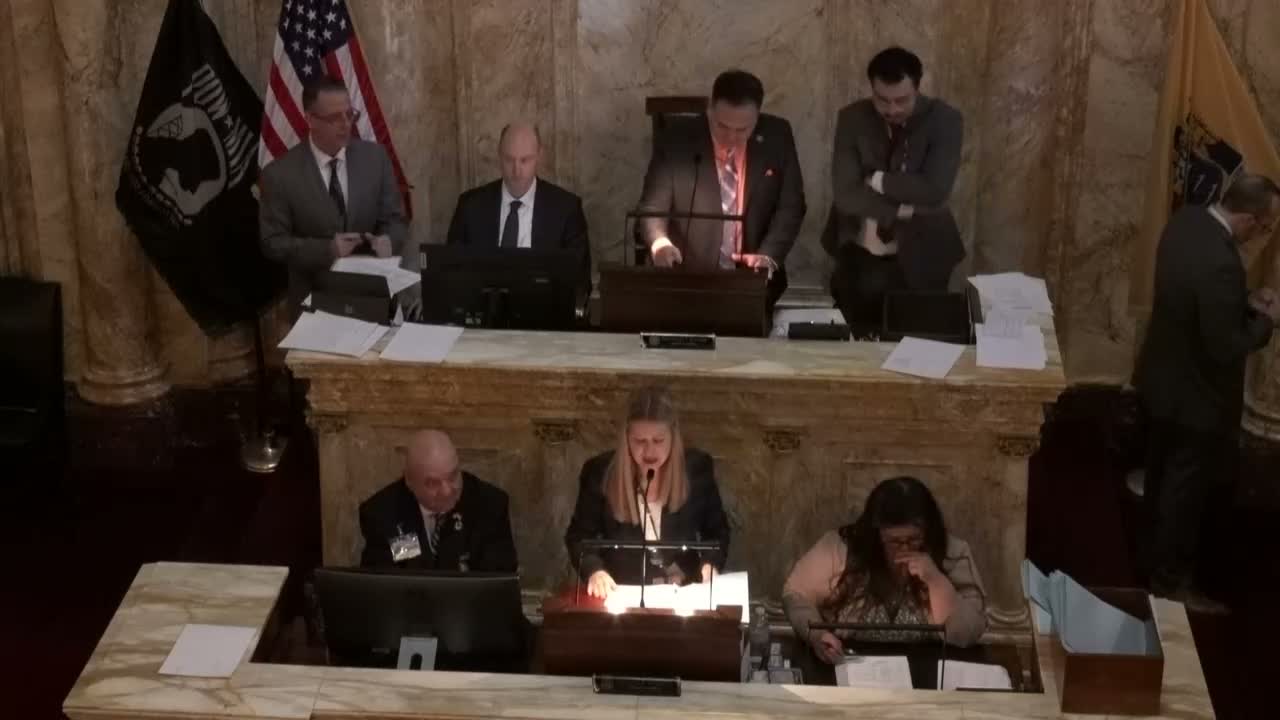
The New Jersey State Senate approved S‑3114 on third reading after an extended floor debate that exposed sharp differences over law‑enforcement transparency and public safety tradeoffs.
S‑3114, sponsored by Senator Wimbley, requires certain law‑enforcement officers to reveal their identity during public interactions and present sufficient identification before arresting or detaining a person. The bill drew multiple floor speeches and at least one amendment proposal that would have (1) established a disorderly‑persons offense for anyone who wears a mask with intent to hide identity while committing unlawful conduct and (2) added provisions proponents said would protect federal agents from coordinated doxxing. Senator Schappizzi argued the amendment balanced transparency and safety, saying in part, “First, it establishes a disorderly person's offense for anyone who wears a mask with the intent to hide who they are while engaging in unlawful conduct… according to the Department of Homeland Security, [ICE agents] have faced a 1300% increase in these attacks in recent months.”
Opponents pushed back on that framing during floor remarks. Senator Ruiz cautioned against using the measure to “weaponize our undocumented communities,” noting the economic contributions and community ties of many immigrants. Senator Testa urged colleagues to be “intellectually honest” about tradeoffs and proposed a narrow amendment to require notifications to federal immigration authorities when individuals convicted of certain violent offenses are released; the motion to place that amendment on second reading was tabled and the motion to table carried by recorded vote.
Senator Pinacchio offered an emphatic floor critique, linking national immigration policy to local public safety and asserting that past federal administrations had allowed “millions of unvetted illegals” into the country — an on‑floor claim that other senators disputed and that was not substantiated within the transcript. Senator Bramnick and others defended the measure from a public‑safety and officer‑protection standpoint, with Bramnick saying the public must be able to know who is making arrests.
Procedural steps: Senator Schappizzi moved that the bill be placed back on second reading for amendment under Senate rule 17; Senator Ruiz moved to table the amendment (motion to table carried 23‑15 on the machine). The final recorded tally on S‑3114 was announced as 24 yes, 14 no; the presiding officer declared the bill passed.
Why it matters: The bill changes expectations about officer identification during public interactions and prompted competing claims about whether the change would make communities safer or expose certain agents to new risks. Floor debate included unverified statistical assertions and competing policy framings; those assertions were not substantiated within the session record.
Next steps: With passage on third reading, the enacted measure will proceed through normal enrollment and any gubernatorial consideration.
S‑3114, sponsored by Senator Wimbley, requires certain law‑enforcement officers to reveal their identity during public interactions and present sufficient identification before arresting or detaining a person. The bill drew multiple floor speeches and at least one amendment proposal that would have (1) established a disorderly‑persons offense for anyone who wears a mask with intent to hide identity while committing unlawful conduct and (2) added provisions proponents said would protect federal agents from coordinated doxxing. Senator Schappizzi argued the amendment balanced transparency and safety, saying in part, “First, it establishes a disorderly person's offense for anyone who wears a mask with the intent to hide who they are while engaging in unlawful conduct… according to the Department of Homeland Security, [ICE agents] have faced a 1300% increase in these attacks in recent months.”
Opponents pushed back on that framing during floor remarks. Senator Ruiz cautioned against using the measure to “weaponize our undocumented communities,” noting the economic contributions and community ties of many immigrants. Senator Testa urged colleagues to be “intellectually honest” about tradeoffs and proposed a narrow amendment to require notifications to federal immigration authorities when individuals convicted of certain violent offenses are released; the motion to place that amendment on second reading was tabled and the motion to table carried by recorded vote.
Senator Pinacchio offered an emphatic floor critique, linking national immigration policy to local public safety and asserting that past federal administrations had allowed “millions of unvetted illegals” into the country — an on‑floor claim that other senators disputed and that was not substantiated within the transcript. Senator Bramnick and others defended the measure from a public‑safety and officer‑protection standpoint, with Bramnick saying the public must be able to know who is making arrests.
Procedural steps: Senator Schappizzi moved that the bill be placed back on second reading for amendment under Senate rule 17; Senator Ruiz moved to table the amendment (motion to table carried 23‑15 on the machine). The final recorded tally on S‑3114 was announced as 24 yes, 14 no; the presiding officer declared the bill passed.
Why it matters: The bill changes expectations about officer identification during public interactions and prompted competing claims about whether the change would make communities safer or expose certain agents to new risks. Floor debate included unverified statistical assertions and competing policy framings; those assertions were not substantiated within the session record.
Next steps: With passage on third reading, the enacted measure will proceed through normal enrollment and any gubernatorial consideration.
View the Full Meeting & All Its Details
This article offers just a summary. Unlock complete video, transcripts, and insights as a Founder Member.
✓
Watch full, unedited meeting videos
✓
Search every word spoken in unlimited transcripts
✓
AI summaries & real-time alerts (all government levels)
✓
Permanent access to expanding government content
30-day money-back guarantee
