Goshen officials spotlight Mobile Integrated Health program as a way to reduce emergency calls and connect people to care
March 14, 2026 | Goshen City, Elkhart County, Indiana
This article was created by AI summarizing key points discussed. AI makes mistakes, so for full details and context, please refer to the video of the full meeting. Please report any errors so we can fix them. Report an error »
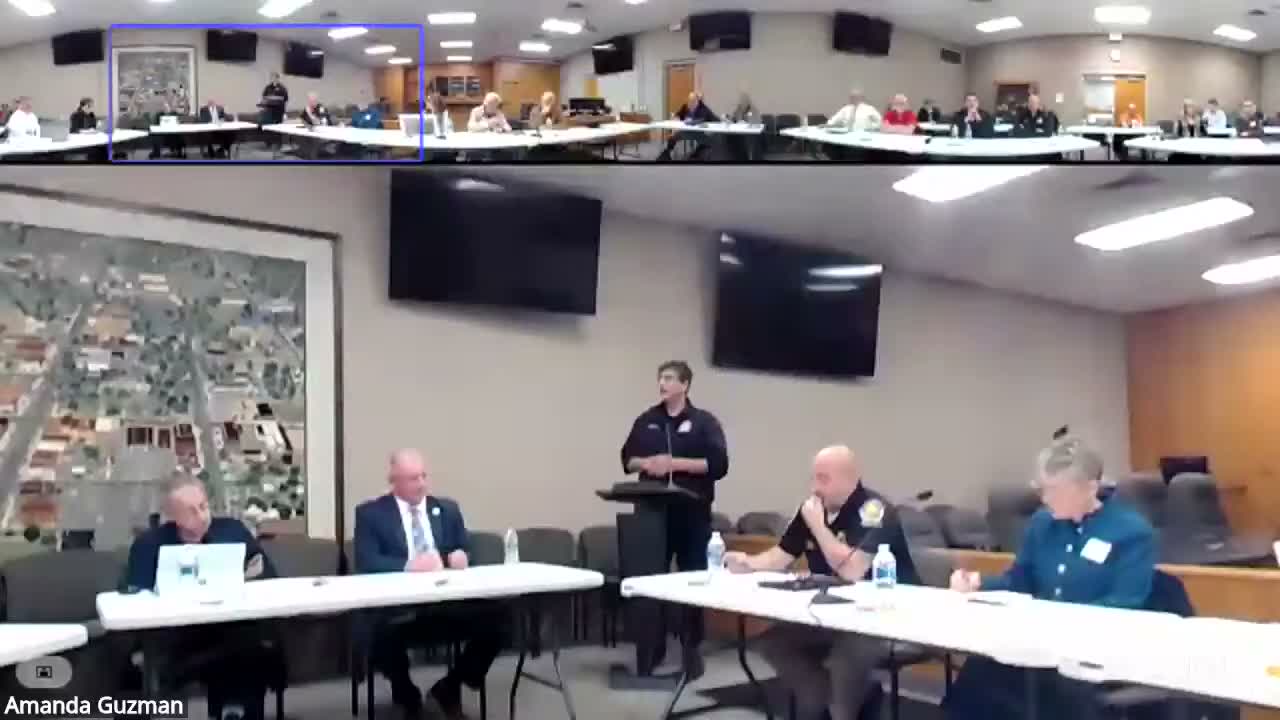
Andrew, a member of Goshen’s Mobile Integrated Health (MIH) team, told city leaders the program uses data-driven outreach and partnerships to address the community’s greatest needs, including fetal and infant mortality prevention, youth behavioral health and repeat 911 users. He described three cases where MIH intervened: an elderly couple found malnourished (one person later died), a young man with schizoaffective disorder who was admitted to inpatient care, and a chronically homeless individual who was rehoused and began searching for work.
The program emphasizes de-escalation and alternatives to emergency-room transport, Andrew said, noting Goshen Fire Department has trained 10 paramedics in Crisis Intervention Team (CIT) techniques and operates a 24/7 “chase” vehicle staffed by a CIT-trained paramedic. "So it's really awesome that we have 24/7 coverage," he said, describing how the team can begin coordinated care after hours.
Why it matters: Officials said MIH both improves individual outcomes and frees public-safety resources for true emergencies. The team pulls data from multiple sources to identify high-need cases and coordinate services, and leaders told the council they plan to show impact metrics during upcoming budget presentations.
Program mechanics and partnerships cited by Andrew include a referral link into the team's case-management platform (referred to in the presentation as Gelada), integration of EMS and patrol records, and local partner organizations such as Meals on Wheels, First Life Mission and a community "clubhouse" for people with serious mental-health diagnoses. He said the MIH team also routes appropriate patients to an Oak Lawn crisis center for extended mental-health evaluation rather than to hospital emergency departments.
Andrew described a proposed expansion of clinical options in the field, saying the MIH team expects to offer pre-hospital medication for opioid use disorder in some cases (referred to in the presentation as "pre-hospital Suboxone") to improve retention in treatment. He characterized published and program-level results as promising, saying pre-hospital administration is associated with a multi-fold increase in patients entering ongoing care based on the team's data and the research he cited. Speakers cautioned that some counterfactuals — for example, how many calls an individual would have made without intervention — are impossible to measure exactly, and city staff said AIM and partner agencies are collecting the data needed to quantify program impact.
Councilors repeatedly praised the interagency approach and asked for numbers they could use during budget decisions. The mayor said the program has drawn attention from peers across the state and encouraged the team to continue collecting and presenting impact data.
The council did not take formal action during the presentation; staff said impact metrics and budget requests will be presented this summer.
The program emphasizes de-escalation and alternatives to emergency-room transport, Andrew said, noting Goshen Fire Department has trained 10 paramedics in Crisis Intervention Team (CIT) techniques and operates a 24/7 “chase” vehicle staffed by a CIT-trained paramedic. "So it's really awesome that we have 24/7 coverage," he said, describing how the team can begin coordinated care after hours.
Why it matters: Officials said MIH both improves individual outcomes and frees public-safety resources for true emergencies. The team pulls data from multiple sources to identify high-need cases and coordinate services, and leaders told the council they plan to show impact metrics during upcoming budget presentations.
Program mechanics and partnerships cited by Andrew include a referral link into the team's case-management platform (referred to in the presentation as Gelada), integration of EMS and patrol records, and local partner organizations such as Meals on Wheels, First Life Mission and a community "clubhouse" for people with serious mental-health diagnoses. He said the MIH team also routes appropriate patients to an Oak Lawn crisis center for extended mental-health evaluation rather than to hospital emergency departments.
Andrew described a proposed expansion of clinical options in the field, saying the MIH team expects to offer pre-hospital medication for opioid use disorder in some cases (referred to in the presentation as "pre-hospital Suboxone") to improve retention in treatment. He characterized published and program-level results as promising, saying pre-hospital administration is associated with a multi-fold increase in patients entering ongoing care based on the team's data and the research he cited. Speakers cautioned that some counterfactuals — for example, how many calls an individual would have made without intervention — are impossible to measure exactly, and city staff said AIM and partner agencies are collecting the data needed to quantify program impact.
Councilors repeatedly praised the interagency approach and asked for numbers they could use during budget decisions. The mayor said the program has drawn attention from peers across the state and encouraged the team to continue collecting and presenting impact data.
The council did not take formal action during the presentation; staff said impact metrics and budget requests will be presented this summer.
Don't Miss a Word: See the Full Meeting!
Go beyond summaries. Unlock every video, transcript, and key insight with a Founder Membership.
✓
Get instant access to full meeting videos
✓
Search and clip any phrase from complete transcripts
✓
Receive AI-powered summaries & custom alerts
✓
Enjoy lifetime, unrestricted access to government data
30-day money-back guarantee
