Councilmember Alter to offer amendments after public criticizes homeless strategic plan
March 24, 2026 | Austin, Travis County, Texas
This article was created by AI summarizing key points discussed. AI makes mistakes, so for full details and context, please refer to the video of the full meeting. Please report any errors so we can fix them. Report an error »
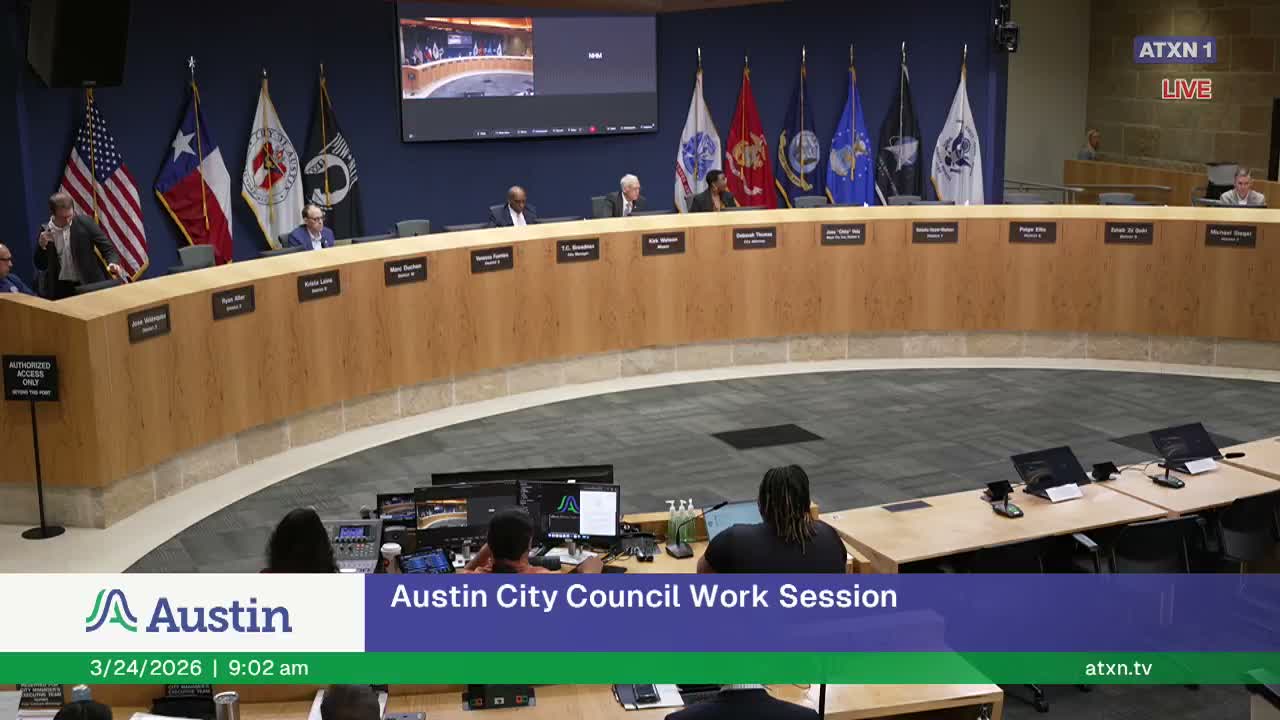
Jen Robicheaux, a long‑time Austin resident, told the council the city’s homeless strategic plan “completely omits the taxpayer’s perspective” and called for more accountability, data transparency and clearer measures of success.
Robicheaux urged the city to tie contractor payments to outcomes that move people toward self‑sufficiency, create public dashboards showing point‑of‑origin and length‑of‑service data, and address persistent encampments that cause environmental damage. “We need contractors to be tied to self sufficiency,” she said. She also argued the plan’s current emphasis on shelter capacity should be balanced with stronger metrics for permanent supportive housing and rapid rehousing.
Councilmember Ryan Alter, who pulled item A31 for discussion, said he has worked with Director David Gray and staff to draft amendments. Alter said the amendments would strike a single numerical bed‑capacity target and instead expand KPIs to measure progress on shelter expansion, permanent supportive housing (PSH) and rapid rehousing programs. “It addresses the targets we have right now around shelter capacity … and adds some KPIs around PSH and rapid,” Alter said, and he said he would post the amendment to the message board before Thursday.
Director David Gray told council he and his staff appreciate the collaboration and look forward to receiving the amendments. Gray said internal working groups and leadership will continue tracking progress and that staff can provide regular updates to council or the public health committee as requested. In response to a question from Councilmember Duchin, Gray confirmed behavioral‑health language was added to the plan introduction and that the department is coordinating with IntegralCare, the region’s mental‑health authority.
Next steps: Alter said the amendment will be formally posted ahead of Thursday’s meeting and will be offered then; staff said they will continue to brief council on implementation and monitoring plans.
Robicheaux urged the city to tie contractor payments to outcomes that move people toward self‑sufficiency, create public dashboards showing point‑of‑origin and length‑of‑service data, and address persistent encampments that cause environmental damage. “We need contractors to be tied to self sufficiency,” she said. She also argued the plan’s current emphasis on shelter capacity should be balanced with stronger metrics for permanent supportive housing and rapid rehousing.
Councilmember Ryan Alter, who pulled item A31 for discussion, said he has worked with Director David Gray and staff to draft amendments. Alter said the amendments would strike a single numerical bed‑capacity target and instead expand KPIs to measure progress on shelter expansion, permanent supportive housing (PSH) and rapid rehousing programs. “It addresses the targets we have right now around shelter capacity … and adds some KPIs around PSH and rapid,” Alter said, and he said he would post the amendment to the message board before Thursday.
Director David Gray told council he and his staff appreciate the collaboration and look forward to receiving the amendments. Gray said internal working groups and leadership will continue tracking progress and that staff can provide regular updates to council or the public health committee as requested. In response to a question from Councilmember Duchin, Gray confirmed behavioral‑health language was added to the plan introduction and that the department is coordinating with IntegralCare, the region’s mental‑health authority.
Next steps: Alter said the amendment will be formally posted ahead of Thursday’s meeting and will be offered then; staff said they will continue to brief council on implementation and monitoring plans.
Don't Miss a Word: See the Full Meeting!
Go beyond summaries. Unlock every video, transcript, and key insight with a Founder Membership.
✓
Get instant access to full meeting videos
✓
Search and clip any phrase from complete transcripts
✓
Receive AI-powered summaries & custom alerts
✓
Enjoy lifetime, unrestricted access to government data
30-day money-back guarantee
