Council presses staff on missing‑middle zoning, seeks clearer targeting and monitoring
March 24, 2026 | Austin, Travis County, Texas
This article was created by AI summarizing key points discussed. AI makes mistakes, so for full details and context, please refer to the video of the full meeting. Please report any errors so we can fix them. Report an error »
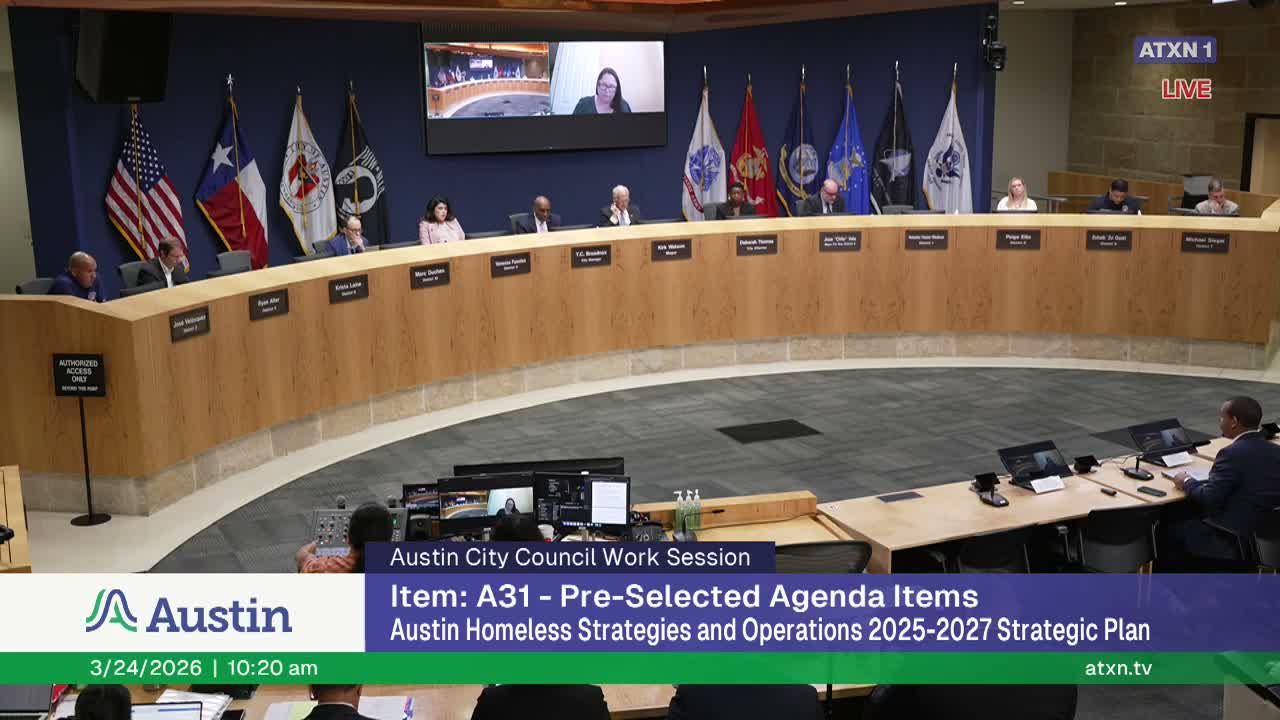
Council members debated how the city should deploy proposed missing‑middle and mixed‑use zoning tools to add duplexes, multiplexes and townhomes without creating displacement or parking pressures.
Jordan Feldman of the planning department said staff is tracking uptake of HOME 1 and HOME 2 programs but does not yet have complete data on the effects of recent zoning changes; he said staff will follow up with council offices to provide additional monitoring details. Andrea Bates, assistant director for Austin Planning, said staff will develop a robust engagement plan using virtual and in‑person sessions, targeted stakeholder outreach and detailed testing of proposed regulations on sample sites.
Councilmember Duchin said she pulled the item to ask whether the city is measuring outcomes from earlier zoning changes and argued for a deliberative, geographically targeted rollout to reduce displacement risks. “I worry that new base zones to enable missing middle and mixed use development could affect displacement pressure,” Duchin said, urging safeguards and an iterative pilot approach.
Councilmember Jose Velasquez said clear communications and mapping of areas where missing‑middle housing could help reduce displacement should be part of staff’s scope. Planning staff said mixed‑use zones would focus on transit corridors and station areas while missing‑middle zones would be applied in a context‑sensitive way to integrate into neighborhoods.
Staff next steps include developing an engagement plan, returning with mapping and metrics as available, and following up with council offices on measurement and monitoring. Councilmembers asked staff to clarify where tools would be allowed, what community engagement will look like and how parking and transportation demand management might be used to mitigate impacts.
Next steps: Planning staff will follow up with council offices on data requests, develop a public engagement plan and produce mapping and monitoring materials as they become available.
Jordan Feldman of the planning department said staff is tracking uptake of HOME 1 and HOME 2 programs but does not yet have complete data on the effects of recent zoning changes; he said staff will follow up with council offices to provide additional monitoring details. Andrea Bates, assistant director for Austin Planning, said staff will develop a robust engagement plan using virtual and in‑person sessions, targeted stakeholder outreach and detailed testing of proposed regulations on sample sites.
Councilmember Duchin said she pulled the item to ask whether the city is measuring outcomes from earlier zoning changes and argued for a deliberative, geographically targeted rollout to reduce displacement risks. “I worry that new base zones to enable missing middle and mixed use development could affect displacement pressure,” Duchin said, urging safeguards and an iterative pilot approach.
Councilmember Jose Velasquez said clear communications and mapping of areas where missing‑middle housing could help reduce displacement should be part of staff’s scope. Planning staff said mixed‑use zones would focus on transit corridors and station areas while missing‑middle zones would be applied in a context‑sensitive way to integrate into neighborhoods.
Staff next steps include developing an engagement plan, returning with mapping and metrics as available, and following up with council offices on measurement and monitoring. Councilmembers asked staff to clarify where tools would be allowed, what community engagement will look like and how parking and transportation demand management might be used to mitigate impacts.
Next steps: Planning staff will follow up with council offices on data requests, develop a public engagement plan and produce mapping and monitoring materials as they become available.
View the Full Meeting & All Its Details
This article offers just a summary. Unlock complete video, transcripts, and insights as a Founder Member.
✓
Watch full, unedited meeting videos
✓
Search every word spoken in unlimited transcripts
✓
AI summaries & real-time alerts (all government levels)
✓
Permanent access to expanding government content
30-day money-back guarantee
