Austin Energy simplifies design‑and‑construction workflow, aims to shorten timelines for small projects
March 24, 2026 | Austin, Travis County, Texas
This article was created by AI summarizing key points discussed. AI makes mistakes, so for full details and context, please refer to the video of the full meeting. Please report any errors so we can fix them. Report an error »
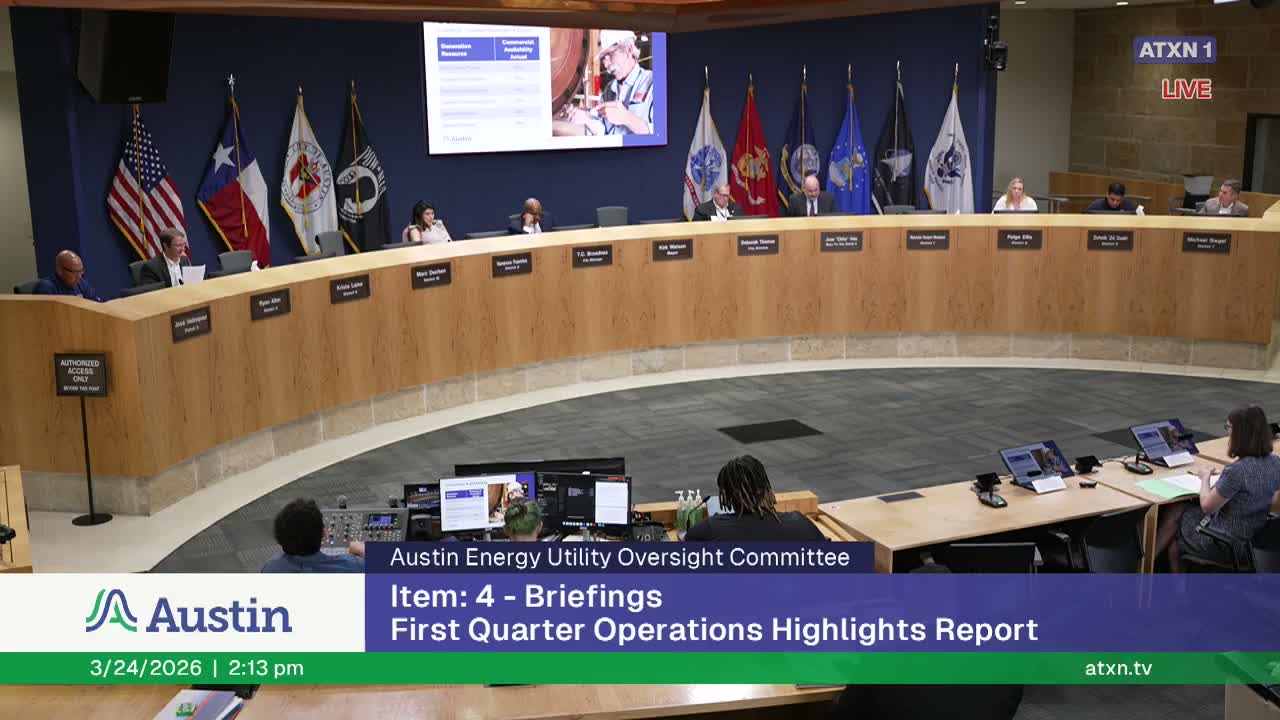
Brock Carter, vice president of Electric System Field Operations, told the Utility Oversight Committee Austin Energy has restructured its design and construction process into six phases (three design, three construction), introduced a three‑day feedback loop between design and construction teams, and launched an online portal to give customers visibility into where their applications are in the queue.
Carter said developer feedback sessions revealed inconsistent information and long waits, so the utility consolidated intake and design teams, realigned construction reporting chains and expanded phone coverage from 6 a.m. to 5 p.m. Monday–Friday to improve customer access. He presented early metrics: a roughly 35% decrease in intake times, 30–60% decreases in design times for some project categories, and an average across jobs of about 12 weeks. Carter said active jobs and design queue length have declined and that scheduled outage wait times for small projects have fallen from months to about a week in many cases.
David Thom Cheston, vice president of Engineering, clarified that design review often runs in parallel with site‑plan review but that construction release waits for site‑plan approval. He said some small residential design requests can be routed and completed in as few as one to two weeks, and that a new pole and transformer for a typical residential connection can range from roughly $5,000 to $10,000 depending on scope and whether poles are already in place.
Councilmembers asked for more detailed breakdowns for small projects (single‑home vs. multiunit) and for staff to return with data segmented by project size. Several councilmembers expressed interest in policies that could socialize some upgrade costs for small infill projects to advance city housing goals; staff noted that since 2014 Austin Energy’s policy has been “growth pays for growth,” meaning customers currently bear upgrade costs.
Carter said staff will continue to refine project‑type categorization, expand the portal to include construction milestones and hold recurring customer feedback events to iterate on the process.
Carter said developer feedback sessions revealed inconsistent information and long waits, so the utility consolidated intake and design teams, realigned construction reporting chains and expanded phone coverage from 6 a.m. to 5 p.m. Monday–Friday to improve customer access. He presented early metrics: a roughly 35% decrease in intake times, 30–60% decreases in design times for some project categories, and an average across jobs of about 12 weeks. Carter said active jobs and design queue length have declined and that scheduled outage wait times for small projects have fallen from months to about a week in many cases.
David Thom Cheston, vice president of Engineering, clarified that design review often runs in parallel with site‑plan review but that construction release waits for site‑plan approval. He said some small residential design requests can be routed and completed in as few as one to two weeks, and that a new pole and transformer for a typical residential connection can range from roughly $5,000 to $10,000 depending on scope and whether poles are already in place.
Councilmembers asked for more detailed breakdowns for small projects (single‑home vs. multiunit) and for staff to return with data segmented by project size. Several councilmembers expressed interest in policies that could socialize some upgrade costs for small infill projects to advance city housing goals; staff noted that since 2014 Austin Energy’s policy has been “growth pays for growth,” meaning customers currently bear upgrade costs.
Carter said staff will continue to refine project‑type categorization, expand the portal to include construction milestones and hold recurring customer feedback events to iterate on the process.
View the Full Meeting & All Its Details
This article offers just a summary. Unlock complete video, transcripts, and insights as a Founder Member.
✓
Watch full, unedited meeting videos
✓
Search every word spoken in unlimited transcripts
✓
AI summaries & real-time alerts (all government levels)
✓
Permanent access to expanding government content
30-day money-back guarantee
