JFAC adopts Economic Outlook report, sets committee revenue recommendation after debate
January 19, 2026 | JOINT, Committees, Legislative, Idaho
This article was created by AI summarizing key points discussed. AI makes mistakes, so for full details and context, please refer to the video of the full meeting. Please report any errors so we can fix them. Report an error »
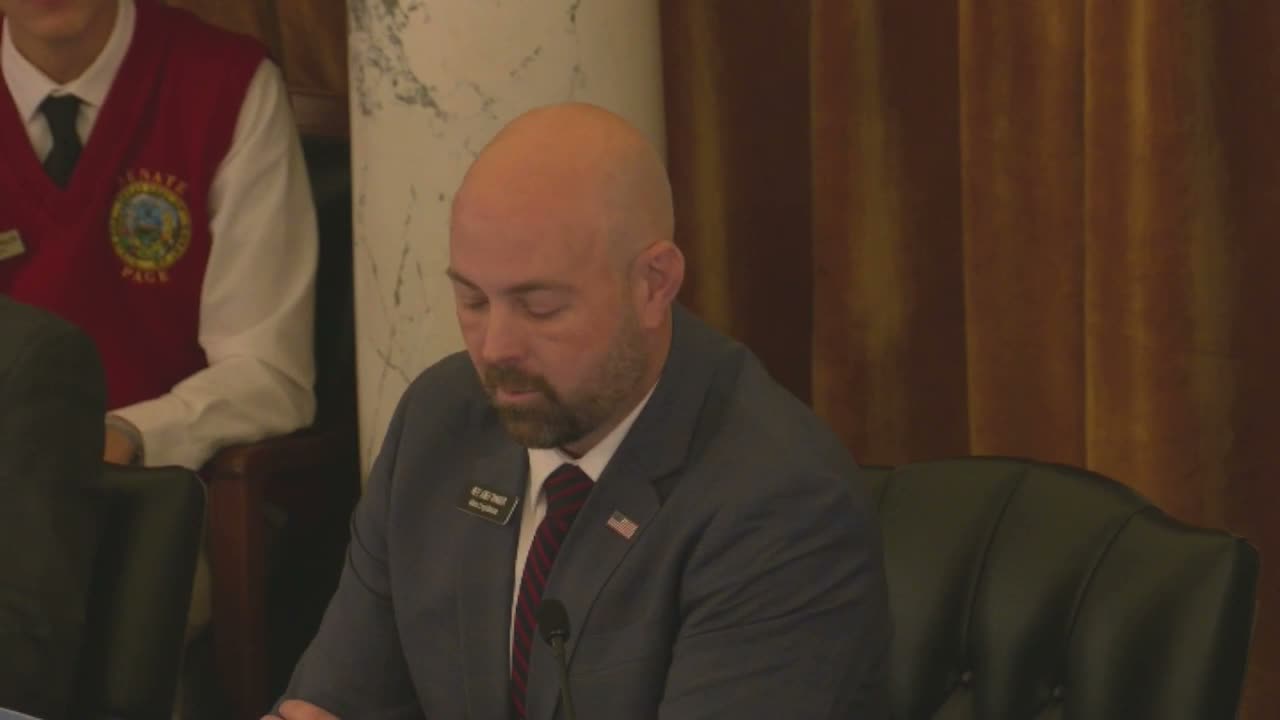
The Joint Finance-Appropriations Committee (JFAC) adopted the Economic Outlook and Revenue Assessment Committee’s revenue recommendation and will carry a due-pass recommendation after a final roll-call vote, committee leaders said.
Senator Cook, co-chair of the Economic Outlook committee, opened the presentation by recommending committee median general fund totals and urging caution against making appropriations above those figures. The committee recommended total general fund revenues available for appropriation of $5,000,000,665,100,000 for fiscal year 2026 and $5,000,000,816,600,000 for fiscal year 2027, according to the committee report presented to JFAC.
Representative Jeff Ehlers (co-chair) said the committee selected the median of outside experts and the governor’s projections to balance competing forecasts. "The committee came in sort of right in the middle there, at the median, about a 150,000,000 over the governor's projections," Ehlers said, describing how outside experts generally sat higher than the governor’s forecast.
A procedural issue surfaced when Representative Manwaring flagged a math discrepancy on the summary sheet. "If you do the math, it's 2.4%," Manwaring said, noting that the percentage printed for FY2027 between the committee median and the governor’s projection had been shown as 2.8%.
Keith Ivey, division manager of budget policy analysis for the Legislative Services Office, explained the parliamentary difference between accepting and adopting the report: "The difference between accept and adopt, you, literally are just accepting the committee report for future action, versus adopting the committee report, means that the committee adopts the report," he said, clarifying that adopting would set the revenue number for JFAC.
Members debated whether to accept the committee’s work and continue deliberation on the numbers later, or to adopt the report now and lock in a revenue number for budget work. Senator Woodward urged prudence but said he preferred hard decisions early: "I would rather make the hard decisions now ... versus being gone and having someone else make the decisions for us," he said, pressing for clarity on assumptions underlying the revenue estimates and for attention to transportation and fire funding.
After initial procedural votes on a motion to accept the report with the corrected 2.4% notation failed to achieve a combined majority across both chambers, Representative Miller moved to adopt the Economic Outlook report with the FY2027 percentage corrected to 2.4%. Members then debated the practical implications of adopting a number now versus later. Supporters said adopting would allow budget writing to begin immediately and avoid delays; others called for continued scrutiny of conformity bills and budget assumptions.
In the final roll call, the chair announced the motion to adopt had passed with unanimous aye votes in both chambers. "The senate voting, 10 ayes, 0 nays, and the house voting 10 ayes, 0 nays," the chair said. The committee said it would carry a due-pass recommendation and adjourned until the next morning at 8 a.m.
What the action means: by adopting the committee’s recommendation, JFAC set the committee’s median revenue projections as the working revenue figure for budget deliberations. Members repeatedly emphasized uncertainty — including pending tax conformity legislation — and noted the state’s rainy-day account balance cited in committee remarks. Further decisions about conformity and line-item allocations will occur as the budget process continues.
Senator Cook, co-chair of the Economic Outlook committee, opened the presentation by recommending committee median general fund totals and urging caution against making appropriations above those figures. The committee recommended total general fund revenues available for appropriation of $5,000,000,665,100,000 for fiscal year 2026 and $5,000,000,816,600,000 for fiscal year 2027, according to the committee report presented to JFAC.
Representative Jeff Ehlers (co-chair) said the committee selected the median of outside experts and the governor’s projections to balance competing forecasts. "The committee came in sort of right in the middle there, at the median, about a 150,000,000 over the governor's projections," Ehlers said, describing how outside experts generally sat higher than the governor’s forecast.
A procedural issue surfaced when Representative Manwaring flagged a math discrepancy on the summary sheet. "If you do the math, it's 2.4%," Manwaring said, noting that the percentage printed for FY2027 between the committee median and the governor’s projection had been shown as 2.8%.
Keith Ivey, division manager of budget policy analysis for the Legislative Services Office, explained the parliamentary difference between accepting and adopting the report: "The difference between accept and adopt, you, literally are just accepting the committee report for future action, versus adopting the committee report, means that the committee adopts the report," he said, clarifying that adopting would set the revenue number for JFAC.
Members debated whether to accept the committee’s work and continue deliberation on the numbers later, or to adopt the report now and lock in a revenue number for budget work. Senator Woodward urged prudence but said he preferred hard decisions early: "I would rather make the hard decisions now ... versus being gone and having someone else make the decisions for us," he said, pressing for clarity on assumptions underlying the revenue estimates and for attention to transportation and fire funding.
After initial procedural votes on a motion to accept the report with the corrected 2.4% notation failed to achieve a combined majority across both chambers, Representative Miller moved to adopt the Economic Outlook report with the FY2027 percentage corrected to 2.4%. Members then debated the practical implications of adopting a number now versus later. Supporters said adopting would allow budget writing to begin immediately and avoid delays; others called for continued scrutiny of conformity bills and budget assumptions.
In the final roll call, the chair announced the motion to adopt had passed with unanimous aye votes in both chambers. "The senate voting, 10 ayes, 0 nays, and the house voting 10 ayes, 0 nays," the chair said. The committee said it would carry a due-pass recommendation and adjourned until the next morning at 8 a.m.
What the action means: by adopting the committee’s recommendation, JFAC set the committee’s median revenue projections as the working revenue figure for budget deliberations. Members repeatedly emphasized uncertainty — including pending tax conformity legislation — and noted the state’s rainy-day account balance cited in committee remarks. Further decisions about conformity and line-item allocations will occur as the budget process continues.
Don't Miss a Word: See the Full Meeting!
Go beyond summaries. Unlock every video, transcript, and key insight with a Founder Membership.
✓
Get instant access to full meeting videos
✓
Search and clip any phrase from complete transcripts
✓
Receive AI-powered summaries & custom alerts
✓
Enjoy lifetime, unrestricted access to government data
30-day money-back guarantee
