Minn. committee hears heated debate on earned-wage access bill and lays it over
March 24, 2026 | 2026 Legislature MN, Minnesota
This article was created by AI summarizing key points discussed. AI makes mistakes, so for full details and context, please refer to the video of the full meeting. Please report any errors so we can fix them. Report an error »
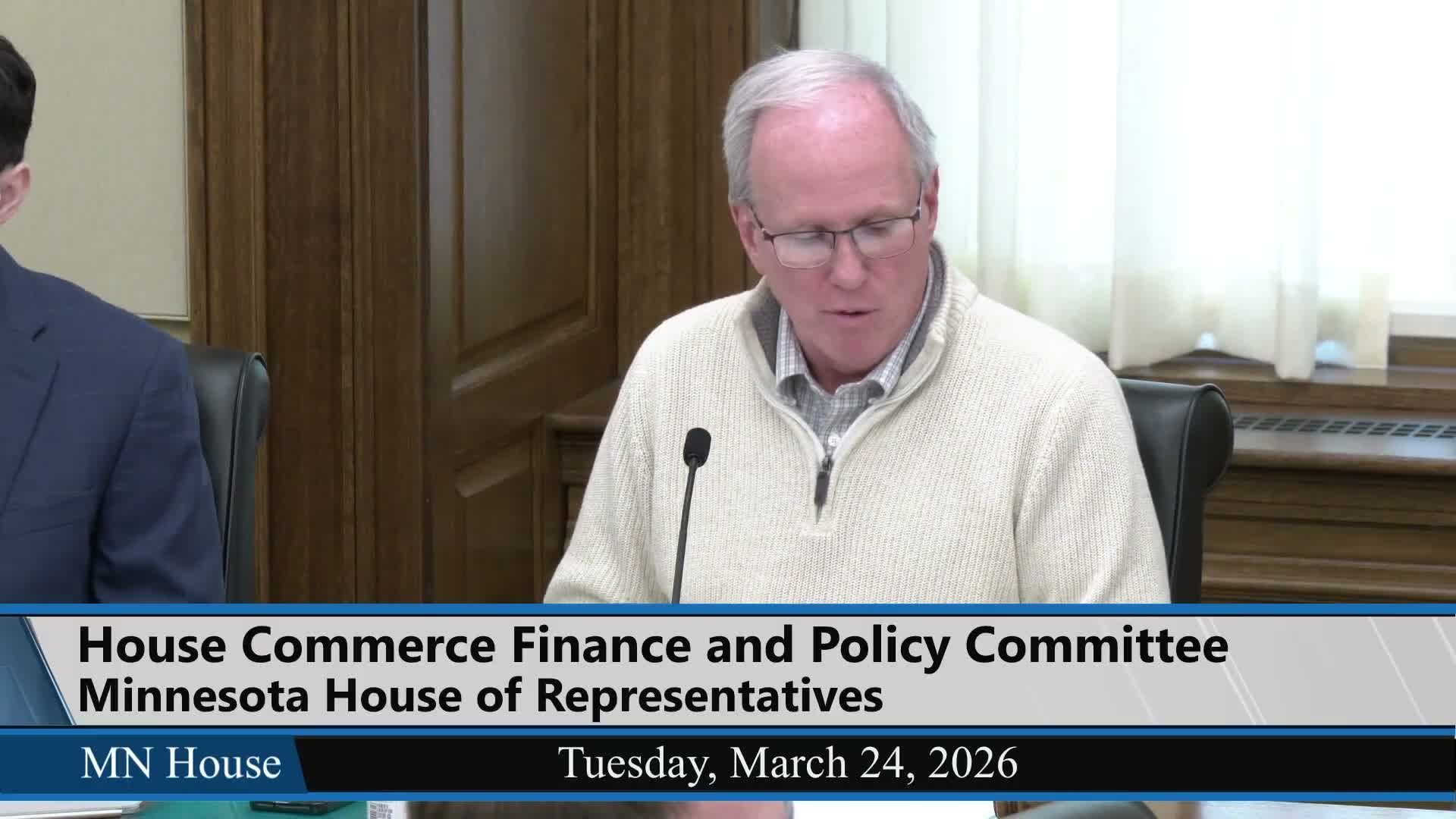
Representative Krisha on Tuesday presented House File 2874, a proposal to create a licensing and fee-cap framework for earned-wage access apps that let workers access already-earned pay before payday.
The bill, as described by nonpartisan staff, would limit expedite/transaction fees to $5 for advances of $75 or less and $7.50 for advances above $75 and would require providers to offer at least one no-cost option. Supporters told the committee those limits, disclosures and licensing would protect workers while preserving low-cost access to earned wages.
"Workers can only access wages they have already earned," Molly Jones, head of public policy at PayActiv, told the committee. "There is no interest, late fees, or penalties, and no compounding balance. Repayment happens through the payroll process." Tara Ryder, vice president of policy and government relations for Bridget, said her company serves about 75,000 Minnesota consumers with an average transaction of $72 and supplies a low optional expedited fee.
Industry witnesses and employer representatives argued EWA programs provide a workplace benefit that reduces overdrafts and helps employees bridge short cash-flow gaps. Ben Lien of Exodus Lending, speaking in opposition, said many EWA products operate like payday loans and that the industry seeks a carve-out from Minnesota's lending laws. "These aren't loans," Lien said of his view on the bill's opponents' claims, asserting the product will be regulated if treated as credit.
Consumer advocates and public-enforcement officials urged caution. Yasmin Fahri of the Center for Responsible Lending told the committee that app-based advances often function as short-term, high-cost loans that encourage repeat borrowing, citing research that finds high re-borrowing rates and effective APRs that can exceed statutory caps. Lauren Saunders of the National Consumer Law Center said the bill's per-transaction caps are easily evaded by tips, subscription fees and design features that push users toward paid options.
Sarah Dockteri, assistant attorney general, told lawmakers Minnesota's existing payday-lending statutes and the disclosures they require are at risk under the bill. "A $25 advance with a $5 fee due in a week would not be permitted under Minnesota law," she said, and the proposed legislation would allow that product by redefining the transaction.
Sam Smith of the Department of Commerce warned that data indicate a sizable share of EWA users rely on advances routinely; his office said fee caps in the current draft are too high and raised concerns about tipping practices and loan stacking.
Representative Krisha defended the measure as a regulatory framework rather than a carve-out, saying it guarantees a free option, bans interest and credit reporting and requires disclosures and licensing. "These are not what you're typically classifying as payday loans," he said, urging members to weigh access against risk.
Members pressed both sides on tipping, user interfaces that may nudge fees, recurring use and consumer protections. Several committee members — including Representative Finke and Representative Kegel — expressed skepticism about whether the bill would prevent predatory practices.
After extended testimony and member questions, the committee laid HF2874 over so sponsors and stakeholders can negotiate additional consumer protections and technical fixes. There was no final vote on the bill.
The bill, as described by nonpartisan staff, would limit expedite/transaction fees to $5 for advances of $75 or less and $7.50 for advances above $75 and would require providers to offer at least one no-cost option. Supporters told the committee those limits, disclosures and licensing would protect workers while preserving low-cost access to earned wages.
"Workers can only access wages they have already earned," Molly Jones, head of public policy at PayActiv, told the committee. "There is no interest, late fees, or penalties, and no compounding balance. Repayment happens through the payroll process." Tara Ryder, vice president of policy and government relations for Bridget, said her company serves about 75,000 Minnesota consumers with an average transaction of $72 and supplies a low optional expedited fee.
Industry witnesses and employer representatives argued EWA programs provide a workplace benefit that reduces overdrafts and helps employees bridge short cash-flow gaps. Ben Lien of Exodus Lending, speaking in opposition, said many EWA products operate like payday loans and that the industry seeks a carve-out from Minnesota's lending laws. "These aren't loans," Lien said of his view on the bill's opponents' claims, asserting the product will be regulated if treated as credit.
Consumer advocates and public-enforcement officials urged caution. Yasmin Fahri of the Center for Responsible Lending told the committee that app-based advances often function as short-term, high-cost loans that encourage repeat borrowing, citing research that finds high re-borrowing rates and effective APRs that can exceed statutory caps. Lauren Saunders of the National Consumer Law Center said the bill's per-transaction caps are easily evaded by tips, subscription fees and design features that push users toward paid options.
Sarah Dockteri, assistant attorney general, told lawmakers Minnesota's existing payday-lending statutes and the disclosures they require are at risk under the bill. "A $25 advance with a $5 fee due in a week would not be permitted under Minnesota law," she said, and the proposed legislation would allow that product by redefining the transaction.
Sam Smith of the Department of Commerce warned that data indicate a sizable share of EWA users rely on advances routinely; his office said fee caps in the current draft are too high and raised concerns about tipping practices and loan stacking.
Representative Krisha defended the measure as a regulatory framework rather than a carve-out, saying it guarantees a free option, bans interest and credit reporting and requires disclosures and licensing. "These are not what you're typically classifying as payday loans," he said, urging members to weigh access against risk.
Members pressed both sides on tipping, user interfaces that may nudge fees, recurring use and consumer protections. Several committee members — including Representative Finke and Representative Kegel — expressed skepticism about whether the bill would prevent predatory practices.
After extended testimony and member questions, the committee laid HF2874 over so sponsors and stakeholders can negotiate additional consumer protections and technical fixes. There was no final vote on the bill.
Don't Miss a Word: See the Full Meeting!
Go beyond summaries. Unlock every video, transcript, and key insight with a Founder Membership.
✓
Get instant access to full meeting videos
✓
Search and clip any phrase from complete transcripts
✓
Receive AI-powered summaries & custom alerts
✓
Enjoy lifetime, unrestricted access to government data
30-day money-back guarantee
