Committee advances bill allowing retroactive child support from pregnancy; critics warn of fetal-personhood risks
March 23, 2026 | 2026 Legislature Arizona, Arizona
This article was created by AI summarizing key points discussed. AI makes mistakes, so for full details and context, please refer to the video of the full meeting. Please report any errors so we can fix them. Report an error »
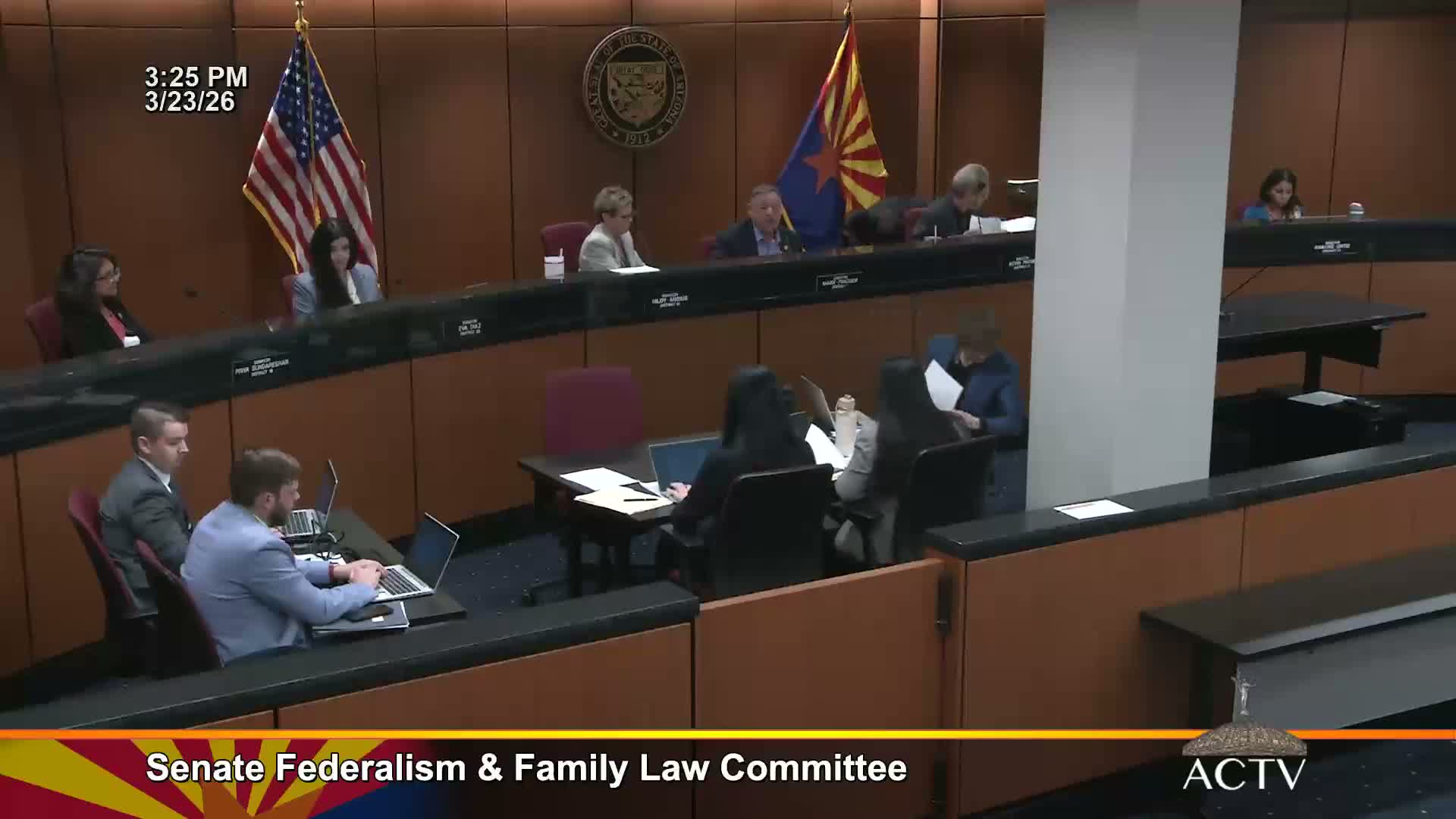
A 4–3 committee vote advanced House Bill 2144, which would allow courts to set retroactive child-support beginning at the time of a positive pregnancy test confirmed by a licensed health-care professional or at the date a dissolution filing occurs.
Supporters framed the bill as a practical financial protection for pregnant people and a way to hold fathers accountable. Daryl Groves, speaking for Red State Reform Civic Action Group, said the measure “encourages responsibility” and would help mothers cover prenatal and pregnancy-related costs. James Rogers, an attorney appearing in his personal capacity, told senators the bill extends existing child-support principles to prenatal expenses and protects both the pregnant person and the preborn child.
Opponents from reproductive-rights groups raised constitutional and practical concerns. Jean Woodbury, speaking for Florisair Reproductive Justice, argued the bill risks advancing fetal-personhood concepts and could create legal contradictions, force paternity testing in ways that endanger domestic-violence survivors, and invite early disclosure and surveillance of pregnancy. Jody Liggett of Reproductive Freedom for All said child-support mechanisms are slow and adversarial and that the bill could be the wrong tool to help pregnant people.
Sponsor Representative Justin Olson said paternity testing procedures and refund mechanisms currently in child-support law would apply and that mothers could wait until after birth to pursue paternity if they wished. Senators questioned practical enforcement, reimbursement if paternity is disproved, and whether the bill’s definition of a “preborn child” creates broader legal exposures.
The committee record shows HB 2144 passed out of committee on a 4–3 vote. Proponents said it gives mothers an additional avenue for financial relief; opponents said the bill could have unintended constitutional and safety consequences that deserve further consideration on the floor.
Supporters framed the bill as a practical financial protection for pregnant people and a way to hold fathers accountable. Daryl Groves, speaking for Red State Reform Civic Action Group, said the measure “encourages responsibility” and would help mothers cover prenatal and pregnancy-related costs. James Rogers, an attorney appearing in his personal capacity, told senators the bill extends existing child-support principles to prenatal expenses and protects both the pregnant person and the preborn child.
Opponents from reproductive-rights groups raised constitutional and practical concerns. Jean Woodbury, speaking for Florisair Reproductive Justice, argued the bill risks advancing fetal-personhood concepts and could create legal contradictions, force paternity testing in ways that endanger domestic-violence survivors, and invite early disclosure and surveillance of pregnancy. Jody Liggett of Reproductive Freedom for All said child-support mechanisms are slow and adversarial and that the bill could be the wrong tool to help pregnant people.
Sponsor Representative Justin Olson said paternity testing procedures and refund mechanisms currently in child-support law would apply and that mothers could wait until after birth to pursue paternity if they wished. Senators questioned practical enforcement, reimbursement if paternity is disproved, and whether the bill’s definition of a “preborn child” creates broader legal exposures.
The committee record shows HB 2144 passed out of committee on a 4–3 vote. Proponents said it gives mothers an additional avenue for financial relief; opponents said the bill could have unintended constitutional and safety consequences that deserve further consideration on the floor.
View the Full Meeting & All Its Details
This article offers just a summary. Unlock complete video, transcripts, and insights as a Founder Member.
✓
Watch full, unedited meeting videos
✓
Search every word spoken in unlimited transcripts
✓
AI summaries & real-time alerts (all government levels)
✓
Permanent access to expanding government content
30-day money-back guarantee
