Committee advances bill clarifying direct primary care is not insurance
March 24, 2026 | 2026 Legislature MN, Minnesota
This article was created by AI summarizing key points discussed. AI makes mistakes, so for full details and context, please refer to the video of the full meeting. Please report any errors so we can fix them. Report an error »
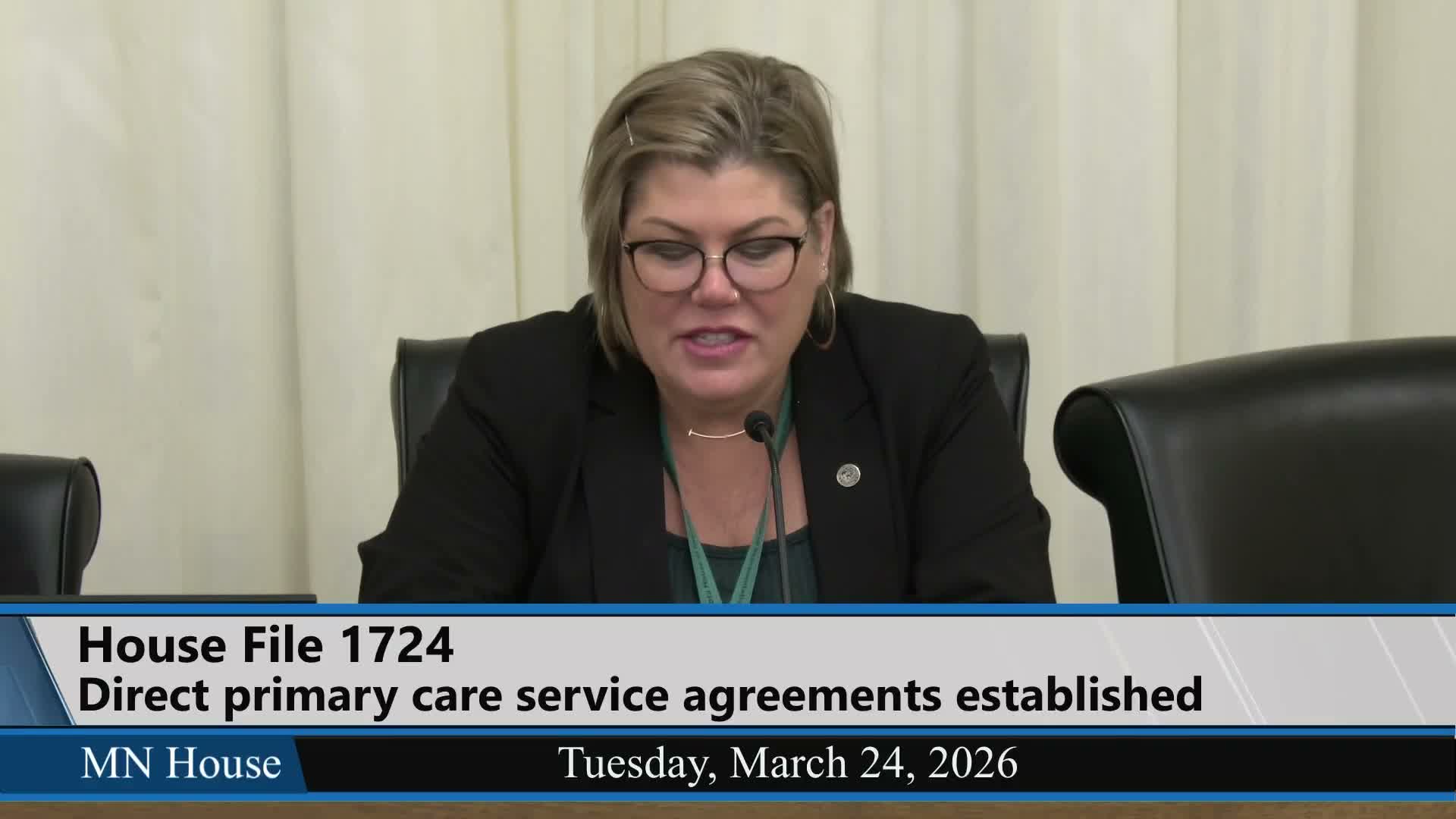
Representative Gilman told the committee HF1724 would protect direct primary care by clarifying in statute that DPC agreements are not insurance and by creating a safe harbor so providers are not mistakenly regulated under insurance laws.
"It creates a safe harbor so providers aren't mistakenly regulated under insurance laws," Representative Gilman said, adding the bill supports small and independent clinics and transparent, flat monthly pricing.
Testimony in support included Grama Lee and Dean Clancy of Americans for Prosperity and Dr. Nejaha Moussa of the Minnesota Academy of Family Physicians. Dr. Moussa said DPC can reduce administrative burdens, expand same-day access and allow physicians to focus on patient care. "House file 17 24 provides important clarity around direct primary care," she said, noting DPC can provide predictable monthly fees and more timely access to care.
The Department of Commerce, represented by Sam Smith, urged caution. Smith said the department is interested in innovative solutions but had "consumer and market protection concerns," including patient selection and the risk that arrangements could be represented as an alternative to comprehensive insurance. He said codifying a carve-out could limit future innovation and complicate oversight.
Members questioned how DPC arrangements interact with existing insurance coverage and referrals to specialists. Dr. Moussa said most patients use DPC alongside insurance or can be referred to specialists covered by traditional plans; she estimated typical monthly membership fees range from about $50 to $150 depending on services.
Representative Gilman moved and the committee adopted the author's A1 amendment by voice vote. The committee then voted to refer HF1724 to the committee on health.
"It creates a safe harbor so providers aren't mistakenly regulated under insurance laws," Representative Gilman said, adding the bill supports small and independent clinics and transparent, flat monthly pricing.
Testimony in support included Grama Lee and Dean Clancy of Americans for Prosperity and Dr. Nejaha Moussa of the Minnesota Academy of Family Physicians. Dr. Moussa said DPC can reduce administrative burdens, expand same-day access and allow physicians to focus on patient care. "House file 17 24 provides important clarity around direct primary care," she said, noting DPC can provide predictable monthly fees and more timely access to care.
The Department of Commerce, represented by Sam Smith, urged caution. Smith said the department is interested in innovative solutions but had "consumer and market protection concerns," including patient selection and the risk that arrangements could be represented as an alternative to comprehensive insurance. He said codifying a carve-out could limit future innovation and complicate oversight.
Members questioned how DPC arrangements interact with existing insurance coverage and referrals to specialists. Dr. Moussa said most patients use DPC alongside insurance or can be referred to specialists covered by traditional plans; she estimated typical monthly membership fees range from about $50 to $150 depending on services.
Representative Gilman moved and the committee adopted the author's A1 amendment by voice vote. The committee then voted to refer HF1724 to the committee on health.
Don't Miss a Word: See the Full Meeting!
Go beyond summaries. Unlock every video, transcript, and key insight with a Founder Membership.
✓
Get instant access to full meeting videos
✓
Search and clip any phrase from complete transcripts
✓
Receive AI-powered summaries & custom alerts
✓
Enjoy lifetime, unrestricted access to government data
30-day money-back guarantee
