House approves endorsement pathway allowing some military chaplains to seek counselor licensure after sharp floor debate
March 09, 2026 | Legislative, Idaho
This article was created by AI summarizing key points discussed. AI makes mistakes, so for full details and context, please refer to the video of the full meeting. Please report any errors so we can fix them. Report an error »
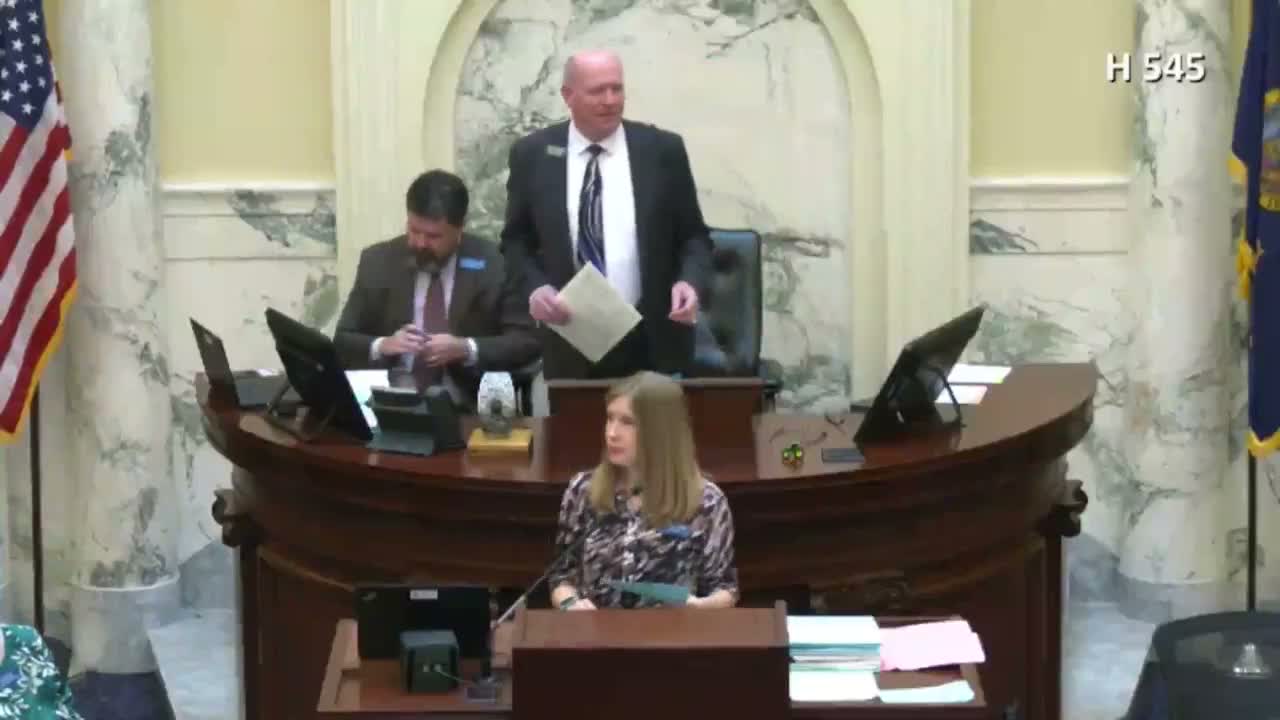
The Idaho House on March 9 narrowly approved a measure to create a pathway for military chaplains (and certain veterans or spouses) to obtain counseling licensure by endorsement, setting off a lengthy floor debate about training equivalency and public-safety safeguards.
Sponsor testimony explained the bill’s intent: to recognize training that military chaplains receive and to create a process by which a licensing authority can grant licensure by endorsement to a chaplain, a veteran, or a spouse who meets defined criteria. The sponsor distributed a chart comparing military training, clinical pastoral education credits and civilian education requirements and emphasized that chaplains receive significant practical experience in deployment settings.
Opponents questioned whether clinical pastoral education (CPE) and the military’s training produce the same diagnostic and clinical competence as an accredited master’s program in clinical mental health counseling. One member argued that clinical pastoral education is “interfaith professional education for ministry” and that it does not provide the same training to diagnose conditions such as bipolar disorder or borderline personality disorder. That member urged rejection or creation of a separate licensure category rather than placing chaplains in the same licensing category as licensed clinical professional counselors.
Sponsor response: The sponsor said the military’s deployment experience can exceed standard supervised hours and contended that allowing a pathway would expand access to counseling in underserved areas. On insurance and billing, the sponsor said that if chaplains obtain licensure, insurance companies would accept claims under normal rules.
Vote and outcome: The clerk recorded the roll-call result reported in the transcript as 52 yes, 17 no, and 1 abstain/excused; the bill was declared passed and will be transmitted to the Senate for the next step.
Why this matters: The measure creates a state-level pathway that could expand the pool of providers who can bill insurance and serve veterans and communities with counselor shortages. Opponents argued the measure risks lowering diagnostic standards and urged careful statutory safeguards or a distinct licensing category.
Sponsor testimony explained the bill’s intent: to recognize training that military chaplains receive and to create a process by which a licensing authority can grant licensure by endorsement to a chaplain, a veteran, or a spouse who meets defined criteria. The sponsor distributed a chart comparing military training, clinical pastoral education credits and civilian education requirements and emphasized that chaplains receive significant practical experience in deployment settings.
Opponents questioned whether clinical pastoral education (CPE) and the military’s training produce the same diagnostic and clinical competence as an accredited master’s program in clinical mental health counseling. One member argued that clinical pastoral education is “interfaith professional education for ministry” and that it does not provide the same training to diagnose conditions such as bipolar disorder or borderline personality disorder. That member urged rejection or creation of a separate licensure category rather than placing chaplains in the same licensing category as licensed clinical professional counselors.
Sponsor response: The sponsor said the military’s deployment experience can exceed standard supervised hours and contended that allowing a pathway would expand access to counseling in underserved areas. On insurance and billing, the sponsor said that if chaplains obtain licensure, insurance companies would accept claims under normal rules.
Vote and outcome: The clerk recorded the roll-call result reported in the transcript as 52 yes, 17 no, and 1 abstain/excused; the bill was declared passed and will be transmitted to the Senate for the next step.
Why this matters: The measure creates a state-level pathway that could expand the pool of providers who can bill insurance and serve veterans and communities with counselor shortages. Opponents argued the measure risks lowering diagnostic standards and urged careful statutory safeguards or a distinct licensing category.
View the Full Meeting & All Its Details
This article offers just a summary. Unlock complete video, transcripts, and insights as a Founder Member.
✓
Watch full, unedited meeting videos
✓
Search every word spoken in unlimited transcripts
✓
AI summaries & real-time alerts (all government levels)
✓
Permanent access to expanding government content
30-day money-back guarantee
