Respiratory Care Board defends move toward bachelor'level entry as stakeholders warn of workforce strain
March 24, 2026 | California State Senate, Senate, Legislative, California
This article was created by AI summarizing key points discussed. AI makes mistakes, so for full details and context, please refer to the video of the full meeting. Please report any errors so we can fix them. Report an error »
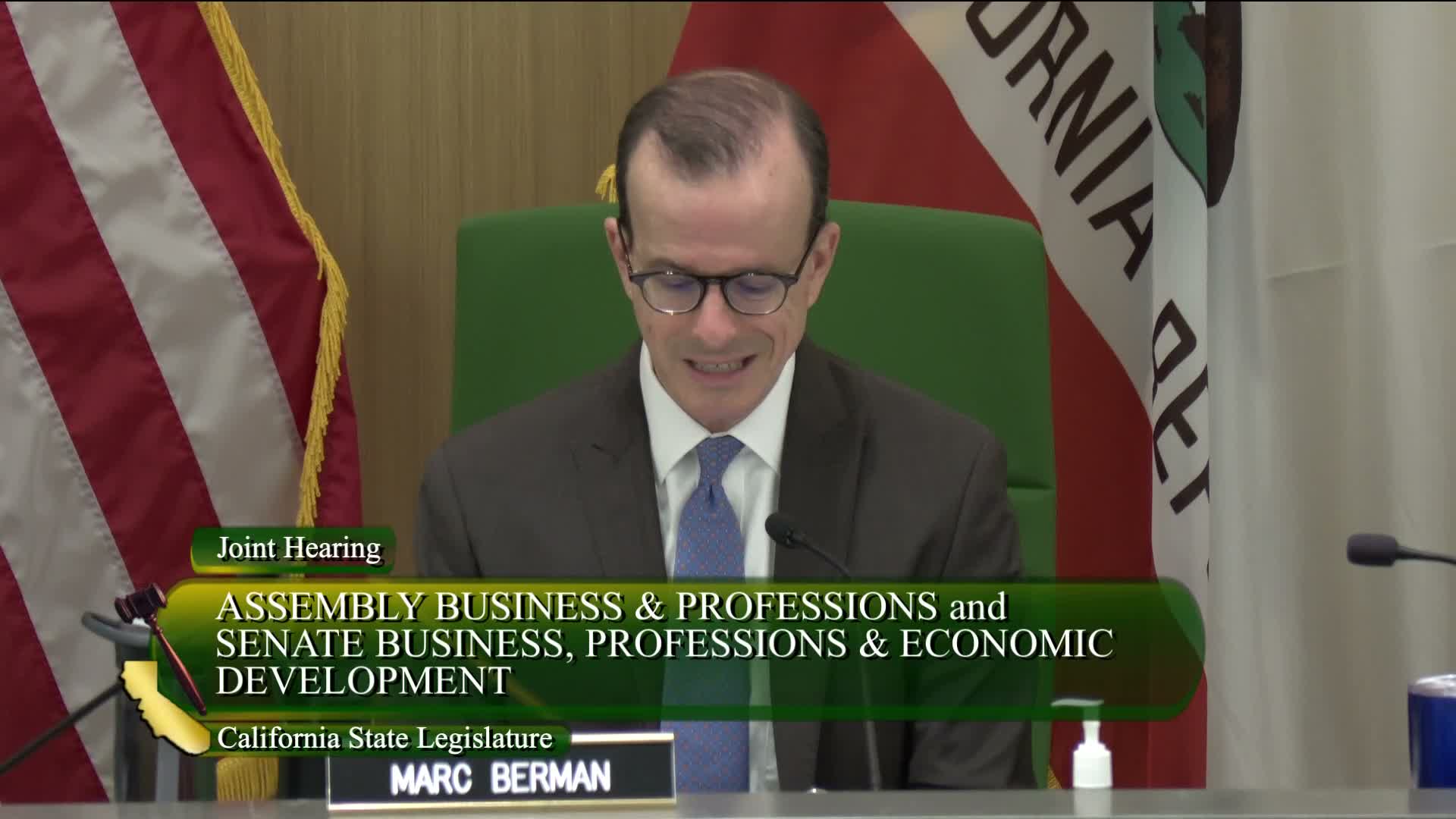
Ricardo Guzman, president of the California Respiratory Care Board, told the Assembly and Senate committees the board's mission remains public protection through licensing, enforcement, and education. Guzman highlighted a new digital licensing system, a continuing-education framework and work to address unlawful practice by licensed vocational nurses (LVNs).
The board's vice president, Ray Hernandez, said the board has been studying whether to increase the minimum educational requirement to a baccalaureate degree since 2015 and began focused public meetings in 2021. He described the initiative as stakeholder-driven and comparable to similar debates in nursing and physical therapy.
Committee members pressed the board about the potential impact of a bachelor'level requirement on rural access. Assemblymember Addis and other legislators asked whether raising the entry standard would shrink the workforce in underserved areas. Hernandez said the board has built transition plans and is working with community colleges to create baccalaureate pathways; executive officer Christine Molina added that some programs already translate much associate coursework toward a bachelor'level and the incremental time to finish a bachelor'degree might be six to 12 months for many students.
Frontline respiratory therapists and employers warned the committee that a blanket bachelor'degree requirement could increase barriers and deepen shortages. "Requiring a bachelor's degree for all new respiratory therapists will increase barriers to our profession and barriers to our care for our patients," said Bridget Lemaire, a registered respiratory therapist with 23 years' experience, who described already-short staffing and the effects on patient wait times.
Several congregate living health facility operators and parents urged exemptions that would allow LVNs to continue providing certain basic respiratory tasks in residential settings. Parents described reliance on LVNs for trach suctioning and ventilator assistance that enables children to attend school and live in their communities.
On fees and fund reserves, Molina said the board permanently eliminated an initial licensing fee in 2012 and now manages fees to improve processing times. She noted statutory limits that cap reserves at six months and said the board is monitoring its fund condition in light of rising personnel and enforcement costs.
No formal votes were recorded at the hearing. Board representatives said they welcome the committee's recommendations and will continue stakeholder engagement as they refine education pathways, LVN scope clarifications, and budgeting plans.
The committee did not take immediate action on the board's proposals; members said they expect follow'up conversations and additional data on geographic workforce distribution.
The board's vice president, Ray Hernandez, said the board has been studying whether to increase the minimum educational requirement to a baccalaureate degree since 2015 and began focused public meetings in 2021. He described the initiative as stakeholder-driven and comparable to similar debates in nursing and physical therapy.
Committee members pressed the board about the potential impact of a bachelor'level requirement on rural access. Assemblymember Addis and other legislators asked whether raising the entry standard would shrink the workforce in underserved areas. Hernandez said the board has built transition plans and is working with community colleges to create baccalaureate pathways; executive officer Christine Molina added that some programs already translate much associate coursework toward a bachelor'level and the incremental time to finish a bachelor'degree might be six to 12 months for many students.
Frontline respiratory therapists and employers warned the committee that a blanket bachelor'degree requirement could increase barriers and deepen shortages. "Requiring a bachelor's degree for all new respiratory therapists will increase barriers to our profession and barriers to our care for our patients," said Bridget Lemaire, a registered respiratory therapist with 23 years' experience, who described already-short staffing and the effects on patient wait times.
Several congregate living health facility operators and parents urged exemptions that would allow LVNs to continue providing certain basic respiratory tasks in residential settings. Parents described reliance on LVNs for trach suctioning and ventilator assistance that enables children to attend school and live in their communities.
On fees and fund reserves, Molina said the board permanently eliminated an initial licensing fee in 2012 and now manages fees to improve processing times. She noted statutory limits that cap reserves at six months and said the board is monitoring its fund condition in light of rising personnel and enforcement costs.
No formal votes were recorded at the hearing. Board representatives said they welcome the committee's recommendations and will continue stakeholder engagement as they refine education pathways, LVN scope clarifications, and budgeting plans.
The committee did not take immediate action on the board's proposals; members said they expect follow'up conversations and additional data on geographic workforce distribution.
View the Full Meeting & All Its Details
This article offers just a summary. Unlock complete video, transcripts, and insights as a Founder Member.
✓
Watch full, unedited meeting videos
✓
Search every word spoken in unlimited transcripts
✓
AI summaries & real-time alerts (all government levels)
✓
Permanent access to expanding government content
30-day money-back guarantee
