House approves memorial urging Congress to address unfunded school costs tied to immigration ruling
March 19, 2026 | Legislative, Idaho
This article was created by AI summarizing key points discussed. AI makes mistakes, so for full details and context, please refer to the video of the full meeting. Please report any errors so we can fix them. Report an error »
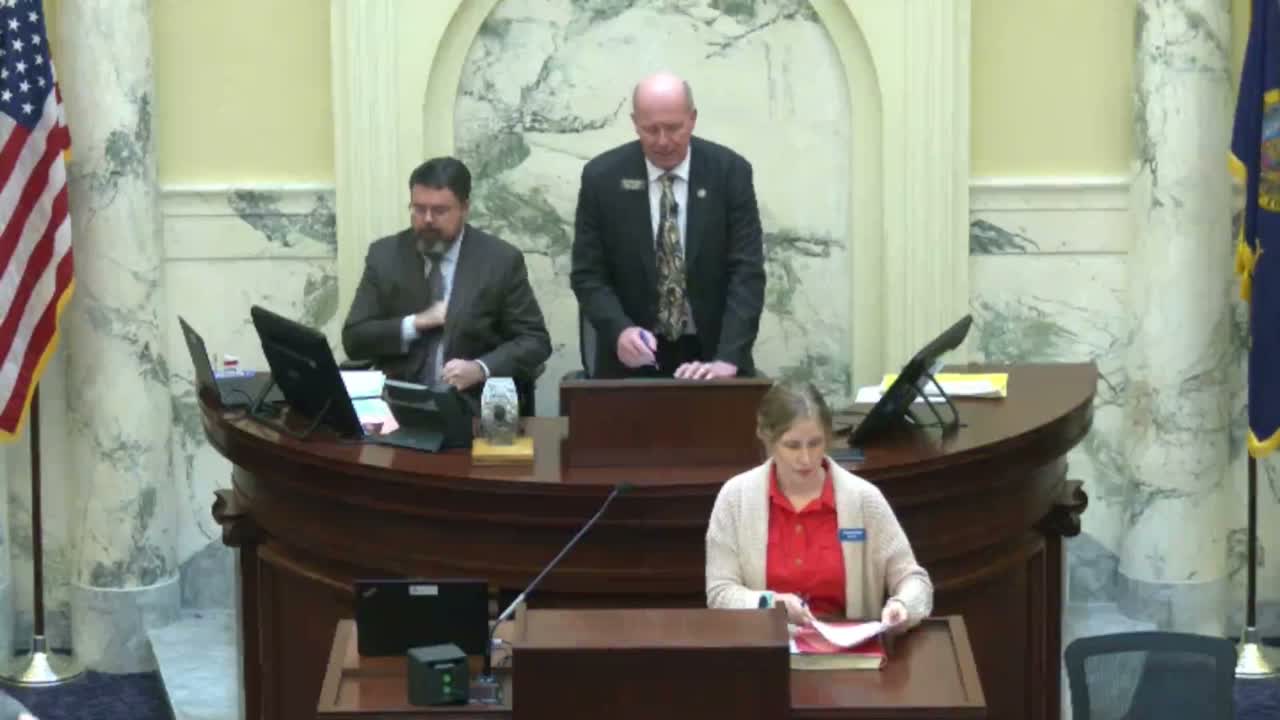
The Idaho House on March 19 adopted House Joint Memorial 20, a nonbinding statement asking Congress to acknowledge what the sponsor described as an “unfunded mandate” created by the U.S. Supreme Court’s 1982 decision in Plyler v. Doe.
The memorial’s sponsor, a House member presenting the measure on the floor, said the 1982 ruling prevents public schools from denying enrollment based on immigration status and that the resulting fiscal burden falls to states. On the House floor the sponsor offered numerical estimates, saying the student population affected may be "somewhere between 2,000 and 2,500 students" and that annual costs—after accounting for Title I and Title III funding—could range in the tens of millions. The sponsor summarized the 10-year fiscal impact as roughly $730 million in the aggregate under the assumptions stated on the floor.
Why it matters: supporters said the memorial is intended to prompt federal attention and potential reimbursement or policy change rather than impose state-level mandates. The sponsor told colleagues the memorial merely asks Congress to recognize the fiscal strain and to consider legislative remedies.
Opponents or cautioning members did not block the measure on the floor, and the House carried the memorial forward: the measure was referred to the Senate for consideration after passage.
What happened next: House Joint Memorial 20 was referred to the Senate as recorded on the House calendar.
Details and limits: the figures recited by the sponsor were presented as rough estimates on the House floor; the memorial does not enact state policy or change funding streams. The sponsor cited the equal-protection basis of Plyler v. Doe and framed the request as seeking federal assistance for state fiscal burdens resulting from that decision.
The House continued its session and later considered other memorials and a long roster of bills that the speaker scheduled for immediate consideration.
The memorial’s sponsor, a House member presenting the measure on the floor, said the 1982 ruling prevents public schools from denying enrollment based on immigration status and that the resulting fiscal burden falls to states. On the House floor the sponsor offered numerical estimates, saying the student population affected may be "somewhere between 2,000 and 2,500 students" and that annual costs—after accounting for Title I and Title III funding—could range in the tens of millions. The sponsor summarized the 10-year fiscal impact as roughly $730 million in the aggregate under the assumptions stated on the floor.
Why it matters: supporters said the memorial is intended to prompt federal attention and potential reimbursement or policy change rather than impose state-level mandates. The sponsor told colleagues the memorial merely asks Congress to recognize the fiscal strain and to consider legislative remedies.
Opponents or cautioning members did not block the measure on the floor, and the House carried the memorial forward: the measure was referred to the Senate for consideration after passage.
What happened next: House Joint Memorial 20 was referred to the Senate as recorded on the House calendar.
Details and limits: the figures recited by the sponsor were presented as rough estimates on the House floor; the memorial does not enact state policy or change funding streams. The sponsor cited the equal-protection basis of Plyler v. Doe and framed the request as seeking federal assistance for state fiscal burdens resulting from that decision.
The House continued its session and later considered other memorials and a long roster of bills that the speaker scheduled for immediate consideration.
Don't Miss a Word: See the Full Meeting!
Go beyond summaries. Unlock every video, transcript, and key insight with a Founder Membership.
✓
Get instant access to full meeting videos
✓
Search and clip any phrase from complete transcripts
✓
Receive AI-powered summaries & custom alerts
✓
Enjoy lifetime, unrestricted access to government data
30-day money-back guarantee
