Saint Paul Council delays PHA exemption to 60‑day pre‑eviction notice ordinance after funding concerns
March 18, 2026 | St. Paul City, Ramsey County, Minnesota
This article was created by AI summarizing key points discussed. AI makes mistakes, so for full details and context, please refer to the video of the full meeting. Please report any errors so we can fix them. Report an error »
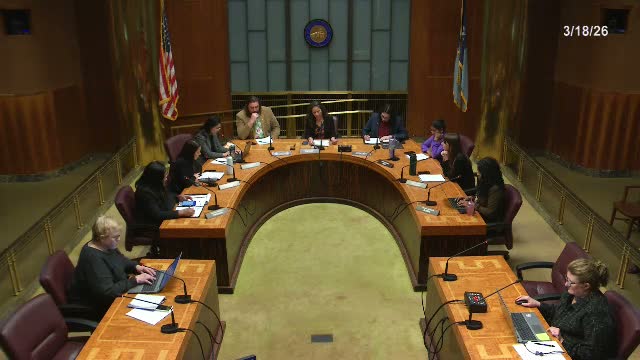
The Saint Paul City Council on March 18 debated whether to exempt the Saint Paul Public Housing Agency from a temporary ordinance extending the pre‑eviction notice period from 30 days to 60 days and voted to lay the exemption over for one week to collect more financial data.
The measure under consideration (Ordinance 26‑18) would temporarily lengthen the notice period for nonpayment of rent citywide. Council members discussed an amendment that would exempt residential units owned or managed by the PHA, which maintains more than 4,200 units citywide.
Karina Serrano, housing choice programs director for the St. Paul Public Housing Agency, told the council the PHA already uses a 30‑day pre‑eviction notice and that extending the period to 60 days would likely increase accounts receivable carried on the agency’s ledger. ‘‘When we implemented 30 days in 2021, our tenant accounts receivable went from roughly $90,000 a month to almost $400,000 a month,’’ Serrano said, adding that higher receivables can affect eligibility for HUD capital funding and delay needed repairs.
Council members pressed Serrano for specifics on eviction filings, execution rates and the size of outstanding balances. One member cited fiscal‑year figures showing filings and evictions rose in recent years (for example, 271 filings and 48 evictions in one cited year, 393 filings and 66 evictions in the next), and another asked whether mutual aid was masking unpaid balances.
Serrano explained PHA procedures for income verification and hardship adjustments, saying rents are recalculated when households report income changes and that some program data (such as capital‑fund amounts and exact thresholds that trigger HUD penalties) would require follow‑up from the PHA finance team. She said PHA staff could provide more precise figures on request.
Council members weighed tradeoffs: supporters of the 60‑day extension said it could reduce evictions and give tenants time to access rental assistance, while critics cautioned that exempting the PHA would carve out thousands of units from the ordinance and could set precedents for future exemptions. Members also noted differences with Minneapolis, where the Minneapolis Public Housing Authority did not seek a similar exemption.
Given outstanding questions about how increased notice periods would affect PHA finances and federal funding eligibility, the council president moved—and the council approved by voice vote—a one‑week layover to permit the PHA to supply follow‑up data, including ledger balances, potential impacts on capital funds and demographic breakdowns of eviction filings. The item was laid over to March 25.
What happens next: The PHA will be asked to provide the council with the requested fiscal figures and demographic data before the council reconvenes consideration of the amendment. The underlying ordinance extending the pre‑eviction notice remains on the council calendar.
The measure under consideration (Ordinance 26‑18) would temporarily lengthen the notice period for nonpayment of rent citywide. Council members discussed an amendment that would exempt residential units owned or managed by the PHA, which maintains more than 4,200 units citywide.
Karina Serrano, housing choice programs director for the St. Paul Public Housing Agency, told the council the PHA already uses a 30‑day pre‑eviction notice and that extending the period to 60 days would likely increase accounts receivable carried on the agency’s ledger. ‘‘When we implemented 30 days in 2021, our tenant accounts receivable went from roughly $90,000 a month to almost $400,000 a month,’’ Serrano said, adding that higher receivables can affect eligibility for HUD capital funding and delay needed repairs.
Council members pressed Serrano for specifics on eviction filings, execution rates and the size of outstanding balances. One member cited fiscal‑year figures showing filings and evictions rose in recent years (for example, 271 filings and 48 evictions in one cited year, 393 filings and 66 evictions in the next), and another asked whether mutual aid was masking unpaid balances.
Serrano explained PHA procedures for income verification and hardship adjustments, saying rents are recalculated when households report income changes and that some program data (such as capital‑fund amounts and exact thresholds that trigger HUD penalties) would require follow‑up from the PHA finance team. She said PHA staff could provide more precise figures on request.
Council members weighed tradeoffs: supporters of the 60‑day extension said it could reduce evictions and give tenants time to access rental assistance, while critics cautioned that exempting the PHA would carve out thousands of units from the ordinance and could set precedents for future exemptions. Members also noted differences with Minneapolis, where the Minneapolis Public Housing Authority did not seek a similar exemption.
Given outstanding questions about how increased notice periods would affect PHA finances and federal funding eligibility, the council president moved—and the council approved by voice vote—a one‑week layover to permit the PHA to supply follow‑up data, including ledger balances, potential impacts on capital funds and demographic breakdowns of eviction filings. The item was laid over to March 25.
What happens next: The PHA will be asked to provide the council with the requested fiscal figures and demographic data before the council reconvenes consideration of the amendment. The underlying ordinance extending the pre‑eviction notice remains on the council calendar.
View the Full Meeting & All Its Details
This article offers just a summary. Unlock complete video, transcripts, and insights as a Founder Member.
✓
Watch full, unedited meeting videos
✓
Search every word spoken in unlimited transcripts
✓
AI summaries & real-time alerts (all government levels)
✓
Permanent access to expanding government content
30-day money-back guarantee
