Respiratory Care Board Defends Possible Shift to Bachelor's Degree as Stakeholders Warn of Workforce Strain
March 24, 2026 | California State Assembly, House, Legislative, California
This article was created by AI summarizing key points discussed. AI makes mistakes, so for full details and context, please refer to the video of the full meeting. Please report any errors so we can fix them. Report an error »
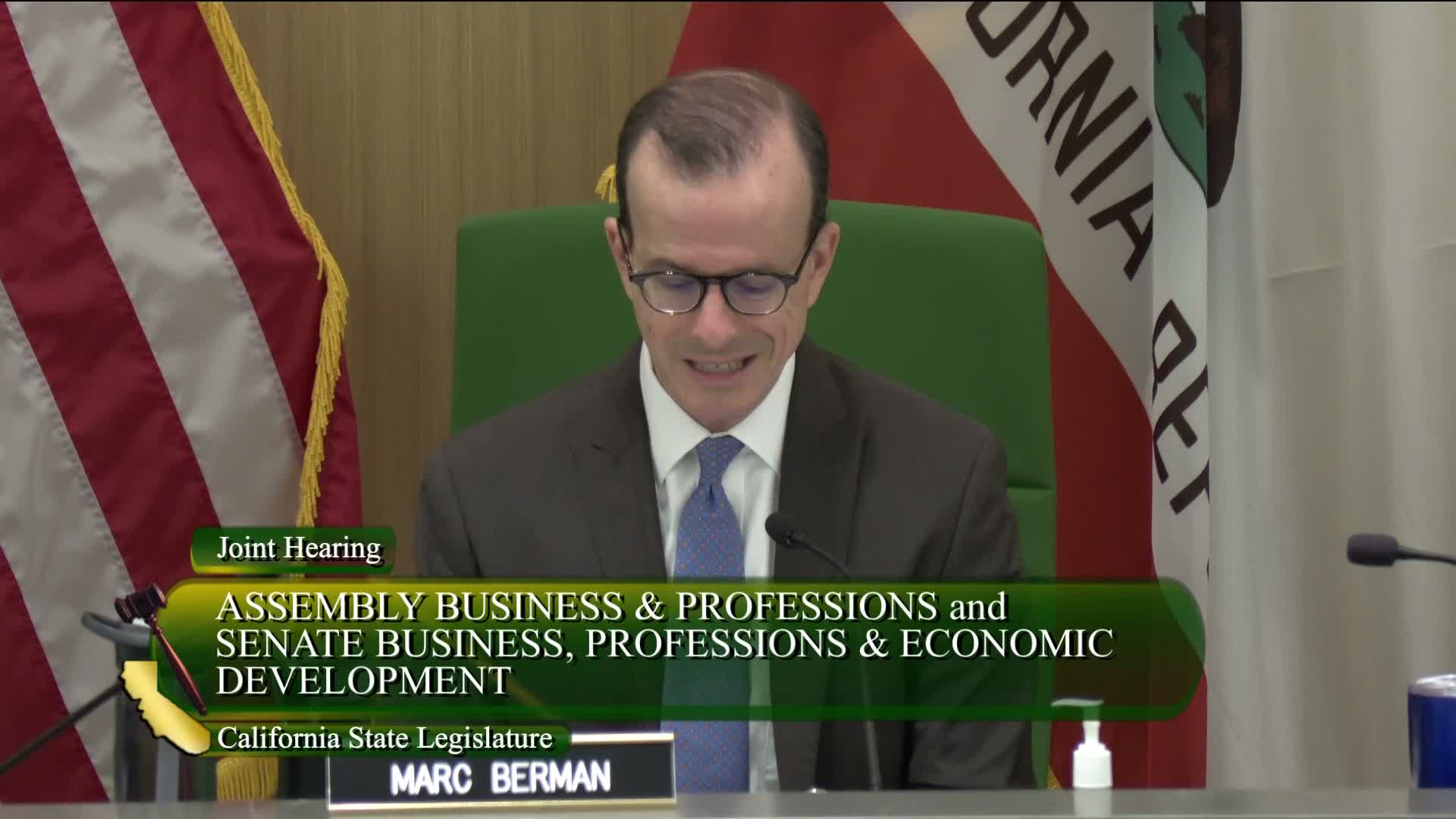
Ricardo Guzman, president of the Respiratory Care Board, told a joint Assembly–Senate sunset review that the board has been studying whether to raise the minimum education for new respiratory care licensees to a baccalaureate degree and is focused on modernizing licensing and strengthening enforcement.
"The board's mission is to protect and serve consumers by licensing qualified respiratory care practitioners," Guzman said, describing recent work to digitize applications and clarify scope-of-practice rules.
Board vice president Ray Hernandez outlined the board’s multi‑year review, which began after national organizations raised a vision for moving toward a bachelor’s degree. Hernandez said community colleges and the board have been working on pathways and noted that, in many programs, transitioning from an associate to a bachelor’s could add roughly six to 12 months of coursework rather than years in practice. He added that higher formal education could strengthen communication and assessment skills and — by elevating the profession’s classification — open the door to stronger reimbursement opportunities.
"If we can get to a bachelor's degree, then there is the opportunity to go to CMS and advocate to a greater degree to get reimbursed directly," Hernandez said, framing reimbursement as a lever to improve access in underserved areas.
Committee members pressed the board on whether the proposed shift would exacerbate shortages in rural and low‑income communities. The board acknowledged the risk and said it is pursuing streamlined academic pathways, working with community colleges, and developing timelines intended to minimize workforce disruption.
Frontline practitioners and providers urged caution. "Requiring a bachelor's degree for all new respiratory therapists will increase barriers to our profession and barriers to our care for our patients," registered respiratory therapist Bridget Lemaire told the committee, saying that most of her training has been on the job and that the policy could reduce the number of graduates entering the field and increase debt burdens.
Operators of congregate living health facilities (CLIFs) asked for broader exemptions to allow licensed vocational nurses to continue performing basic respiratory tasks in their settings. Several speakers credited LVNs with sustaining care in rural and long‑term care locations and said removing that pathway would reduce community access, disrupt schooling for children who rely on in‑home nursing and potentially force higher‑acuity patients back into institutional settings.
Stakeholders also raised a related development: an advanced practice respiratory therapist (APRT) classification that supporters say would create a heart‑and‑lung specialist. The California Society for Respiratory Care and some physician groups described the APRT as a promising way to fill gaps; the California Medical Association said it is monitoring the proposal and cautioned that national adoption is still limited.
The board also described a technical fee change: it has not charged an initial licensing fee since 2012 and is seeking permanent elimination of that fee while ensuring fiscal solvency within statutory reserve limits.
Why it matters: The board’s decisions on education and scope affect workforce supply, rural access, and how respiratory services are reimbursed and delivered across care settings. Lawmakers asked the board to provide disaggregated data on geographic shortages and to prioritize transition strategies that preserve access while raising standards.
Next steps: No formal vote occurred; the presentation concluded with committee members requesting follow‑up data on geographic workforce distribution, the board’s timeline for educational transitions, and continued engagement with stakeholders.
"The board's mission is to protect and serve consumers by licensing qualified respiratory care practitioners," Guzman said, describing recent work to digitize applications and clarify scope-of-practice rules.
Board vice president Ray Hernandez outlined the board’s multi‑year review, which began after national organizations raised a vision for moving toward a bachelor’s degree. Hernandez said community colleges and the board have been working on pathways and noted that, in many programs, transitioning from an associate to a bachelor’s could add roughly six to 12 months of coursework rather than years in practice. He added that higher formal education could strengthen communication and assessment skills and — by elevating the profession’s classification — open the door to stronger reimbursement opportunities.
"If we can get to a bachelor's degree, then there is the opportunity to go to CMS and advocate to a greater degree to get reimbursed directly," Hernandez said, framing reimbursement as a lever to improve access in underserved areas.
Committee members pressed the board on whether the proposed shift would exacerbate shortages in rural and low‑income communities. The board acknowledged the risk and said it is pursuing streamlined academic pathways, working with community colleges, and developing timelines intended to minimize workforce disruption.
Frontline practitioners and providers urged caution. "Requiring a bachelor's degree for all new respiratory therapists will increase barriers to our profession and barriers to our care for our patients," registered respiratory therapist Bridget Lemaire told the committee, saying that most of her training has been on the job and that the policy could reduce the number of graduates entering the field and increase debt burdens.
Operators of congregate living health facilities (CLIFs) asked for broader exemptions to allow licensed vocational nurses to continue performing basic respiratory tasks in their settings. Several speakers credited LVNs with sustaining care in rural and long‑term care locations and said removing that pathway would reduce community access, disrupt schooling for children who rely on in‑home nursing and potentially force higher‑acuity patients back into institutional settings.
Stakeholders also raised a related development: an advanced practice respiratory therapist (APRT) classification that supporters say would create a heart‑and‑lung specialist. The California Society for Respiratory Care and some physician groups described the APRT as a promising way to fill gaps; the California Medical Association said it is monitoring the proposal and cautioned that national adoption is still limited.
The board also described a technical fee change: it has not charged an initial licensing fee since 2012 and is seeking permanent elimination of that fee while ensuring fiscal solvency within statutory reserve limits.
Why it matters: The board’s decisions on education and scope affect workforce supply, rural access, and how respiratory services are reimbursed and delivered across care settings. Lawmakers asked the board to provide disaggregated data on geographic shortages and to prioritize transition strategies that preserve access while raising standards.
Next steps: No formal vote occurred; the presentation concluded with committee members requesting follow‑up data on geographic workforce distribution, the board’s timeline for educational transitions, and continued engagement with stakeholders.
View the Full Meeting & All Its Details
This article offers just a summary. Unlock complete video, transcripts, and insights as a Founder Member.
✓
Watch full, unedited meeting videos
✓
Search every word spoken in unlimited transcripts
✓
AI summaries & real-time alerts (all government levels)
✓
Permanent access to expanding government content
30-day money-back guarantee
