DMV and CPUC outline expanded reporting and enforcement as AV rulemaking advances
March 24, 2026 | California State Senate, Senate, Legislative, California
This article was created by AI summarizing key points discussed. AI makes mistakes, so for full details and context, please refer to the video of the full meeting. Please report any errors so we can fix them. Report an error »
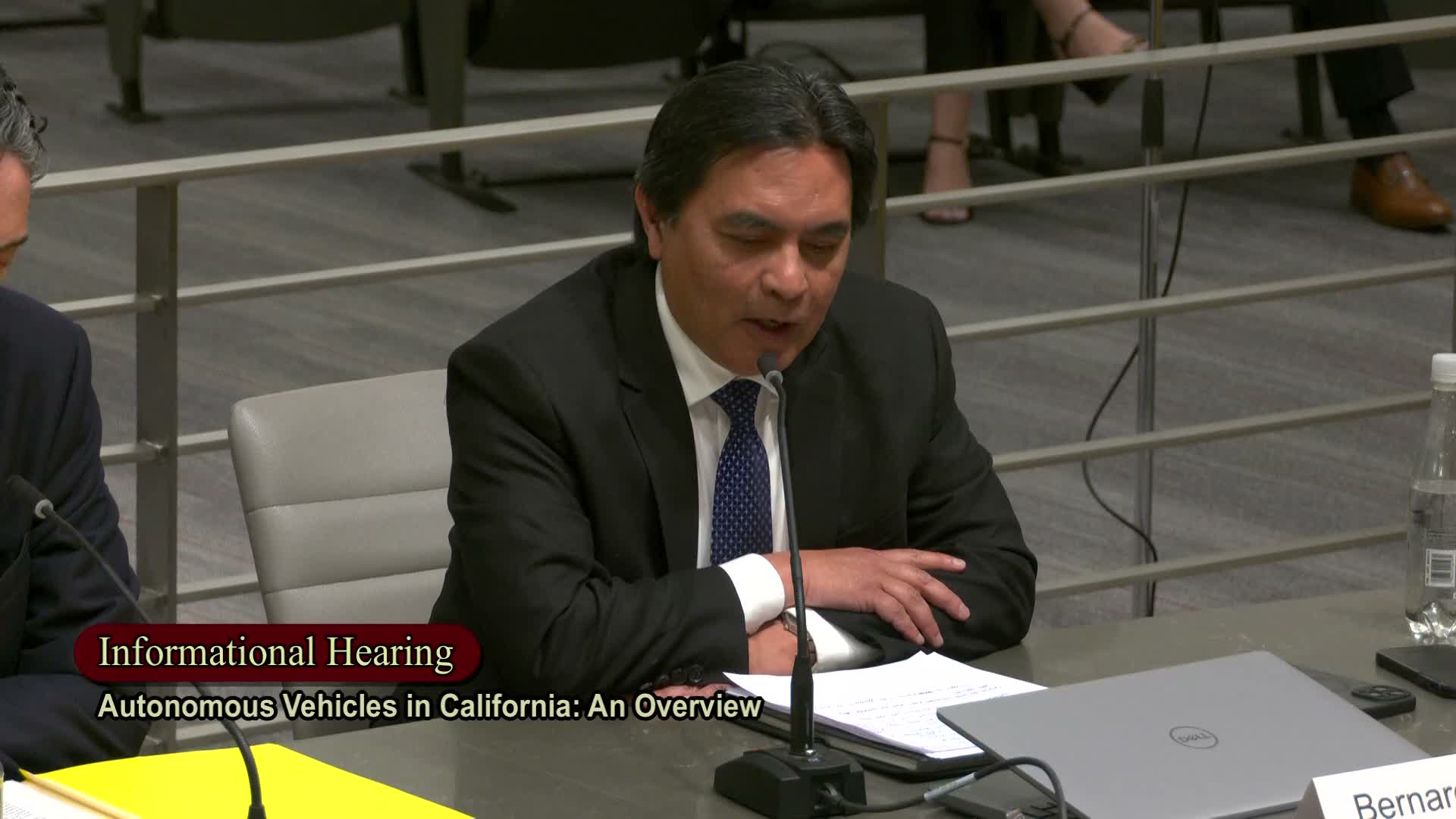
Representatives of the Department of Motor Vehicles and the California Public Utilities Commission told senators they are updating regulatory frameworks to address operational and safety issues raised in the hearing.
Bernard Soriano, deputy director at the DMV, said California began regulating AVs in 2014 and has developed a "coordinated end to end framework for vehicle operation and passenger service." Miguel Acosta, the DMV’s chief of autonomous vehicles, described the department’s pending fourth rulemaking: it would expand reporting (vehicle immobilizations, system failures, hard braking), align crash reporting with federal standards and add enforcement tools aimed at permitting and operational limits.
Acosta said the DMV currently issues three AV permit types (testing with a safety driver, driverless testing, and deployment), that some vehicles must hold $5,000,000 in insurance, and that the agency has suspended or revoked permits where warranted. "The department maintains strong oversight through ongoing incident review, data reporting, and post permitting enforcement," he said.
Tara Curtis, director of the CPUC's Consumer Protection and Enforcement Division, described the CPUC’s passenger‑service authority and its permitting framework for pilot and deployment authorization. Curtis said permit holders must provide safety plans, operational data and comply with reporting requirements; the commission can inspect, open investigations, issue citations or pursue permit suspension or revocation.
Both agencies said they have engaged first responders and local partners through workshops and that the new rules aim to close gaps on incident reporting, law‑enforcement interactions and operational oversight.
Why it matters: the agencies are positioning administrative rule changes—new reporting categories and narrower, enforceable operational expectations—as the near‑term mechanism to address many safety and responder concerns raised at the hearing. Senators said they will review agency proposals and may consider statutory changes where agencies request additional authority.
The hearing ended without votes on legislation.
Bernard Soriano, deputy director at the DMV, said California began regulating AVs in 2014 and has developed a "coordinated end to end framework for vehicle operation and passenger service." Miguel Acosta, the DMV’s chief of autonomous vehicles, described the department’s pending fourth rulemaking: it would expand reporting (vehicle immobilizations, system failures, hard braking), align crash reporting with federal standards and add enforcement tools aimed at permitting and operational limits.
Acosta said the DMV currently issues three AV permit types (testing with a safety driver, driverless testing, and deployment), that some vehicles must hold $5,000,000 in insurance, and that the agency has suspended or revoked permits where warranted. "The department maintains strong oversight through ongoing incident review, data reporting, and post permitting enforcement," he said.
Tara Curtis, director of the CPUC's Consumer Protection and Enforcement Division, described the CPUC’s passenger‑service authority and its permitting framework for pilot and deployment authorization. Curtis said permit holders must provide safety plans, operational data and comply with reporting requirements; the commission can inspect, open investigations, issue citations or pursue permit suspension or revocation.
Both agencies said they have engaged first responders and local partners through workshops and that the new rules aim to close gaps on incident reporting, law‑enforcement interactions and operational oversight.
Why it matters: the agencies are positioning administrative rule changes—new reporting categories and narrower, enforceable operational expectations—as the near‑term mechanism to address many safety and responder concerns raised at the hearing. Senators said they will review agency proposals and may consider statutory changes where agencies request additional authority.
The hearing ended without votes on legislation.
Don't Miss a Word: See the Full Meeting!
Go beyond summaries. Unlock every video, transcript, and key insight with a Founder Membership.
✓
Get instant access to full meeting videos
✓
Search and clip any phrase from complete transcripts
✓
Receive AI-powered summaries & custom alerts
✓
Enjoy lifetime, unrestricted access to government data
30-day money-back guarantee
