Senate approves referral asking voters to require 60% classroom spending for large districts
March 23, 2026 | 2026 Legislature Arizona, Arizona
This article was created by AI summarizing key points discussed. AI makes mistakes, so for full details and context, please refer to the video of the full meeting. Please report any errors so we can fix them. Report an error »
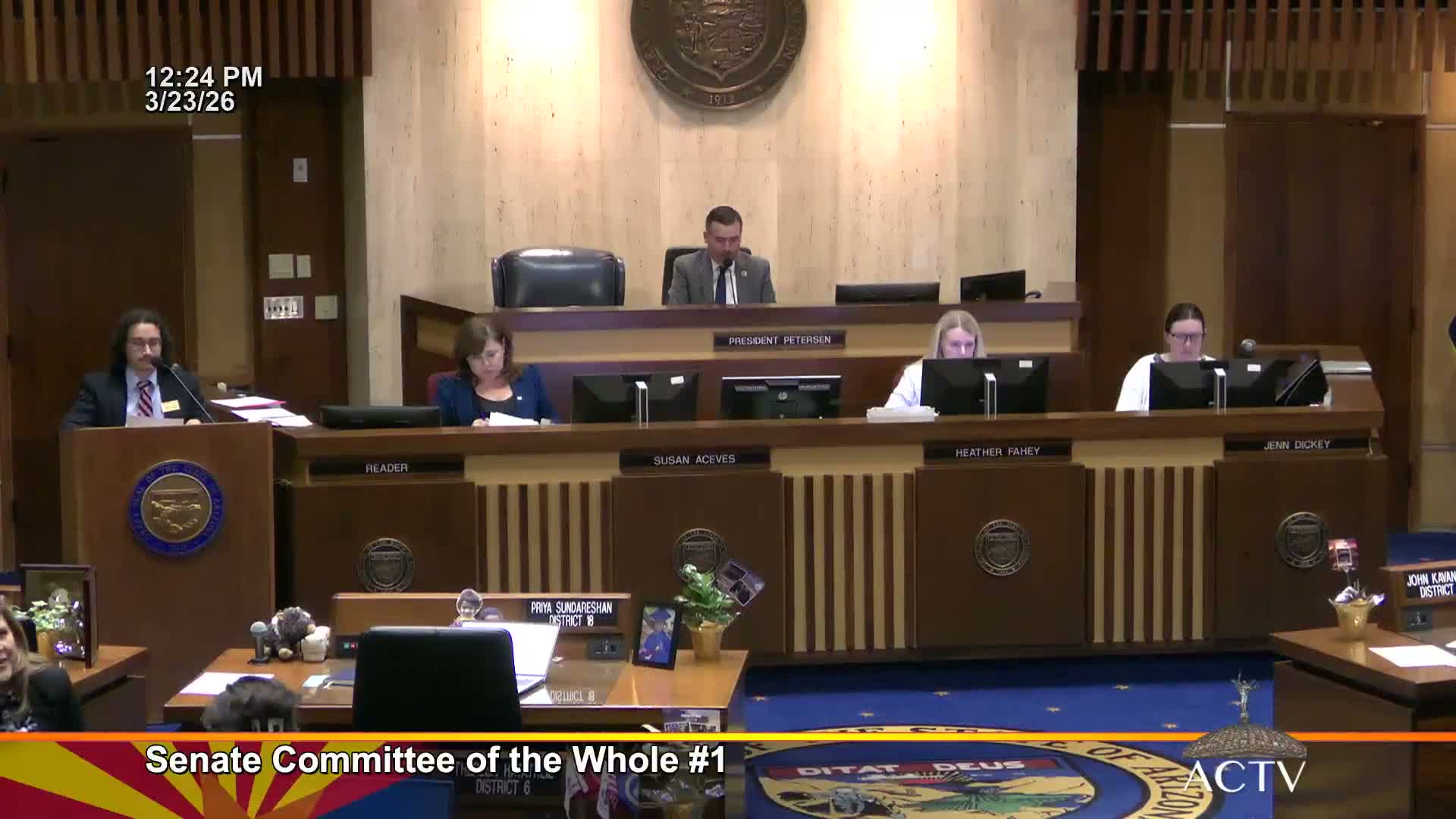
The Arizona Senate voted on March 23 to refer Senate Concurrent Resolution 10-32 to the ballot, a measure that would require qualifying school districts to spend at least 60% of operational spending on "direct instructional expenses" and phase in financial penalties for noncompliance.
Sponsor Senator Jake Hoffman said the amendment adopted on the floor was designed to be "a slightly moderated approach" that reflects stakeholder input and creates a stepped penalty and waiver system. "So 25% in year 3, 50% in year 4, 75% in year 5, and then a 100% [reduction] ultimately only if they fail to comply," Hoffman said during his floor explanation. He added the proposal also limits how many waivers the superintendent may issue and aims to make sure "the money is flowing through the classrooms."
Opponents argued the referral would improperly micromanage local decisions and could force cuts to services not counted as direct instructional expenses. "This bill would micromanage what the people want," said Senator Epstein, who warned the Auditor General's definition of direct instructional expenses could exclude nurses, transportation, facility maintenance and counseling, forcing districts to cut other student services. "You are taking money away from students with this bill," Epstein said.
Senator Miranda, explaining her vote against the referral, summarized the measure’s requirements on the floor: "This SCR 10-32 requires that if a school district has at least 7,500 students or operates in a county with a population over 500,000, the district must spend at least 60% of operational spending on direct instructional expenses as defined by the Auditor General," and she warned that the definition "will exclude many components of a district budget that are both important and costly."
Supporters framed the measure as putting the decision to voters rather than the Legislature. "This lets voters tell those districts, 'no, no, no, we want our children to have a funded classroom,'" Hoffman said, adding the argument that large administrative growth has outpaced classroom funding.
On explanations of vote, critics raised separate concerns about ESA voucher oversight and broader funding shortfalls; supporters responded that the referral is revenue-neutral and instead redistributes existing funds toward classrooms. The clerk recorded the final vote on SCR 10-32 as reported in the transcript: 16 ayes, 12 nays, and 2 not voting. The Senate instructed the secretary to record the action and transmit the referral to the House.
The referral, if approved by voters as written, would apply to districts meeting the size or county-population thresholds cited on the floor and would rely on the Auditor General’s definition of direct instructional expenses to determine compliance. Next procedural step: the Senate transmitted the referral to the House for further processing and it will remain a referral to the people rather than an enacted statutory change unless adopted by voters.
Sponsor Senator Jake Hoffman said the amendment adopted on the floor was designed to be "a slightly moderated approach" that reflects stakeholder input and creates a stepped penalty and waiver system. "So 25% in year 3, 50% in year 4, 75% in year 5, and then a 100% [reduction] ultimately only if they fail to comply," Hoffman said during his floor explanation. He added the proposal also limits how many waivers the superintendent may issue and aims to make sure "the money is flowing through the classrooms."
Opponents argued the referral would improperly micromanage local decisions and could force cuts to services not counted as direct instructional expenses. "This bill would micromanage what the people want," said Senator Epstein, who warned the Auditor General's definition of direct instructional expenses could exclude nurses, transportation, facility maintenance and counseling, forcing districts to cut other student services. "You are taking money away from students with this bill," Epstein said.
Senator Miranda, explaining her vote against the referral, summarized the measure’s requirements on the floor: "This SCR 10-32 requires that if a school district has at least 7,500 students or operates in a county with a population over 500,000, the district must spend at least 60% of operational spending on direct instructional expenses as defined by the Auditor General," and she warned that the definition "will exclude many components of a district budget that are both important and costly."
Supporters framed the measure as putting the decision to voters rather than the Legislature. "This lets voters tell those districts, 'no, no, no, we want our children to have a funded classroom,'" Hoffman said, adding the argument that large administrative growth has outpaced classroom funding.
On explanations of vote, critics raised separate concerns about ESA voucher oversight and broader funding shortfalls; supporters responded that the referral is revenue-neutral and instead redistributes existing funds toward classrooms. The clerk recorded the final vote on SCR 10-32 as reported in the transcript: 16 ayes, 12 nays, and 2 not voting. The Senate instructed the secretary to record the action and transmit the referral to the House.
The referral, if approved by voters as written, would apply to districts meeting the size or county-population thresholds cited on the floor and would rely on the Auditor General’s definition of direct instructional expenses to determine compliance. Next procedural step: the Senate transmitted the referral to the House for further processing and it will remain a referral to the people rather than an enacted statutory change unless adopted by voters.
View the Full Meeting & All Its Details
This article offers just a summary. Unlock complete video, transcripts, and insights as a Founder Member.
✓
Watch full, unedited meeting videos
✓
Search every word spoken in unlimited transcripts
✓
AI summaries & real-time alerts (all government levels)
✓
Permanent access to expanding government content
30-day money-back guarantee
