Rep. Stutz backs bill to let patriotic organizations serve visiting veterans and sell spirits at permitted events
March 23, 2026 | 2026 Legislature Alaska, Alaska
This article was created by AI summarizing key points discussed. AI makes mistakes, so for full details and context, please refer to the video of the full meeting. Please report any errors so we can fix them. Report an error »
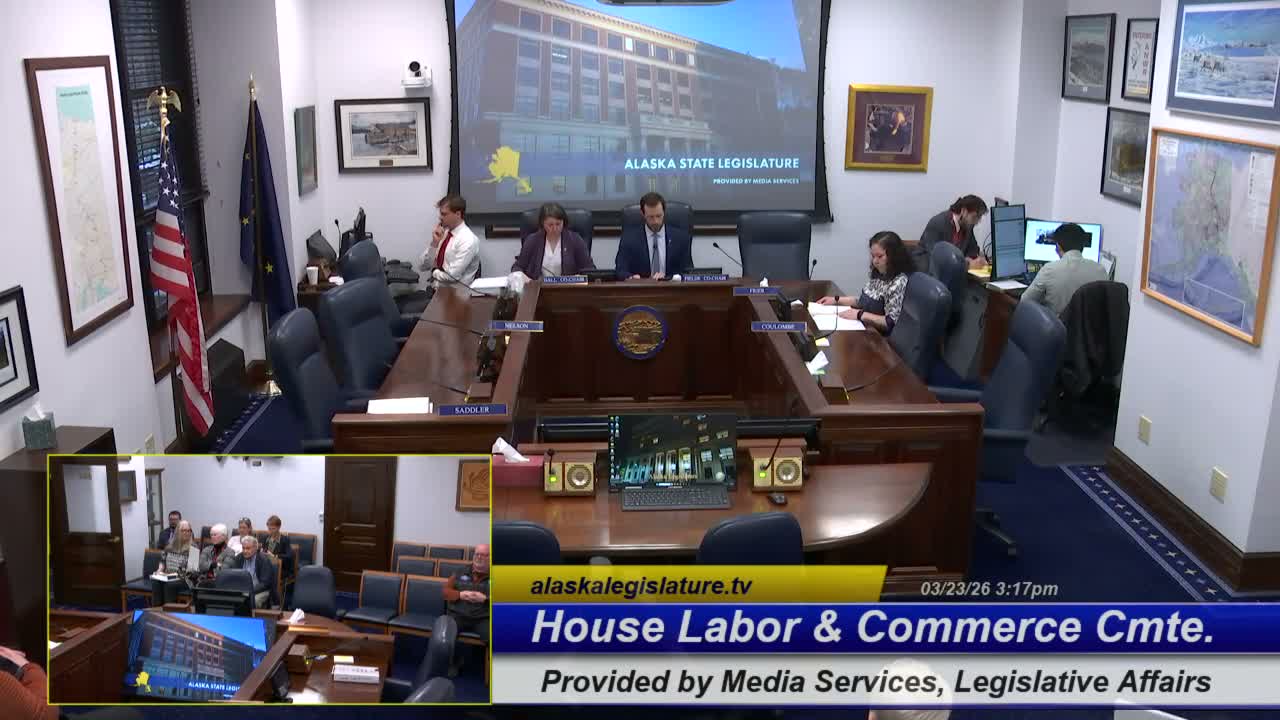
Representative Stutz, sponsor of House Bill 363, told the House Labor and Commerce Committee the measure would do two things: allow reciprocal service for members of patriotic organizations and permit spirits to be sold to nonmembers during permitted nonprofit events.
"So if you are a member of the American Legion, you could go to the VFW without being a member and be served," Stutz said, explaining the bill removes a state-level reciprocity approval requirement and lets local organizations accept a member card as proof of membership. Stutz said the change is intended to improve parity between veterans and active-duty military personnel and make community fundraising easier.
Michael Calhoun of American Legion Post 5, an invited testifier, described the practical effect in Seward: "This would allow us to treat them basically when it comes to, service here as if they were a member, without them having to be the guest of a member," he said, adding the change would let the post better welcome visiting veterans.
Justin Mills, commander of American Legion Post 1 in Anchorage, said the bill would align nonprofit-event liquor service with how other nonprofit organizations operate and help sustain programs such as emergency assistance for veterans, scholarships and youth activities.
A committee member asked about a repeal in the bill of a previous reciprocity-agreement requirement; Stutz said last year’s language inadvertently required state‑level approval for local reciprocity and that HB 363 removes that extra paperwork so local chapters can recognize one another directly.
The chair set an amendment deadline of Tuesday, March 24 at 5 p.m. and said the committee would return to the bill at a future meeting. No vote was taken.
The committee hearing record included references to Title 4 provisions and to AS 4.09.220(d)(3) as the statute that currently permits service to active-duty military members but not to nonmember veterans; these citations were discussed in explaining the bill’s targeted changes.
"So if you are a member of the American Legion, you could go to the VFW without being a member and be served," Stutz said, explaining the bill removes a state-level reciprocity approval requirement and lets local organizations accept a member card as proof of membership. Stutz said the change is intended to improve parity between veterans and active-duty military personnel and make community fundraising easier.
Michael Calhoun of American Legion Post 5, an invited testifier, described the practical effect in Seward: "This would allow us to treat them basically when it comes to, service here as if they were a member, without them having to be the guest of a member," he said, adding the change would let the post better welcome visiting veterans.
Justin Mills, commander of American Legion Post 1 in Anchorage, said the bill would align nonprofit-event liquor service with how other nonprofit organizations operate and help sustain programs such as emergency assistance for veterans, scholarships and youth activities.
A committee member asked about a repeal in the bill of a previous reciprocity-agreement requirement; Stutz said last year’s language inadvertently required state‑level approval for local reciprocity and that HB 363 removes that extra paperwork so local chapters can recognize one another directly.
The chair set an amendment deadline of Tuesday, March 24 at 5 p.m. and said the committee would return to the bill at a future meeting. No vote was taken.
The committee hearing record included references to Title 4 provisions and to AS 4.09.220(d)(3) as the statute that currently permits service to active-duty military members but not to nonmember veterans; these citations were discussed in explaining the bill’s targeted changes.
View the Full Meeting & All Its Details
This article offers just a summary. Unlock complete video, transcripts, and insights as a Founder Member.
✓
Watch full, unedited meeting videos
✓
Search every word spoken in unlimited transcripts
✓
AI summaries & real-time alerts (all government levels)
✓
Permanent access to expanding government content
30-day money-back guarantee
