Goshen council approves amended boundary for downtown DORA on first reading after lengthy debate
March 24, 2026 | Goshen City, Elkhart County, Indiana
This article was created by AI summarizing key points discussed. AI makes mistakes, so for full details and context, please refer to the video of the full meeting. Please report any errors so we can fix them. Report an error »
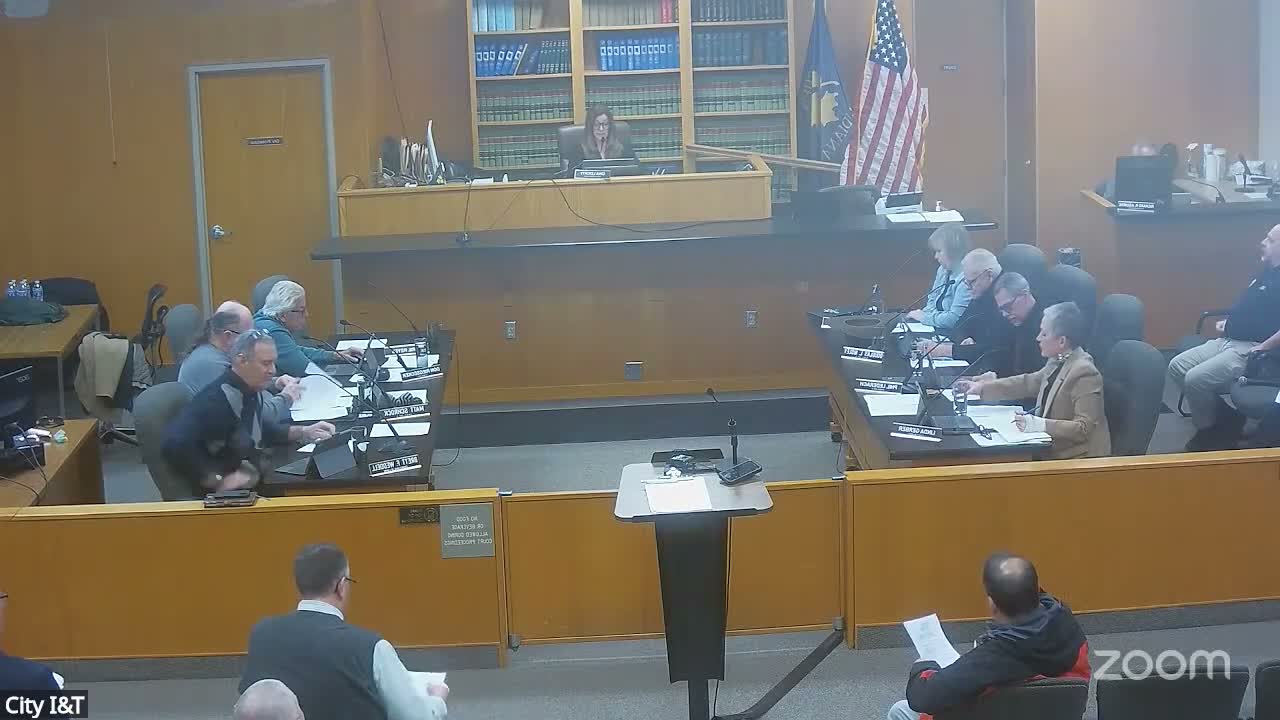
Goshen — The Goshen City Council approved an amended boundary for a proposed designated outdoor refreshment area (DORA) on first reading at its March 23 meeting, passing the amended ordinance 5–2 after extended staff presentations, council questions and public comment. Councilors decided not to proceed with a second reading the same night and will take up the ordinance again in April.
City staff presented the DORA proposal as a limited downtown footprint that would allow licensed restaurants and approved vendors to sell alcoholic beverages in branded cups or cups with stickers for consumption inside the mapped district. Michael Wambaugh, the city’s director of administrative affairs, said the plan grows out of outreach over the last three months and a downtown business survey; staff received about 55 responses and "over 90% of those respondents expressed strong support" among those who replied.
Don Schuler of the city legal department summarized the statutory framework, noting the state legislature authorized DORAs in 2023 and that the ordinance incorporates statutory limits on beverage size, hours and required signage. Schuler also explained that the city would submit a public-safety and sanitation plan to the Alcohol and Tobacco Commission (ATC) as part of the application and that only businesses licensed and approved by ATC could serve beverages that leave the premises.
Councilors pressed staff on several points: whether retail stores could participate (staff said only licensed permittees may sell alcoholic beverages and that a retail store without an ATC permit could not sell for the DORA), whether county-owned spaces such as the courthouse lawn could be included (county commissioners had been consulted and took a cautious, wait-and-see approach), and whether the city could face liability for harms caused by patrons who move between establishments. Schuler said the city’s passing of an ordinance makes the program permissive and that business liability for over-serving is fact-specific and generally attaches to the individual seller rather than the city.
Public commenters voiced both support and concern. Longtime resident Glenn Noll urged caution, citing worries about children at First Fridays and enforcement difficulties: "I would not approve this because some of them kids are pretty rowdy," he said during public comment. By contrast, Nicholas Singer and other attendees said research from other Indiana communities suggested the approach can work if rules are enforced.
The council first adopted an amendment to section 2.2 (the ordinance’s boundary language and Exhibit A) by unanimous voice vote to reflect the handout map provided that night. Later, a roll-call vote on the amended ordinance language recorded the following responses: Officer Gerber — yes; Officer Metterock — yes; Officer Nesli — no; Mr. Peel — yes; Mr. Schrock — no; (other roll-call names recorded in the transcript produced the 5–2 tally). After the 5–2 result, the council president noted there was not unanimous consent to proceed to second reading that night; the second and final reading was postponed to the April meeting.
If adopted, staff told the council the city would post clear perimeter signage, require branded stickers or cups to mark authorized drinks, submit the ordinance and required forms to the ATC and develop a safety plan in coordination with the Board of Public Works and Safety. Staff also said the city expects to supply stickers and perimeter signs, and asked participating businesses to handle cup procurement.
The next procedural step is the ordinance’s second reading in April, when councilors will revisit the amended boundaries and any edits vetted after the public comments and legal clarifications. Absent further action, staff said the ATC’s allocation and approvals would be required for participating businesses to obtain their designated permits.
City staff presented the DORA proposal as a limited downtown footprint that would allow licensed restaurants and approved vendors to sell alcoholic beverages in branded cups or cups with stickers for consumption inside the mapped district. Michael Wambaugh, the city’s director of administrative affairs, said the plan grows out of outreach over the last three months and a downtown business survey; staff received about 55 responses and "over 90% of those respondents expressed strong support" among those who replied.
Don Schuler of the city legal department summarized the statutory framework, noting the state legislature authorized DORAs in 2023 and that the ordinance incorporates statutory limits on beverage size, hours and required signage. Schuler also explained that the city would submit a public-safety and sanitation plan to the Alcohol and Tobacco Commission (ATC) as part of the application and that only businesses licensed and approved by ATC could serve beverages that leave the premises.
Councilors pressed staff on several points: whether retail stores could participate (staff said only licensed permittees may sell alcoholic beverages and that a retail store without an ATC permit could not sell for the DORA), whether county-owned spaces such as the courthouse lawn could be included (county commissioners had been consulted and took a cautious, wait-and-see approach), and whether the city could face liability for harms caused by patrons who move between establishments. Schuler said the city’s passing of an ordinance makes the program permissive and that business liability for over-serving is fact-specific and generally attaches to the individual seller rather than the city.
Public commenters voiced both support and concern. Longtime resident Glenn Noll urged caution, citing worries about children at First Fridays and enforcement difficulties: "I would not approve this because some of them kids are pretty rowdy," he said during public comment. By contrast, Nicholas Singer and other attendees said research from other Indiana communities suggested the approach can work if rules are enforced.
The council first adopted an amendment to section 2.2 (the ordinance’s boundary language and Exhibit A) by unanimous voice vote to reflect the handout map provided that night. Later, a roll-call vote on the amended ordinance language recorded the following responses: Officer Gerber — yes; Officer Metterock — yes; Officer Nesli — no; Mr. Peel — yes; Mr. Schrock — no; (other roll-call names recorded in the transcript produced the 5–2 tally). After the 5–2 result, the council president noted there was not unanimous consent to proceed to second reading that night; the second and final reading was postponed to the April meeting.
If adopted, staff told the council the city would post clear perimeter signage, require branded stickers or cups to mark authorized drinks, submit the ordinance and required forms to the ATC and develop a safety plan in coordination with the Board of Public Works and Safety. Staff also said the city expects to supply stickers and perimeter signs, and asked participating businesses to handle cup procurement.
The next procedural step is the ordinance’s second reading in April, when councilors will revisit the amended boundaries and any edits vetted after the public comments and legal clarifications. Absent further action, staff said the ATC’s allocation and approvals would be required for participating businesses to obtain their designated permits.
View the Full Meeting & All Its Details
This article offers just a summary. Unlock complete video, transcripts, and insights as a Founder Member.
✓
Watch full, unedited meeting videos
✓
Search every word spoken in unlimited transcripts
✓
AI summaries & real-time alerts (all government levels)
✓
Permanent access to expanding government content
30-day money-back guarantee
