Finance committee advances seven bills, including measure to phase out certificate-of-need for hospitals
March 19, 2026 | 2026 Legislature TN, Tennessee
This article was created by AI summarizing key points discussed. AI makes mistakes, so for full details and context, please refer to the video of the full meeting. Please report any errors so we can fix them. Report an error »
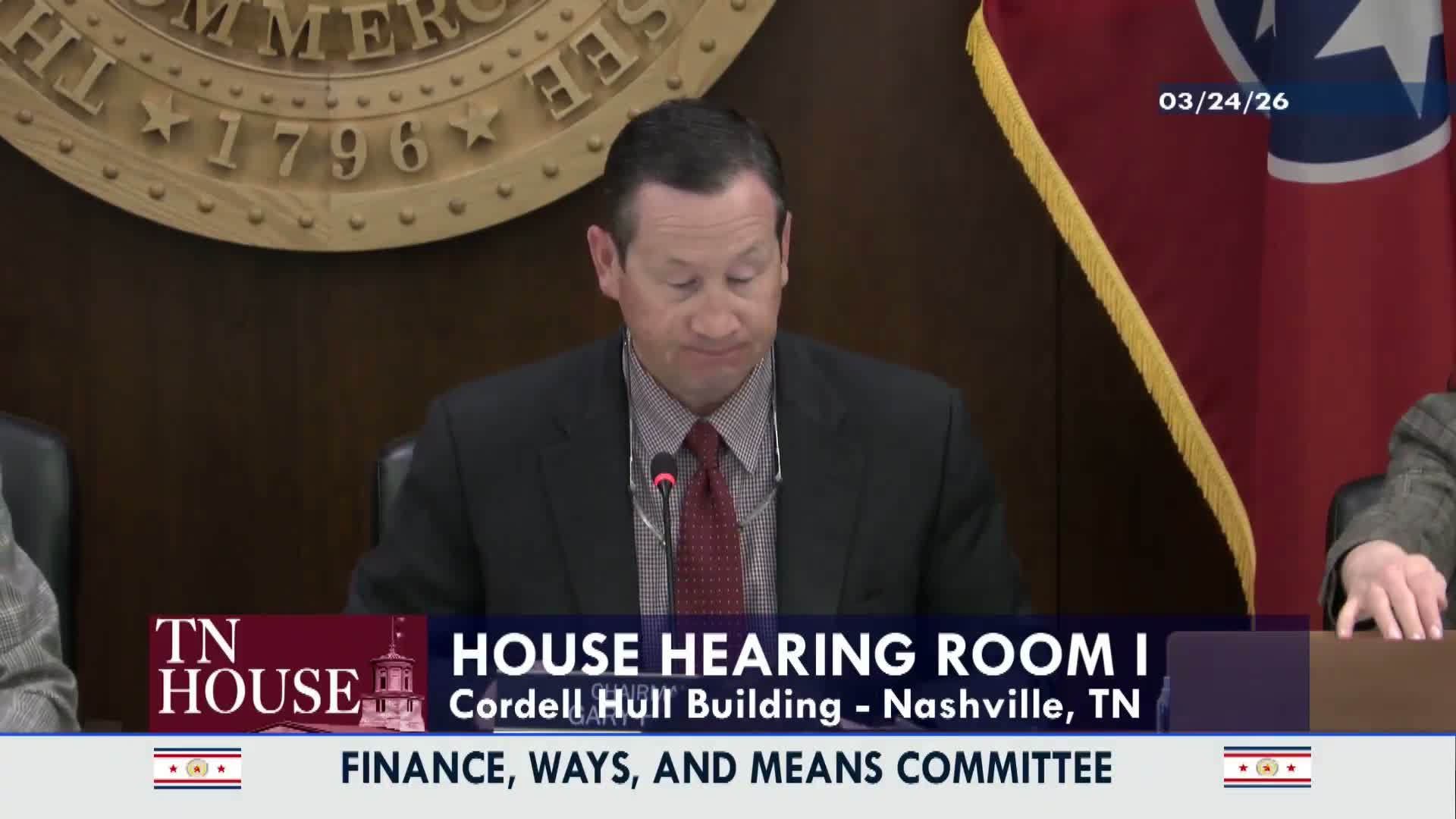
NASHVILLE — The Tennessee House Finance, Ways and Means Committee advanced seven bills to calendar and rules on March 24, moving a package that ranges from administrative updates to a contentious proposal to scale back the state's Certificate of Need process.
Representative Garrett, sponsor of House Bill 8 19, described the bill as a three-part change: removing acute-care hospitals from CON beginning in 2030; removing freestanding emergency departments and cardiac catheterization labs from CON by 2027 with some exceptions; and exempting an existing East Tennessee facility already in operation. "What this does is basically three things," Garrett said, adding that he expected the bill to "inspire more access to health care with more choice." The committee approved HB 8 19, sending it to calendar and rules by a 23–2 vote.
The strongest concerns came from members representing rural areas, who warned that changes to CON and licensure could disadvantage small hospitals. Chairman Williams said payer mix is the ‘‘big challenge’’ for rural hospitals, noting large hospital chains sometimes secure higher reimbursement ‘‘sometimes 25% more than rural hospitals,’’ which he said creates an unfair advantage for larger systems. Williams moved and withdrew an untimely amendment aimed at protecting three counties (Murray, Madison and Putnam) from CON removal; the withdrawal was accepted by the committee.
Votes at a glance
- HB 4 84 (Rep. Capley) — amendment adopted; passed to calendar and rules, vote: 26 ayes, 1 no.
- HB 18 20 (Chairman Russell) — requires post-certified law-enforcement academy graduation for constable candidates (effective Jan. 2030) and expands law-enforcement psychological evaluations; passed 27–0.
- HB 22 15 (Rep. Ashley) — allows TWRA agreements with local law enforcement to enforce prohibition on intentional feeding of bears and raises the penalty from class C to class B misdemeanor and the fine from $50 to $250; passed 27–0.
- HB 21 86 (Leader Lambert) — authorizes counties with metropolitan forms of government to reduce grocery tax and cleans up code language; passed 24–3.
- HB 16 28 (Rep. Capley) — administrative updates to the Department of Tourism and Development; passed 27–0.
- HB 8 19 (Rep. Garrett) — phases out CON for acute hospitals and other services (see above); passed 23–2.
- HB 15 35 (Rep. Shaw) — facility-naming measure for Michael Banks (wastewater treatment plant); passed 27–0.
Several bills were debated only briefly; committee members used the question-and-answer period to confirm scope and applicability. For example, Leader Lambert and Representative Love sought clarification that HB 21 86 applies to counties with a metropolitan form of government, now and in the future, and Representative Ashley confirmed that HB 22 15 originated with Gatlinburg and Pigeon Forge.
The committee recessed to hear the Department of Finance & Administration's budget amendment presentation. The committee returned and adjourned without further votes.
What happens next
All seven bills advanced to the full House calendar and rules process. HB 8 19, which drew substantive questions about rural hospital viability and payer mix, will face additional committee review and floor debate where sponsors and opponents can seek further amendments.
Representative Garrett, sponsor of House Bill 8 19, described the bill as a three-part change: removing acute-care hospitals from CON beginning in 2030; removing freestanding emergency departments and cardiac catheterization labs from CON by 2027 with some exceptions; and exempting an existing East Tennessee facility already in operation. "What this does is basically three things," Garrett said, adding that he expected the bill to "inspire more access to health care with more choice." The committee approved HB 8 19, sending it to calendar and rules by a 23–2 vote.
The strongest concerns came from members representing rural areas, who warned that changes to CON and licensure could disadvantage small hospitals. Chairman Williams said payer mix is the ‘‘big challenge’’ for rural hospitals, noting large hospital chains sometimes secure higher reimbursement ‘‘sometimes 25% more than rural hospitals,’’ which he said creates an unfair advantage for larger systems. Williams moved and withdrew an untimely amendment aimed at protecting three counties (Murray, Madison and Putnam) from CON removal; the withdrawal was accepted by the committee.
Votes at a glance
- HB 4 84 (Rep. Capley) — amendment adopted; passed to calendar and rules, vote: 26 ayes, 1 no.
- HB 18 20 (Chairman Russell) — requires post-certified law-enforcement academy graduation for constable candidates (effective Jan. 2030) and expands law-enforcement psychological evaluations; passed 27–0.
- HB 22 15 (Rep. Ashley) — allows TWRA agreements with local law enforcement to enforce prohibition on intentional feeding of bears and raises the penalty from class C to class B misdemeanor and the fine from $50 to $250; passed 27–0.
- HB 21 86 (Leader Lambert) — authorizes counties with metropolitan forms of government to reduce grocery tax and cleans up code language; passed 24–3.
- HB 16 28 (Rep. Capley) — administrative updates to the Department of Tourism and Development; passed 27–0.
- HB 8 19 (Rep. Garrett) — phases out CON for acute hospitals and other services (see above); passed 23–2.
- HB 15 35 (Rep. Shaw) — facility-naming measure for Michael Banks (wastewater treatment plant); passed 27–0.
Several bills were debated only briefly; committee members used the question-and-answer period to confirm scope and applicability. For example, Leader Lambert and Representative Love sought clarification that HB 21 86 applies to counties with a metropolitan form of government, now and in the future, and Representative Ashley confirmed that HB 22 15 originated with Gatlinburg and Pigeon Forge.
The committee recessed to hear the Department of Finance & Administration's budget amendment presentation. The committee returned and adjourned without further votes.
What happens next
All seven bills advanced to the full House calendar and rules process. HB 8 19, which drew substantive questions about rural hospital viability and payer mix, will face additional committee review and floor debate where sponsors and opponents can seek further amendments.
View the Full Meeting & All Its Details
This article offers just a summary. Unlock complete video, transcripts, and insights as a Founder Member.
✓
Watch full, unedited meeting videos
✓
Search every word spoken in unlimited transcripts
✓
AI summaries & real-time alerts (all government levels)
✓
Permanent access to expanding government content
30-day money-back guarantee
