Sponsor seeks twice‑yearly reporting of immigration status for booked arrestees; members raise access and enforcement concerns
March 18, 2026 | Legislative, Idaho
This article was created by AI summarizing key points discussed. AI makes mistakes, so for full details and context, please refer to the video of the full meeting. Please report any errors so we can fix them. Report an error »
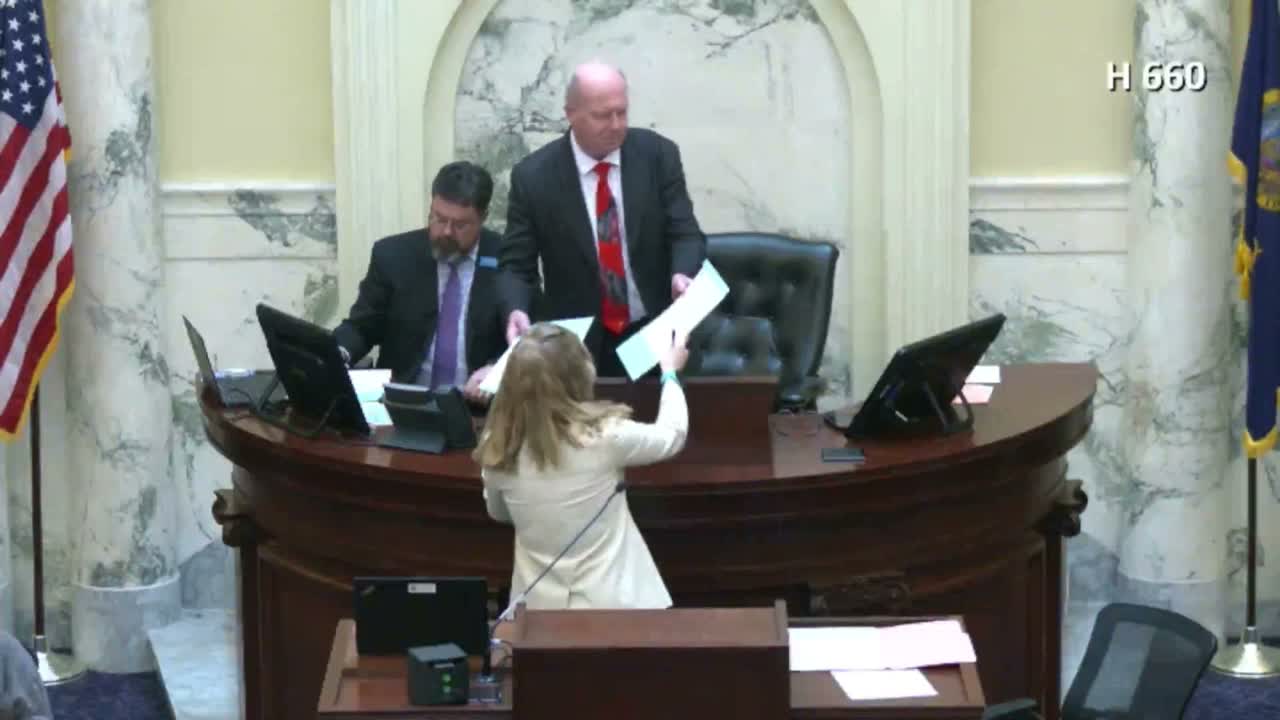
A sponsor presented legislation to require that booking facilities verify immigration status for people processed through local jails and provide aggregate reporting twice a year. The sponsor said the change would not ask officers to determine immigration status on traffic stops but would focus on arrested and booked individuals, and cited a state prison cost of "a little over $9,000,000 a year" related to people not lawfully in the U.S.
Representative (speaker 17) told the House the bill was designed to be "the lightest touch possible" and said vendors already offer optional, low‑cost "box‑check" tools that can integrate with booking systems. He said the bill could be amended in the Senate from a requirement to a collection standard ("verified" to "collect") if needed.
Members pressed the sponsor about whether local law enforcement has direct access to federal immigration databases and whether timely verification is realistic in routine operations. Representative (speaker 23) asked what the expected deadline would be for verification and whether compliance would mean verifying status prior to adjudication or only by the biannual report date. Representative (speaker 22) said the Idaho Sheriffs Association, the Fraternal Order of Police and chiefs had raised concerns about costs and operational burdens inconsistent with a zero fiscal note.
Supporters said some fingerprint and criminal information exchanges already existed and that certain automated processes could reduce friction. Opponents warned the bill could create a new workload the local agencies are not staffed for, and asked for clearer fiscal documentation.
The transcript records extensive questioning and debate about database access, reporting timelines and whether the bill would impose unfunded responsibilities on local law enforcement; the provided excerpt does not show a final recorded vote on the bill within the same excerpt.
Representative (speaker 17) told the House the bill was designed to be "the lightest touch possible" and said vendors already offer optional, low‑cost "box‑check" tools that can integrate with booking systems. He said the bill could be amended in the Senate from a requirement to a collection standard ("verified" to "collect") if needed.
Members pressed the sponsor about whether local law enforcement has direct access to federal immigration databases and whether timely verification is realistic in routine operations. Representative (speaker 23) asked what the expected deadline would be for verification and whether compliance would mean verifying status prior to adjudication or only by the biannual report date. Representative (speaker 22) said the Idaho Sheriffs Association, the Fraternal Order of Police and chiefs had raised concerns about costs and operational burdens inconsistent with a zero fiscal note.
Supporters said some fingerprint and criminal information exchanges already existed and that certain automated processes could reduce friction. Opponents warned the bill could create a new workload the local agencies are not staffed for, and asked for clearer fiscal documentation.
The transcript records extensive questioning and debate about database access, reporting timelines and whether the bill would impose unfunded responsibilities on local law enforcement; the provided excerpt does not show a final recorded vote on the bill within the same excerpt.
View the Full Meeting & All Its Details
This article offers just a summary. Unlock complete video, transcripts, and insights as a Founder Member.
✓
Watch full, unedited meeting videos
✓
Search every word spoken in unlimited transcripts
✓
AI summaries & real-time alerts (all government levels)
✓
Permanent access to expanding government content
30-day money-back guarantee
