Committee advances bill to expand church-run respite care exemptions amid safety questions
March 19, 2026 | 2026 Legislature TN, Tennessee
This article was created by AI summarizing key points discussed. AI makes mistakes, so for full details and context, please refer to the video of the full meeting. Please report any errors so we can fix them. Report an error »
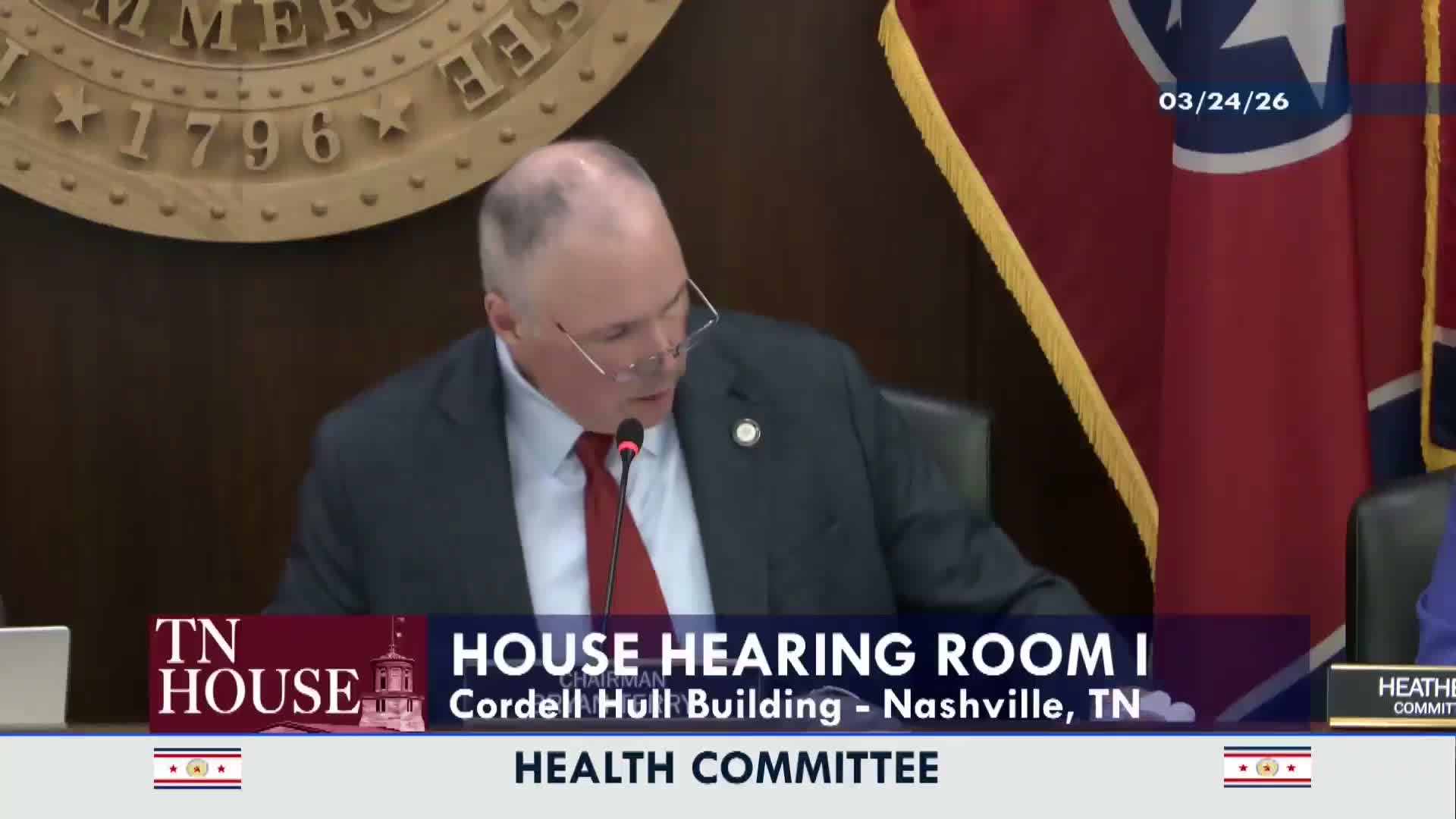
A bill to broaden exemptions for limited respite care programs — commonly run by churches and ministries — passed the Tennessee House Health Committee after extended testimony and debate.
Sponsor statement and purpose: Representative (sponsor) told the committee HB 14‑95 would modestly increase the number of people an exempt respite program may serve at one time and raise the weekly hours those programs may operate. The sponsor said the change is intended to help congregations and community organizations provide short‑term daytime care that relieves family caregivers.
Public testimony and arguments for the bill: Mike Glenn, senior pastor of Brentwood Baptist Church (testifying as a representative of the Engaged Church Network), described church programs that provide “four to five hours a day” of supervised care so family caregivers can attend appointments or run errands. “This is simply a way for neighbors to help neighbors,” Glenn said, urging members to support expanded capacity so more caregivers can be aided.
Questions and concerns raised: Several committee members pressed on safety, staffing ratios, background checks and physical security. Representative Williams (member) and others asked whether church facilities would have locked exits, badge‑in systems or other measures used by licensed memory‑care facilities. One member described memory‑care units that were still vulnerable to elopement despite multiple layers of security and said the exempt centers were not designed for the same risk profile.
Sponsor responses and oversight: The sponsor and supporters said the amended bill preserves existing statutory definitions that limit respite exemptions to adults who can function in group settings and feed and toilet themselves without assistance. The sponsor noted the centers remain subject to Department of Health oversight and that the six currently operating exempt centers have done so without recorded participant complaints over several years. “If there was a substantiated complaint, the department could impose a safety plan,” the sponsor said, pointing to the department’s enforcement tools.
Vote and next steps: The committee voted to advance HB 14‑95, which passed on a 16‑yes, 2‑no, 3‑present‑not‑voting margin. The bill will move to Calendar and Rules as amended.
Context and implications: Supporters described the change as a way to expand low‑cost, community‑based respite for families caring for adults with memory challenges. Opponents and some members said the bill relies heavily on churches’ voluntary protocols rather than required physical safeguards or training standards and urged careful monitoring as the program expands. The debate highlighted a tradeoff lawmakers face between increasing community capacity and ensuring uniform safety standards.
The committee adjourned after completing the day’s calendar; HB 14‑95 moves forward to the next stage of consideration.
Sponsor statement and purpose: Representative (sponsor) told the committee HB 14‑95 would modestly increase the number of people an exempt respite program may serve at one time and raise the weekly hours those programs may operate. The sponsor said the change is intended to help congregations and community organizations provide short‑term daytime care that relieves family caregivers.
Public testimony and arguments for the bill: Mike Glenn, senior pastor of Brentwood Baptist Church (testifying as a representative of the Engaged Church Network), described church programs that provide “four to five hours a day” of supervised care so family caregivers can attend appointments or run errands. “This is simply a way for neighbors to help neighbors,” Glenn said, urging members to support expanded capacity so more caregivers can be aided.
Questions and concerns raised: Several committee members pressed on safety, staffing ratios, background checks and physical security. Representative Williams (member) and others asked whether church facilities would have locked exits, badge‑in systems or other measures used by licensed memory‑care facilities. One member described memory‑care units that were still vulnerable to elopement despite multiple layers of security and said the exempt centers were not designed for the same risk profile.
Sponsor responses and oversight: The sponsor and supporters said the amended bill preserves existing statutory definitions that limit respite exemptions to adults who can function in group settings and feed and toilet themselves without assistance. The sponsor noted the centers remain subject to Department of Health oversight and that the six currently operating exempt centers have done so without recorded participant complaints over several years. “If there was a substantiated complaint, the department could impose a safety plan,” the sponsor said, pointing to the department’s enforcement tools.
Vote and next steps: The committee voted to advance HB 14‑95, which passed on a 16‑yes, 2‑no, 3‑present‑not‑voting margin. The bill will move to Calendar and Rules as amended.
Context and implications: Supporters described the change as a way to expand low‑cost, community‑based respite for families caring for adults with memory challenges. Opponents and some members said the bill relies heavily on churches’ voluntary protocols rather than required physical safeguards or training standards and urged careful monitoring as the program expands. The debate highlighted a tradeoff lawmakers face between increasing community capacity and ensuring uniform safety standards.
The committee adjourned after completing the day’s calendar; HB 14‑95 moves forward to the next stage of consideration.
Don't Miss a Word: See the Full Meeting!
Go beyond summaries. Unlock every video, transcript, and key insight with a Founder Membership.
✓
Get instant access to full meeting videos
✓
Search and clip any phrase from complete transcripts
✓
Receive AI-powered summaries & custom alerts
✓
Enjoy lifetime, unrestricted access to government data
30-day money-back guarantee
