Committee advances amended bill clarifying parental access to minor medical records after heated testimony from clinicians
March 19, 2026 | 2026 Legislature TN, Tennessee
This article was created by AI summarizing key points discussed. AI makes mistakes, so for full details and context, please refer to the video of the full meeting. Please report any errors so we can fix them. Report an error »
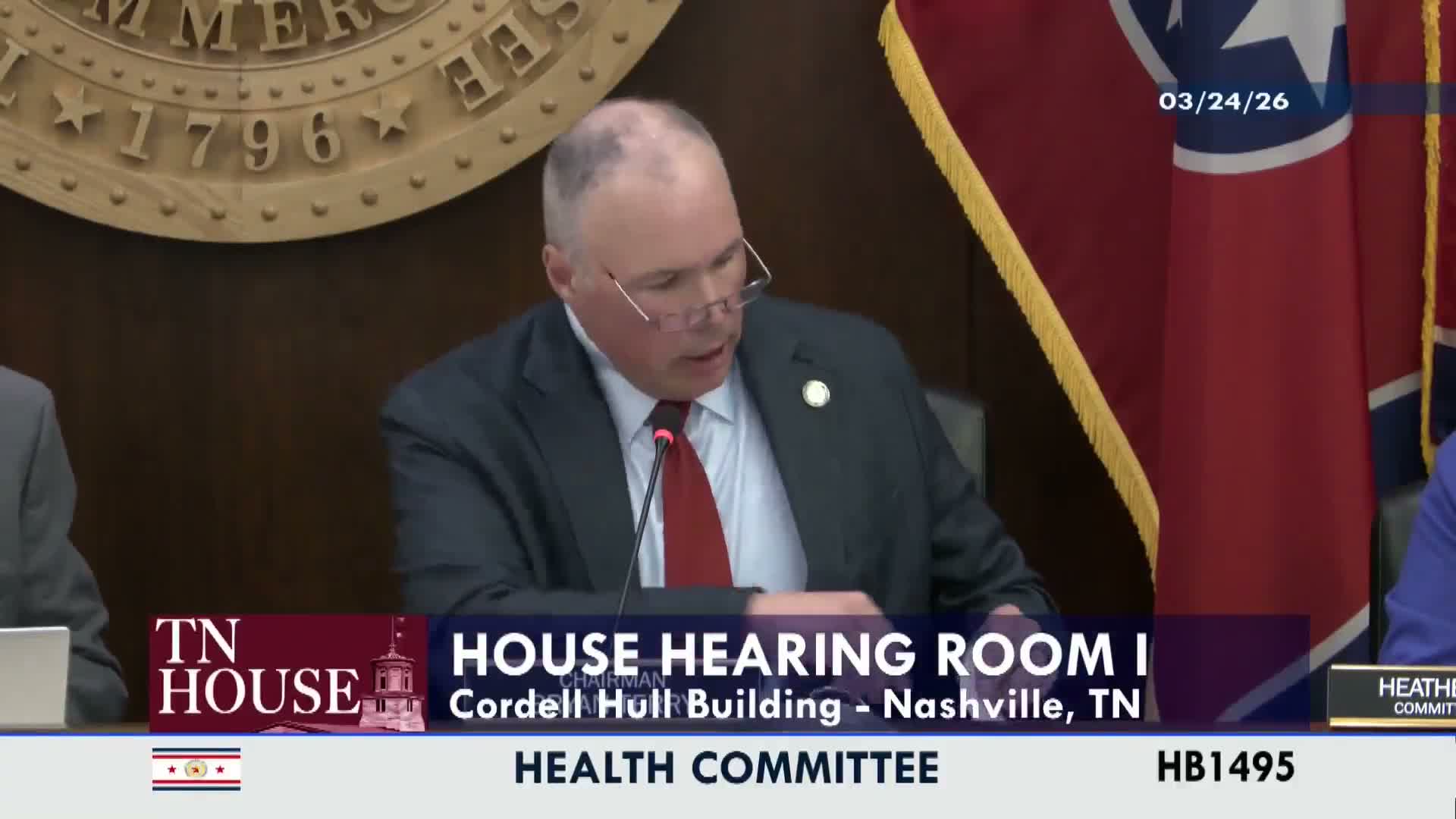
The Tennessee House Health Committee advanced an amendment to House Bill 8‑53 after extensive testimony that split medical and parental‑rights stakeholders.
What the bill would do: Sponsor (Representative, speaker 20) said the amendment clarifies existing code so the Families Rights and Responsibilities Act (adopted in 2024) applies across Tennessee code sections, ensuring parents retain access to their unemancipated child’s medical records unless statutory exceptions apply.
Support and opposition at the microphone: Kayla Garretson, representing the Tennessee Freedom Initiative, told the committee she supports the amendment and commended the sponsor for reaching agreement with state departments. “This amendment brings prescription‑record language up to the standard of the Families Rights and Responsibilities Act,” Garretson said.
Clinicians who oppose the bill warned of clinical harm: Melody Klein, representing the Tennessee Association for Marriage and Family Therapy, argued the change would damage therapeutic confidentiality for 16‑ and 17‑year‑old clients and impede clinicians’ ability to identify abuse. “If they don’t believe this is confidential, they will not share it, and we cannot report it,” Klein said.
Dr. Meg Benningfield, a child and adolescent psychiatrist speaking for the Tennessee chapter of the American Academy of Pediatrics and the Tennessee Psychiatric Association, urged members to oppose the bill. She described clinical scenarios in which assured confidentiality enables adolescents to seek care — including for self‑harm or sexual assault — and said removing privacy protections can lead teens to forgo care. Dr. Benningfield described a recent inpatient case in which clinicians were ultimately able to work with a family to support a patient after a life‑threatening overdose.
Sponsor’s clarifications and statutory exceptions: Members questioned whether the amendment preserves narrow exceptions when disclosure is necessary to protect a child’s life or safety. Representative (sponsor) and Representative Verneaux (member) highlighted language in the amendment that maintains exceptions for required reporting, suspected abuse or neglect, and specific treatments (for example, sexually transmitted infections, contraceptives, and substance‑use treatment) that already can be provided without parental consent.
Vote and next steps: The amended bill passed the committee on an 11‑yes, 7‑no, 2‑present‑not‑voting tally and will move to Calendar and Rules as amended. The debate underscored tensions between parental‑rights advocates and medical professionals over the scope of adolescent confidentiality.
What to watch: Clinicians and associations signaled intent to seek further amendments or outreach to ensure safe channels for adolescent care remain protected. The committee’s record indicates departments were consulted during drafting, a point sponsors emphasized to justify the amendment’s language.
What the bill would do: Sponsor (Representative, speaker 20) said the amendment clarifies existing code so the Families Rights and Responsibilities Act (adopted in 2024) applies across Tennessee code sections, ensuring parents retain access to their unemancipated child’s medical records unless statutory exceptions apply.
Support and opposition at the microphone: Kayla Garretson, representing the Tennessee Freedom Initiative, told the committee she supports the amendment and commended the sponsor for reaching agreement with state departments. “This amendment brings prescription‑record language up to the standard of the Families Rights and Responsibilities Act,” Garretson said.
Clinicians who oppose the bill warned of clinical harm: Melody Klein, representing the Tennessee Association for Marriage and Family Therapy, argued the change would damage therapeutic confidentiality for 16‑ and 17‑year‑old clients and impede clinicians’ ability to identify abuse. “If they don’t believe this is confidential, they will not share it, and we cannot report it,” Klein said.
Dr. Meg Benningfield, a child and adolescent psychiatrist speaking for the Tennessee chapter of the American Academy of Pediatrics and the Tennessee Psychiatric Association, urged members to oppose the bill. She described clinical scenarios in which assured confidentiality enables adolescents to seek care — including for self‑harm or sexual assault — and said removing privacy protections can lead teens to forgo care. Dr. Benningfield described a recent inpatient case in which clinicians were ultimately able to work with a family to support a patient after a life‑threatening overdose.
Sponsor’s clarifications and statutory exceptions: Members questioned whether the amendment preserves narrow exceptions when disclosure is necessary to protect a child’s life or safety. Representative (sponsor) and Representative Verneaux (member) highlighted language in the amendment that maintains exceptions for required reporting, suspected abuse or neglect, and specific treatments (for example, sexually transmitted infections, contraceptives, and substance‑use treatment) that already can be provided without parental consent.
Vote and next steps: The amended bill passed the committee on an 11‑yes, 7‑no, 2‑present‑not‑voting tally and will move to Calendar and Rules as amended. The debate underscored tensions between parental‑rights advocates and medical professionals over the scope of adolescent confidentiality.
What to watch: Clinicians and associations signaled intent to seek further amendments or outreach to ensure safe channels for adolescent care remain protected. The committee’s record indicates departments were consulted during drafting, a point sponsors emphasized to justify the amendment’s language.
View the Full Meeting & All Its Details
This article offers just a summary. Unlock complete video, transcripts, and insights as a Founder Member.
✓
Watch full, unedited meeting videos
✓
Search every word spoken in unlimited transcripts
✓
AI summaries & real-time alerts (all government levels)
✓
Permanent access to expanding government content
30-day money-back guarantee
