County staff say cover‑crop adoption is rising; supervisors press for local water data and measurable results
March 09, 2026 | Dubuque County, Iowa
This article was created by AI summarizing key points discussed. AI makes mistakes, so for full details and context, please refer to the video of the full meeting. Please report any errors so we can fix them. Report an error »
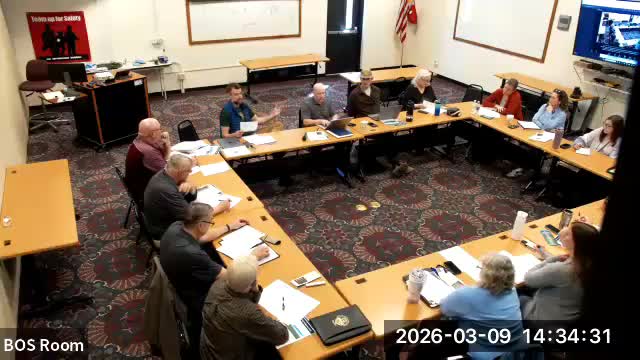
Dubuque County staff told supervisors the county has seen expanding adoption of conservation practices and outlined monitoring and data plans to measure results.
A staff member reported that cover‑crop acreage has grown substantially in recent seasons and said county figures approach 40,000 acres — roughly 21–22% of the county’s cropland, which the presenter contrasted with a state average of 6–8%.
Why it matters: program supporters said greater local adoption and farmer‑led outreach are central to improving water quality, but supervisors repeatedly asked for regular, local monitoring to justify continued funding. "We need local data, not somebody land grant college given us," one supervisor said, urging locally generated results before expanding commitments.
Program details: the presenter described several new or planned programs that Farmer‑to‑Farmer and the soil and water district are developing, including conservation tillage, a small‑grain program and a potential stream‑bank stabilization initiative. For some activities (for example, engineering and design for stream‑bank work) federal funds cannot pay for design; the county’s local match could cover design work so projects are bid and then eligible for NRCS reimbursement for construction.
Monitoring and outreach: county staff said the soil and water commission funded $8,000 this year for monitoring efforts and will distribute nitrate test strips to farmers for on‑farm monitoring. Presenters also flagged the high cost of real‑time monitors (about $30,000 each) and maintenance burdens as constraints on deploying those devices widely.
Next steps: staff will compile a spreadsheet of projects and acres enrolled and present results and funding‑flow details to supervisors at a future fiscal‑year meeting. Supervisors asked for multi‑year monitoring results to assess whether the investments are changing water‑quality indicators before increasing county funding.
A staff member reported that cover‑crop acreage has grown substantially in recent seasons and said county figures approach 40,000 acres — roughly 21–22% of the county’s cropland, which the presenter contrasted with a state average of 6–8%.
Why it matters: program supporters said greater local adoption and farmer‑led outreach are central to improving water quality, but supervisors repeatedly asked for regular, local monitoring to justify continued funding. "We need local data, not somebody land grant college given us," one supervisor said, urging locally generated results before expanding commitments.
Program details: the presenter described several new or planned programs that Farmer‑to‑Farmer and the soil and water district are developing, including conservation tillage, a small‑grain program and a potential stream‑bank stabilization initiative. For some activities (for example, engineering and design for stream‑bank work) federal funds cannot pay for design; the county’s local match could cover design work so projects are bid and then eligible for NRCS reimbursement for construction.
Monitoring and outreach: county staff said the soil and water commission funded $8,000 this year for monitoring efforts and will distribute nitrate test strips to farmers for on‑farm monitoring. Presenters also flagged the high cost of real‑time monitors (about $30,000 each) and maintenance burdens as constraints on deploying those devices widely.
Next steps: staff will compile a spreadsheet of projects and acres enrolled and present results and funding‑flow details to supervisors at a future fiscal‑year meeting. Supervisors asked for multi‑year monitoring results to assess whether the investments are changing water‑quality indicators before increasing county funding.
View the Full Meeting & All Its Details
This article offers just a summary. Unlock complete video, transcripts, and insights as a Founder Member.
✓
Watch full, unedited meeting videos
✓
Search every word spoken in unlimited transcripts
✓
AI summaries & real-time alerts (all government levels)
✓
Permanent access to expanding government content
30-day money-back guarantee
