Zionsville planners urged to make clear findings, avoid open‑door violations
March 08, 2026 | Town of Zionsville, Boone County, Indiana
This article was created by AI summarizing key points discussed. AI makes mistakes, so for full details and context, please refer to the video of the full meeting. Please report any errors so we can fix them. Report an error »
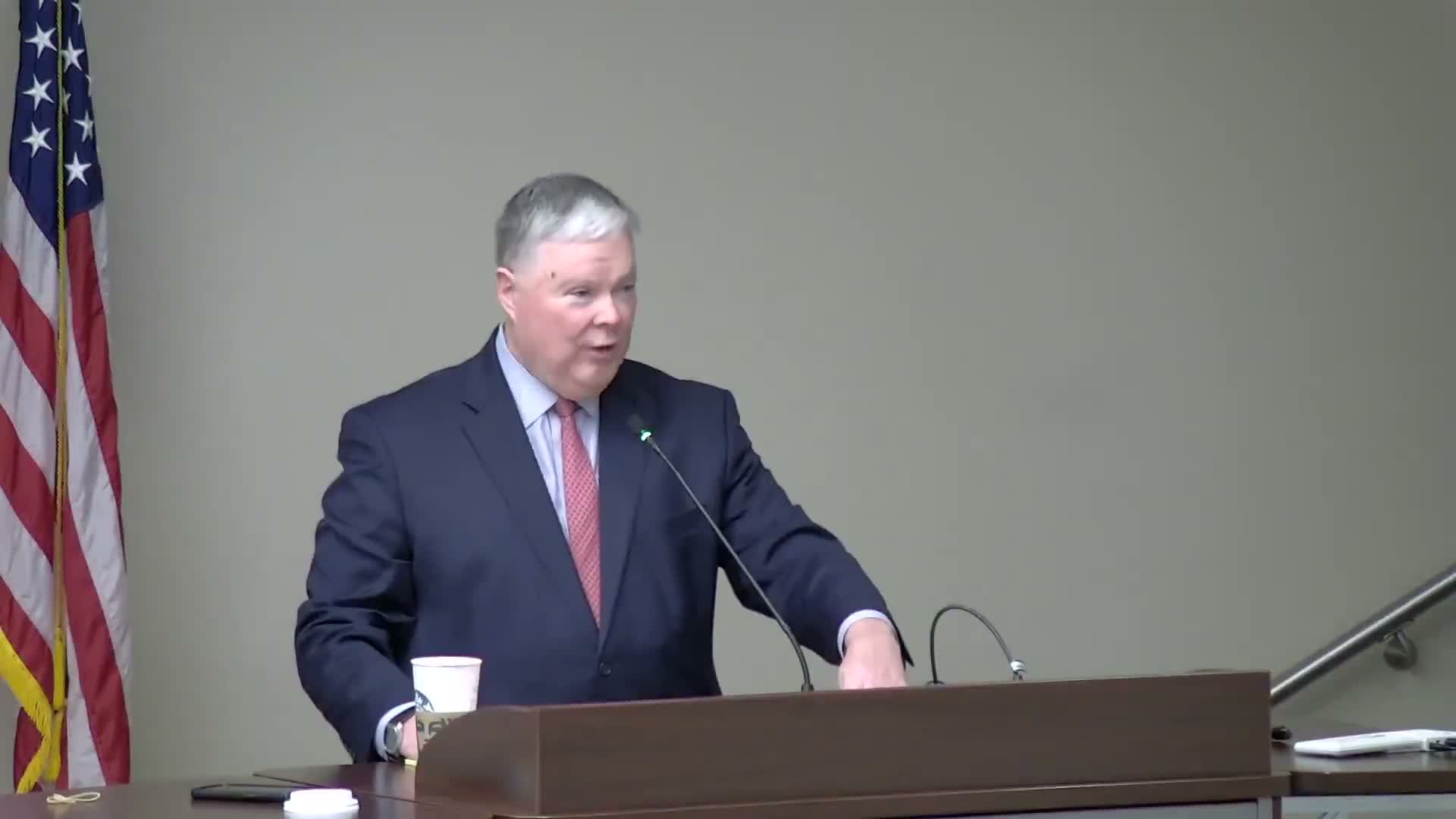
Dan, the training presenter and attorney, instructed commissioners on best practices to reduce appeal risk: document findings on the record and ask questions that directly map to the five statutory factors for rezones and similar cases. "Making findings is a fact," Dan said, arguing that careful questioning and recorded reasons help courts understand the commission's reasoning.
He advised commissioners to use the single word 'because' when moving motions to indicate the legal rationale, and to tie each discussion point to applicable factors. Dan urged that staff proposed findings of fact be included in records and recommended commissioners add conditions (for example, a limited list of permitted uses) when they wish to approve a rezone but restrict future uses.
On conflicts of interest and recusal, Dan said commissioners who have a direct pecuniary interest should disclose it to the secretary and leave the room for that agenda item to avoid improper influence: "If you do have a conflict ... then you're supposed to tell the secretary ... and when we get to that case of the meeting, you have to leave the room." He also discussed bias and impartiality standards for zoning decisions, noting there is no bright‑line rule but the key is whether a member can be impartial.
The training included repeated warnings on the open‑door law and public‑records obligations. Dan emphasized that merely receiving information may constitute a meeting when a majority is gathered and that quick email exchanges can become a prohibited 'chat' if they appear to the public as a concurrent conversation. "Receiving information alone is a meeting," he said. He recommended practical steps — use overflow rooms or larger venues for expected large public hearings, keep separate folders for planning commission email, and pick up the phone rather than create written records where appropriate.
Dan illustrated points with recent cases (for example, a case where a party sued in federal court rather than pursuing local administrative remedies, and a case where commitments in rezoning approvals conflicted and were later interpreted to allow broader uses). He closed by answering commissioners' questions about HOAs, waivers, and executive‑session limits.
The commission then moved, seconded and approved a motion (item not named in transcript) by voice vote to close the business portion of the meeting; commissioners thanked the presenter.
He advised commissioners to use the single word 'because' when moving motions to indicate the legal rationale, and to tie each discussion point to applicable factors. Dan urged that staff proposed findings of fact be included in records and recommended commissioners add conditions (for example, a limited list of permitted uses) when they wish to approve a rezone but restrict future uses.
On conflicts of interest and recusal, Dan said commissioners who have a direct pecuniary interest should disclose it to the secretary and leave the room for that agenda item to avoid improper influence: "If you do have a conflict ... then you're supposed to tell the secretary ... and when we get to that case of the meeting, you have to leave the room." He also discussed bias and impartiality standards for zoning decisions, noting there is no bright‑line rule but the key is whether a member can be impartial.
The training included repeated warnings on the open‑door law and public‑records obligations. Dan emphasized that merely receiving information may constitute a meeting when a majority is gathered and that quick email exchanges can become a prohibited 'chat' if they appear to the public as a concurrent conversation. "Receiving information alone is a meeting," he said. He recommended practical steps — use overflow rooms or larger venues for expected large public hearings, keep separate folders for planning commission email, and pick up the phone rather than create written records where appropriate.
Dan illustrated points with recent cases (for example, a case where a party sued in federal court rather than pursuing local administrative remedies, and a case where commitments in rezoning approvals conflicted and were later interpreted to allow broader uses). He closed by answering commissioners' questions about HOAs, waivers, and executive‑session limits.
The commission then moved, seconded and approved a motion (item not named in transcript) by voice vote to close the business portion of the meeting; commissioners thanked the presenter.
Don't Miss a Word: See the Full Meeting!
Go beyond summaries. Unlock every video, transcript, and key insight with a Founder Membership.
✓
Get instant access to full meeting videos
✓
Search and clip any phrase from complete transcripts
✓
Receive AI-powered summaries & custom alerts
✓
Enjoy lifetime, unrestricted access to government data
30-day money-back guarantee
