Rep. Hall says charter-school financing bill will lower borrowing costs for high-performing schools
March 12, 2026 | 2026 Legislature OK, Oklahoma
This article was created by AI summarizing key points discussed. AI makes mistakes, so for full details and context, please refer to the video of the full meeting. Please report any errors so we can fix them. Report an error »
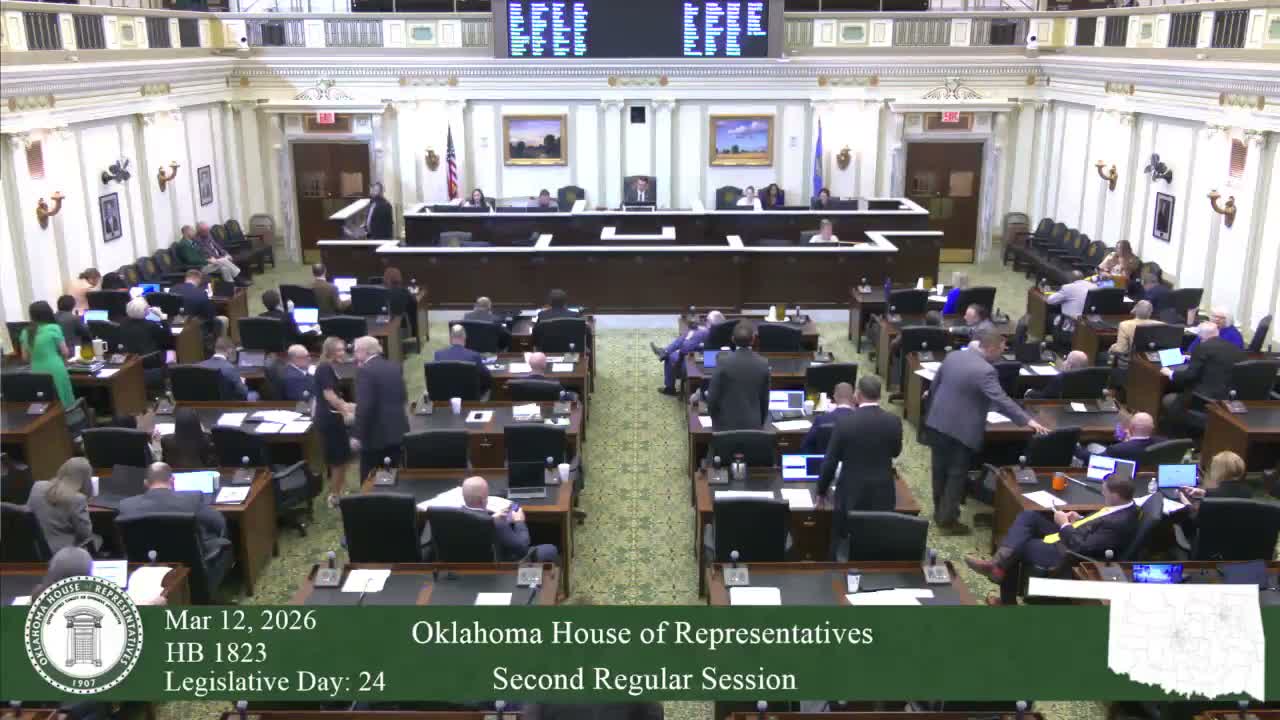
Representative Hall told the House that House Bill 33-72 would give high-performing charter schools access to lower-cost financing for buying, building or renovating facilities by creating a revolving loan fund and a credit enhancement program.
"House bill 33-72 will provide access to lower cost financing for high performing charter schools that are buying, building, or renovating brick and mortar facilities," Representative Hall said on the floor. He said the measure aims to reduce financing costs so more money can be spent in classrooms rather than on interest.
Members asked how repayment and ownership would work if a charter school defaulted. Representative Hall said loans under the program are "not a general obligation of the state" and that the charter school — not the state — would ultimately be responsible for repayment. He described features such as a debt-service reserve (one year of principal and interest up front in some programs) and payment‑intercept mechanisms intended to protect bondholders and lower lenders’ risk.
Questions also focused on whether taxpayers would effectively subsidize bonds and who would own facilities if a charter went defunct. Representative Hall said the bill does not change ownership rules and that state aid currently used to pay financing costs would be the source now and after the bill, but the loan structure would reduce the interest burden.
Representative Grego and others pressed for clarity about default risk and recourse; Hall cited examples from other states and a study he said showed savings in other programs.
The House voted to pass the bill on third reading; the clerk announced the tally as 53 aye, 36 nay.
"House bill 33-72 will provide access to lower cost financing for high performing charter schools that are buying, building, or renovating brick and mortar facilities," Representative Hall said on the floor. He said the measure aims to reduce financing costs so more money can be spent in classrooms rather than on interest.
Members asked how repayment and ownership would work if a charter school defaulted. Representative Hall said loans under the program are "not a general obligation of the state" and that the charter school — not the state — would ultimately be responsible for repayment. He described features such as a debt-service reserve (one year of principal and interest up front in some programs) and payment‑intercept mechanisms intended to protect bondholders and lower lenders’ risk.
Questions also focused on whether taxpayers would effectively subsidize bonds and who would own facilities if a charter went defunct. Representative Hall said the bill does not change ownership rules and that state aid currently used to pay financing costs would be the source now and after the bill, but the loan structure would reduce the interest burden.
Representative Grego and others pressed for clarity about default risk and recourse; Hall cited examples from other states and a study he said showed savings in other programs.
The House voted to pass the bill on third reading; the clerk announced the tally as 53 aye, 36 nay.
View the Full Meeting & All Its Details
This article offers just a summary. Unlock complete video, transcripts, and insights as a Founder Member.
✓
Watch full, unedited meeting videos
✓
Search every word spoken in unlimited transcripts
✓
AI summaries & real-time alerts (all government levels)
✓
Permanent access to expanding government content
30-day money-back guarantee
