Workshop highlights new drone, cybersecurity, genealogy and pill‑drop policies
March 17, 2026 | Michigan City, LaPorte County, Indiana
This article was created by AI summarizing key points discussed. AI makes mistakes, so for full details and context, please refer to the video of the full meeting. Please report any errors so we can fix them. Report an error »
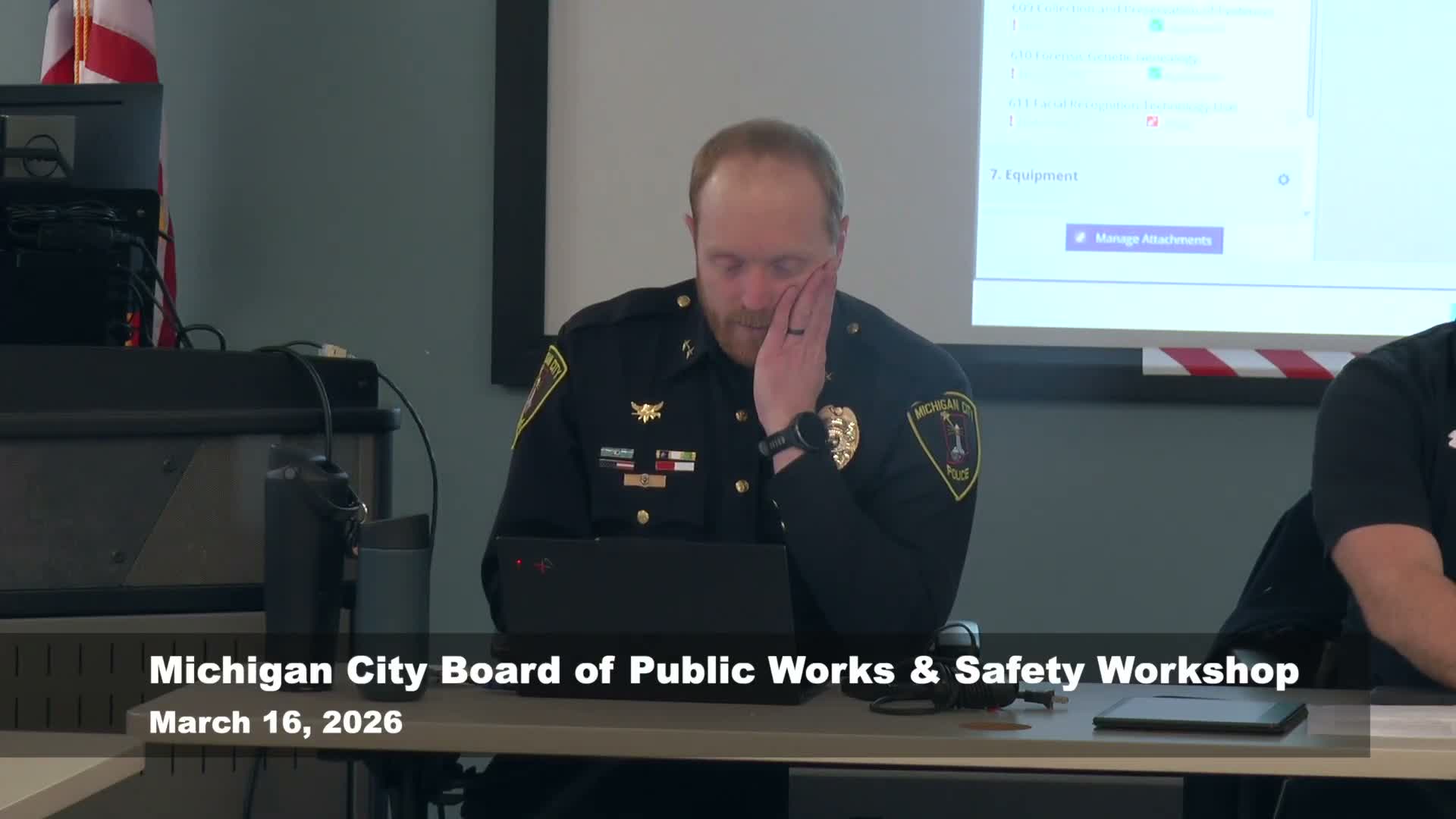
Presenters used the March 16 workshop to walk the board through new policy sections addressing equipment, data security and investigative tools.
On unmanned aircraft, Agency official and Presenter explained the need for a Certificate of Authorization (COA) and a single certified operator to oversee operations and compliance with FAA and departmental standards. As one presenter put it: “the biggest thing for law enforcement is getting a COA set up, which essentially is like an umbrella over the department where you have 1 person who's taken all the tests, certified, knowledgeable, and then they can kind of oversee the program as a whole.”
Cybersecurity updates (policy 806) were presented as necessary to protect CJIS‑level information and to reflect the department’s dedicated IT personnel who manage sensitive data. Presenter said the policy is meant to be future‑proof and to assign clear responsibilities for IT functions.
Investigative updates include a forensic genetic genealogy policy (610) that outlines processes for using commercial genetic databases and third‑party DNA samples in cold‑case work. Presenter said this helps the department adopt new investigative tools while defining appropriate usage and review.
Presenters also reviewed a pill drop box policy for the lobby that coordinates evidence storage and disposal with DEA take‑back events. On cash handling, Presenter noted the La Porte County drug task force’s budget growth, saying the task force’s funding rose “from starting off at a little around $50,000 a year” to “now it's all the way up north of 300 to 500,000 a year,” which requires interagency controls and federal grant accounting.
Board members were invited to continue discussion and to review procedures that translate policy into daily practice; no votes were held at the workshop.
On unmanned aircraft, Agency official and Presenter explained the need for a Certificate of Authorization (COA) and a single certified operator to oversee operations and compliance with FAA and departmental standards. As one presenter put it: “the biggest thing for law enforcement is getting a COA set up, which essentially is like an umbrella over the department where you have 1 person who's taken all the tests, certified, knowledgeable, and then they can kind of oversee the program as a whole.”
Cybersecurity updates (policy 806) were presented as necessary to protect CJIS‑level information and to reflect the department’s dedicated IT personnel who manage sensitive data. Presenter said the policy is meant to be future‑proof and to assign clear responsibilities for IT functions.
Investigative updates include a forensic genetic genealogy policy (610) that outlines processes for using commercial genetic databases and third‑party DNA samples in cold‑case work. Presenter said this helps the department adopt new investigative tools while defining appropriate usage and review.
Presenters also reviewed a pill drop box policy for the lobby that coordinates evidence storage and disposal with DEA take‑back events. On cash handling, Presenter noted the La Porte County drug task force’s budget growth, saying the task force’s funding rose “from starting off at a little around $50,000 a year” to “now it's all the way up north of 300 to 500,000 a year,” which requires interagency controls and federal grant accounting.
Board members were invited to continue discussion and to review procedures that translate policy into daily practice; no votes were held at the workshop.
View the Full Meeting & All Its Details
This article offers just a summary. Unlock complete video, transcripts, and insights as a Founder Member.
✓
Watch full, unedited meeting videos
✓
Search every word spoken in unlimited transcripts
✓
AI summaries & real-time alerts (all government levels)
✓
Permanent access to expanding government content
30-day money-back guarantee
