Senate approves bill creating civil cause of action for alleged coercion in certain medical care
March 23, 2026 | 2026 Legislature TN, Tennessee
This article was created by AI summarizing key points discussed. AI makes mistakes, so for full details and context, please refer to the video of the full meeting. Please report any errors so we can fix them. Report an error »
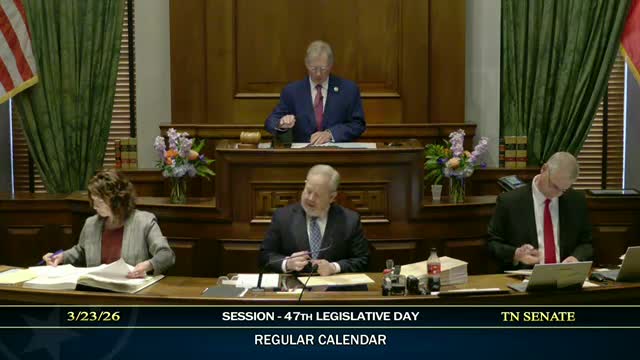
Senator Lowe, the bill sponsor, asked the Senate to approve Senate Bill 20‑31 on third and final consideration, saying the measure creates “a private right of action for anyone who suffered an injury as a result of care related to gender reassignment” and sets a 30‑year statute of limitations for those suits. He and supporters framed the bill as a path for individuals who say they were harmed by treatment they now reject.
Opponents raised constitutional and policy concerns on the floor. Senator Oliver warned the legislation creates “a new pathway for civil action that is targeting one particular medical procedure” and questioned whether it would treat gender‑related care differently from other medical treatments. Senator Campbell said it “pains me personally that we spend so much time attacking transgender people” and called the focus on a small population troubling.
Sponsor Lowe and backers said the amendment adopted in committee clarifies the definition of coercion and excludes certain therapies and that the bill does not invent new criminal definitions. Lowe told colleagues the bill simply gives allegedly aggrieved individuals a civil forum: “All we're simply saying is there's a private right of action for individuals who in a detransitioning phase … feel like that they were coerced into a course of medical treatment.”
The Senate adopted the committee amendment, heard several questions about the legislative intent and scope, and voted to pass the bill on final consideration. The clerk recorded the vote as Ayes 24, Nays 5. No implementation timetable or effective date was specified on the floor record beyond the amendment's clarification that civil actions could only be brought after the bill's effective date.
What happens next: The bill was declared passed on final consideration and will proceed according to the Legislature's enactment procedures and any further enrollment steps before the governor's desk.
Opponents raised constitutional and policy concerns on the floor. Senator Oliver warned the legislation creates “a new pathway for civil action that is targeting one particular medical procedure” and questioned whether it would treat gender‑related care differently from other medical treatments. Senator Campbell said it “pains me personally that we spend so much time attacking transgender people” and called the focus on a small population troubling.
Sponsor Lowe and backers said the amendment adopted in committee clarifies the definition of coercion and excludes certain therapies and that the bill does not invent new criminal definitions. Lowe told colleagues the bill simply gives allegedly aggrieved individuals a civil forum: “All we're simply saying is there's a private right of action for individuals who in a detransitioning phase … feel like that they were coerced into a course of medical treatment.”
The Senate adopted the committee amendment, heard several questions about the legislative intent and scope, and voted to pass the bill on final consideration. The clerk recorded the vote as Ayes 24, Nays 5. No implementation timetable or effective date was specified on the floor record beyond the amendment's clarification that civil actions could only be brought after the bill's effective date.
What happens next: The bill was declared passed on final consideration and will proceed according to the Legislature's enactment procedures and any further enrollment steps before the governor's desk.
View the Full Meeting & All Its Details
This article offers just a summary. Unlock complete video, transcripts, and insights as a Founder Member.
✓
Watch full, unedited meeting videos
✓
Search every word spoken in unlimited transcripts
✓
AI summaries & real-time alerts (all government levels)
✓
Permanent access to expanding government content
30-day money-back guarantee
