DA conference opposes bill to expand 'split confinement'; committee keeps measure in committee
March 23, 2026 | 2026 Legislature TN, Tennessee
This article was created by AI summarizing key points discussed. AI makes mistakes, so for full details and context, please refer to the video of the full meeting. Please report any errors so we can fix them. Report an error »
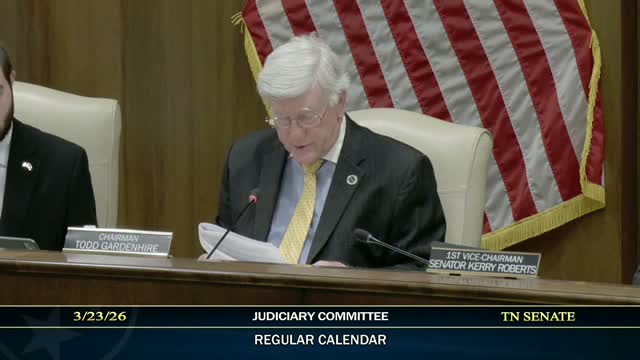
Sen. Yarbrough presented SB 26‑19, which would extend Tennessee’s split‑confinement option — a sentence combining jail time and supervised probation — by expanding the allowable in‑custody portion from one year to three years. Yarbrough said the change gives prosecutors and judges more flexibility to secure convictions and supervision for difficult cases and suggested it can reduce long‑term incarceration and rearrest.
The Tennessee District Attorneys General Conference’s executive director, Steven Crump, testified the DA executive committee unanimously opposed the bill. "We are opposed to this bill," Crump said, explaining the executive committee’s concern that expanding split confinement could allow serious offenders to avoid a true sentence to serve and frustrate appropriate punishment.
Committee members questioned both the policy tradeoffs and the practical effects on conviction rates and reoffending. Sen. Taylor and others pressed for clarity on whether the change would reduce rearrest (Crump said it would not necessarily do so and emphasized public‑safety risks of premature release), and committee discussion noted the elected, independent status of district attorneys.
Outcome: the committee recorded a divided outcome (three ayes, three noes and two present/not voting) and the bill failed to advance out of committee that day and remained in committee.
Next steps: sponsor may refile or revise; the committee record shows opposition from the DA conference and requests for more stakeholder coordination.
The Tennessee District Attorneys General Conference’s executive director, Steven Crump, testified the DA executive committee unanimously opposed the bill. "We are opposed to this bill," Crump said, explaining the executive committee’s concern that expanding split confinement could allow serious offenders to avoid a true sentence to serve and frustrate appropriate punishment.
Committee members questioned both the policy tradeoffs and the practical effects on conviction rates and reoffending. Sen. Taylor and others pressed for clarity on whether the change would reduce rearrest (Crump said it would not necessarily do so and emphasized public‑safety risks of premature release), and committee discussion noted the elected, independent status of district attorneys.
Outcome: the committee recorded a divided outcome (three ayes, three noes and two present/not voting) and the bill failed to advance out of committee that day and remained in committee.
Next steps: sponsor may refile or revise; the committee record shows opposition from the DA conference and requests for more stakeholder coordination.
View the Full Meeting & All Its Details
This article offers just a summary. Unlock complete video, transcripts, and insights as a Founder Member.
✓
Watch full, unedited meeting videos
✓
Search every word spoken in unlimited transcripts
✓
AI summaries & real-time alerts (all government levels)
✓
Permanent access to expanding government content
30-day money-back guarantee
