Senate adopts bill limiting emissions suits and authorizing court 'declarations' on emissions, critics call it a legal 'farce'
March 23, 2026 | 2026 Legislature TN, Tennessee
This article was created by AI summarizing key points discussed. AI makes mistakes, so for full details and context, please refer to the video of the full meeting. Please report any errors so we can fix them. Report an error »
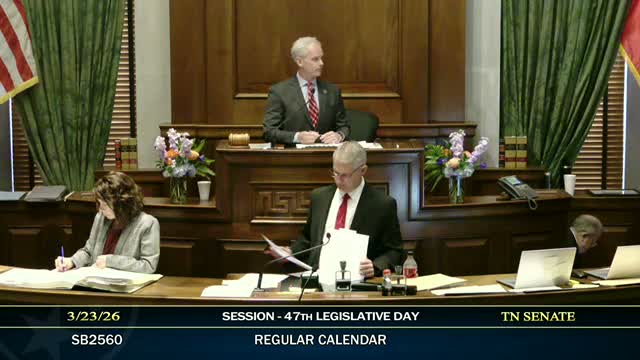
House Bill 20‑70, carried on the floor as a conform/substitute by Senator Reeves, drew vigorous debate over its language that would limit lawsuits tied to carbon emissions and create a judicial process for companies to secure a court declaration about their emissions record.
Senator Reeves described the bill as protecting Tennessee's freedom to pursue energy options and said it “creates a court process to establish an emissions record” and, under formulaic thresholds, a court “must presume the emissions are 0 for that period” in certain circumstances. He said the measure limits suits except where federal environmental laws such as the Clean Air Act have been violated.
Opponents framed the bill as shutting the courthouse door to people harmed by local pollution and as legally troubling. Senator Campbell said, “If we can redefine pollution to 0, if we can redefine pollution to 0 in this body, then we are legislating denial.” Senator Yarbrough said the statute as written would create an “irrebuttable presumption of 0” and expressed concern about extraterritorial effects on other states' enforcement and judgments.
Sponsors argued the bill protects investment and provides a clear, expeditious court process (decisions within 60 days under the sponsor’s reading). Critics warned it removes avenues for communities to seek redress for health harms tied to emissions.
The Senate recorded the vote as Ayes 26, Nays 5 and declared the bill passed on final consideration. The floor record shows extended questioning and repeated statements by senators expressing constitutional and public‑health concerns.
Senator Reeves described the bill as protecting Tennessee's freedom to pursue energy options and said it “creates a court process to establish an emissions record” and, under formulaic thresholds, a court “must presume the emissions are 0 for that period” in certain circumstances. He said the measure limits suits except where federal environmental laws such as the Clean Air Act have been violated.
Opponents framed the bill as shutting the courthouse door to people harmed by local pollution and as legally troubling. Senator Campbell said, “If we can redefine pollution to 0, if we can redefine pollution to 0 in this body, then we are legislating denial.” Senator Yarbrough said the statute as written would create an “irrebuttable presumption of 0” and expressed concern about extraterritorial effects on other states' enforcement and judgments.
Sponsors argued the bill protects investment and provides a clear, expeditious court process (decisions within 60 days under the sponsor’s reading). Critics warned it removes avenues for communities to seek redress for health harms tied to emissions.
The Senate recorded the vote as Ayes 26, Nays 5 and declared the bill passed on final consideration. The floor record shows extended questioning and repeated statements by senators expressing constitutional and public‑health concerns.
View the Full Meeting & All Its Details
This article offers just a summary. Unlock complete video, transcripts, and insights as a Founder Member.
✓
Watch full, unedited meeting videos
✓
Search every word spoken in unlimited transcripts
✓
AI summaries & real-time alerts (all government levels)
✓
Permanent access to expanding government content
30-day money-back guarantee
