Senate approves measure to separate tenure from disciplinary actions at universities after floor debate
March 23, 2026 | 2026 Legislature TN, Tennessee
This article was created by AI summarizing key points discussed. AI makes mistakes, so for full details and context, please refer to the video of the full meeting. Please report any errors so we can fix them. Report an error »
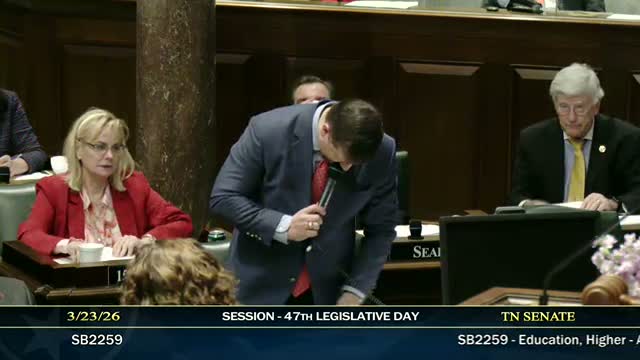
Senator Lowe explained House Bill 21‑94, which he said separates tenure status from disciplinary measures at universities. The bill, carried as a conform/substitute on the floor, preserves tenure awards and academic protections while permitting institutions to pursue disciplinary processes (including termination or suspension) under a bifurcated regime. Lowe emphasized the bill does not change existing institutional due process procedures and that disciplinary action would not be used as a backdoor to remove tenure without procedural safeguards.
Several senators sought clarification. Senator Yarbrough argued the bill statutory language appears to specify that notice and an opportunity to be heard be provided only before the institution's chief academic officer or chief executive officer—raising the concern that appeals could be heard by the same people who made the initial decision. "You basically get to appeal the decision to the person who fired you," Yarbrough said on the floor, and he warned the statutory scheme could fall short of constitutional due‑process minima in some cases.
Sponsor Lowe repeatedly stated the bill does not alter institutional due process, describing the measure as aligning practice and law to prevent tenure from being used to shield conduct that harms an institution’s brand or mission. After debate and clarification, the Senate recorded the vote as Ayes 25, Nays 5 and declared the bill passed.
Several senators sought clarification. Senator Yarbrough argued the bill statutory language appears to specify that notice and an opportunity to be heard be provided only before the institution's chief academic officer or chief executive officer—raising the concern that appeals could be heard by the same people who made the initial decision. "You basically get to appeal the decision to the person who fired you," Yarbrough said on the floor, and he warned the statutory scheme could fall short of constitutional due‑process minima in some cases.
Sponsor Lowe repeatedly stated the bill does not alter institutional due process, describing the measure as aligning practice and law to prevent tenure from being used to shield conduct that harms an institution’s brand or mission. After debate and clarification, the Senate recorded the vote as Ayes 25, Nays 5 and declared the bill passed.
View the Full Meeting & All Its Details
This article offers just a summary. Unlock complete video, transcripts, and insights as a Founder Member.
✓
Watch full, unedited meeting videos
✓
Search every word spoken in unlimited transcripts
✓
AI summaries & real-time alerts (all government levels)
✓
Permanent access to expanding government content
30-day money-back guarantee
