Consultant recommends new PK–1 school as the most practical path; committee hears $120M–$287M master‑plan options
March 19, 2026 | Tewksbury Public Schools, School Boards, Massachusetts
This article was created by AI summarizing key points discussed. AI makes mistakes, so for full details and context, please refer to the video of the full meeting. Please report any errors so we can fix them. Report an error »
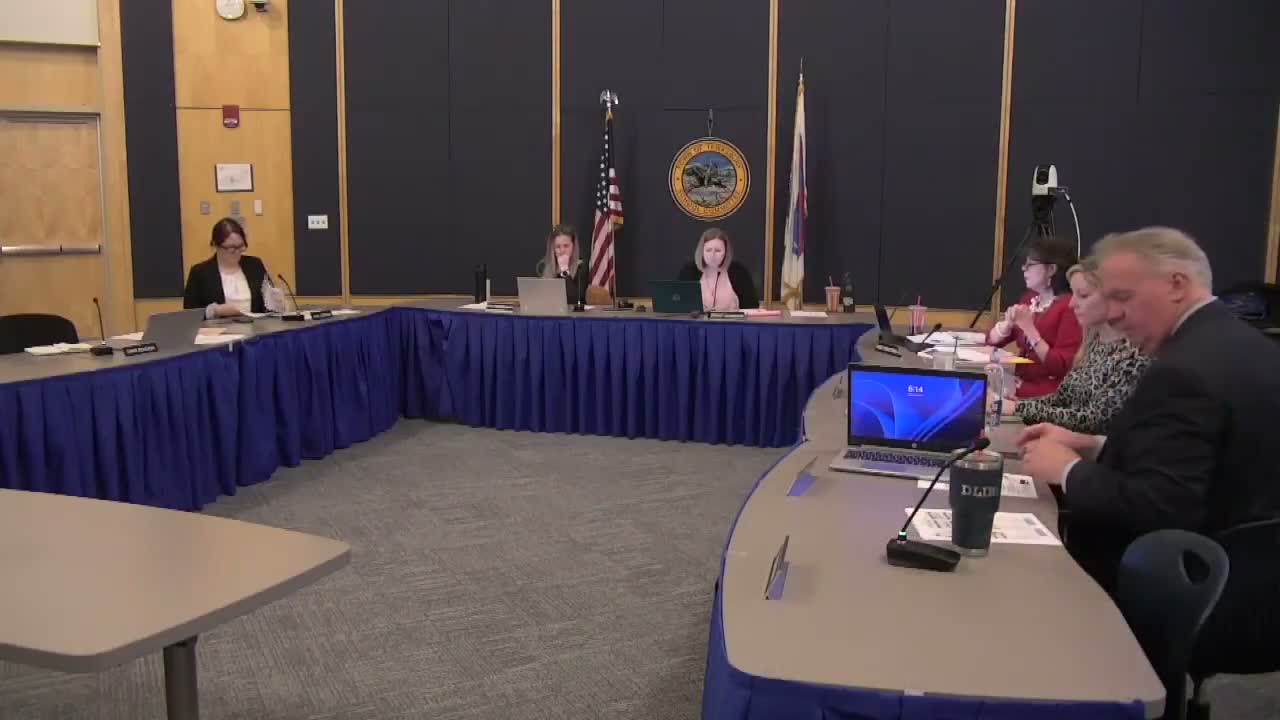
Douglas Roberts of JCJ Architects told the Tewksbury School Committee on March 18 that a multi‑disciplinary facility review and five months of community visioning produced a set of ‘apples‑to‑apples’ test fits for six master‑plan options. "We were assigned five specific tasks," Roberts said, summarizing the study and the MSBA process his team used.
The presentation highlighted two elementary schools — Dewing and Heath Brook — as having the most urgent building needs. Roberts said both sites face electrical‑capacity shortfalls for modern classroom technology and identified other system issues including boilers, roofing, fire‑protection gaps and generators. He warned that some systems are near the end of their useful life and that any significant alteration may trigger code‑driven upgrades, including sprinkler systems where they do not exist.
Why it matters: JCJ modeled each option using Massachusetts School Building Authority (MSBA) space templates and a gross‑up factor so comparisons reflect both educational spaces and the mechanical/accessibility infrastructure that drives cost. The architectural team estimated about $121 million to bring building systems and code items up to a baseline across the district (assuming a construction start near 2031). Individual master‑plan option totals varied widely depending on scope:
- Option 1: close Dewing, convert Heath Brook to a PK center, expand Center, add grades to the middle school and CTE work at the high school — estimated about $209 million.
- Option 2 (JCJ’s recommended option): close Dewing and Heath Brook, build a new PK–1 school (test fit on the former North Street site for modeling), and phase code/CTE improvements at other schools — JCJ noted this option is an "independent school project" with an estimated aggregate cost in the low‑to‑mid‑$200 millions range and more predictable phasing; that option rose to the top of the consultant’s list because it minimizes student transitions and avoids temporary classrooms.
- Option 3: various combinations of closures and additions; approximate estimate $183 million.
- Options 4–6: progressively larger interventions, including two new elementary schools in some studies, with estimates up to about $287 million.
Roberts emphasized that these numbers are high‑level test fits intended to create a common baseline for comparison, not final design bids. He recommended the committee consider filing a single Statement of Interest (SOI) to the MSBA by the mid‑April deadline under statutory priority 7 (replacement of obsolete buildings) as the means to enter the MSBA pipeline and secure feasibility‑phase funding.
District context: JCJ and the district accounted for visioning work with parents, students, staff and senior/veteran stakeholders. The consultants said the MSBA process typically includes a 270‑day eligibility/feasibility phase, a feasibility appropriation often in the $1M–$2M range, schematic design, and — if recommended by MSBA and approved by voters — construction. Roberts said an aggressive schedule could lead to a town‑meeting funding request around May 2030 and an occupancy target in the early 2030s for a SOI launched in 2026.
Quotes and reactions: "It’s not about architectural spaces. It’s about delivering education," Roberts told the committee when explaining MSBA’s evaluation focus on educational program and space needs. Committee members pressed about site options, phasing and the likely town share of any MSBA project; Roberts provided a rough reimbursement model (district historical adjusted reimbursement around 60%) but urged the committee to view these as preliminary estimates.
Next steps: JCJ said the facilities study committee recommended Option 2 as the most likely path forward and that the school committee and select board would need to vote to authorize any SOI. If the committee elects to proceed, the SOI would be submitted for MSBA staff review; acceptance into the eligibility period is not guaranteed on first submission, Roberts cautioned.
Ending: The committee scheduled additional public workshops and cross‑board conversations before committing to an SOI, and asked JCJ to provide the presentation materials and follow‑up cost clarifications for the workshop.
The presentation highlighted two elementary schools — Dewing and Heath Brook — as having the most urgent building needs. Roberts said both sites face electrical‑capacity shortfalls for modern classroom technology and identified other system issues including boilers, roofing, fire‑protection gaps and generators. He warned that some systems are near the end of their useful life and that any significant alteration may trigger code‑driven upgrades, including sprinkler systems where they do not exist.
Why it matters: JCJ modeled each option using Massachusetts School Building Authority (MSBA) space templates and a gross‑up factor so comparisons reflect both educational spaces and the mechanical/accessibility infrastructure that drives cost. The architectural team estimated about $121 million to bring building systems and code items up to a baseline across the district (assuming a construction start near 2031). Individual master‑plan option totals varied widely depending on scope:
- Option 1: close Dewing, convert Heath Brook to a PK center, expand Center, add grades to the middle school and CTE work at the high school — estimated about $209 million.
- Option 2 (JCJ’s recommended option): close Dewing and Heath Brook, build a new PK–1 school (test fit on the former North Street site for modeling), and phase code/CTE improvements at other schools — JCJ noted this option is an "independent school project" with an estimated aggregate cost in the low‑to‑mid‑$200 millions range and more predictable phasing; that option rose to the top of the consultant’s list because it minimizes student transitions and avoids temporary classrooms.
- Option 3: various combinations of closures and additions; approximate estimate $183 million.
- Options 4–6: progressively larger interventions, including two new elementary schools in some studies, with estimates up to about $287 million.
Roberts emphasized that these numbers are high‑level test fits intended to create a common baseline for comparison, not final design bids. He recommended the committee consider filing a single Statement of Interest (SOI) to the MSBA by the mid‑April deadline under statutory priority 7 (replacement of obsolete buildings) as the means to enter the MSBA pipeline and secure feasibility‑phase funding.
District context: JCJ and the district accounted for visioning work with parents, students, staff and senior/veteran stakeholders. The consultants said the MSBA process typically includes a 270‑day eligibility/feasibility phase, a feasibility appropriation often in the $1M–$2M range, schematic design, and — if recommended by MSBA and approved by voters — construction. Roberts said an aggressive schedule could lead to a town‑meeting funding request around May 2030 and an occupancy target in the early 2030s for a SOI launched in 2026.
Quotes and reactions: "It’s not about architectural spaces. It’s about delivering education," Roberts told the committee when explaining MSBA’s evaluation focus on educational program and space needs. Committee members pressed about site options, phasing and the likely town share of any MSBA project; Roberts provided a rough reimbursement model (district historical adjusted reimbursement around 60%) but urged the committee to view these as preliminary estimates.
Next steps: JCJ said the facilities study committee recommended Option 2 as the most likely path forward and that the school committee and select board would need to vote to authorize any SOI. If the committee elects to proceed, the SOI would be submitted for MSBA staff review; acceptance into the eligibility period is not guaranteed on first submission, Roberts cautioned.
Ending: The committee scheduled additional public workshops and cross‑board conversations before committing to an SOI, and asked JCJ to provide the presentation materials and follow‑up cost clarifications for the workshop.
View the Full Meeting & All Its Details
This article offers just a summary. Unlock complete video, transcripts, and insights as a Founder Member.
✓
Watch full, unedited meeting videos
✓
Search every word spoken in unlimited transcripts
✓
AI summaries & real-time alerts (all government levels)
✓
Permanent access to expanding government content
30-day money-back guarantee
