Minnesota senators spar over which committee should handle online sports-betting bill
March 20, 2026 | 2026 Legislature MN, Minnesota
This article was created by AI summarizing key points discussed. AI makes mistakes, so for full details and context, please refer to the video of the full meeting. Please report any errors so we can fix them. Report an error »
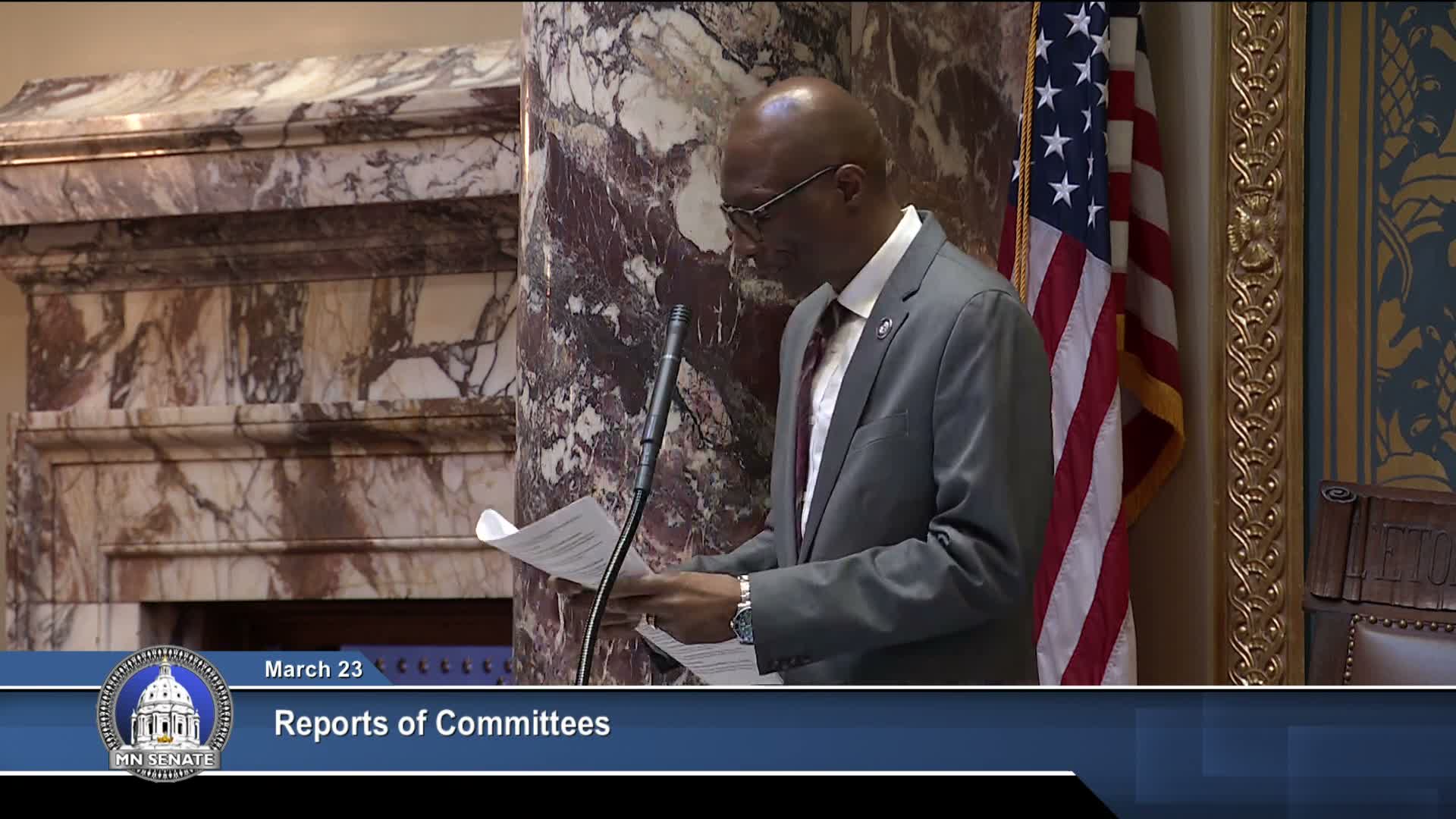
The Minnesota Senate spent significant floor time March 23 disputing which committee should receive a recently filed sports‑betting bill, with members split over whether the measure belongs in the state and local government committee or in commerce.
Senator Steve Rasmussen argued members should reject the Rules Committee’s decision to refer the bill to the Commerce Committee and instead send it to the State and Local Government Committee, which he said is the committee of primary jurisdiction for gambling measures. "This committee report would instead send the latest sports gambling bill to the commerce committee," Rasmussen said, urging colleagues to protect the committee process so subject‑matter experts and the public can vet the legislation.
Supporters of the Rules Committee recommendation pushed back, saying the panel had heard arguments and voted 6‑2 to send the bill to commerce. "We have a rules committee for a reason," said a rules-committee member defending the referral, noting that chief‑author requests and both chairs’ consent frequently guide referral decisions. Senator Miller stressed the dispute before the body was procedural: "This is not a vote right now on whether or not we should legalize sports betting or not. That's not the question in front of the body right now," he said, arguing the motion under consideration was about following chamber traditions on referral and first readings.
Other senators pressed for clarity about what the procedural vote would accomplish. The presiding officer clarified that the pending motion concerned adoption of the committee report and would not, by itself, re‑refer the bill; members were then called to the roll. Debate focused on precedent: opponents argued that prior sports‑betting measures had originated in state and local government and that bypassing that committee would deny members and stakeholders the usual chance to develop expertise and offer amendments. Proponents pointed to the Rules Committee’s majority recommendation and to circumstances in which chief authors and committee chairs have agreed to alternative referrals.
The floor proceeded to a roll call after extended debate; discussion and argument on both sides emphasized committee jurisdiction, public input, and chamber norms. The transcript records the floor debate and the roll-call preparation but does not include a final, explicit floor tally on the divided rules‑committee report within the provided segment.
Senator Steve Rasmussen argued members should reject the Rules Committee’s decision to refer the bill to the Commerce Committee and instead send it to the State and Local Government Committee, which he said is the committee of primary jurisdiction for gambling measures. "This committee report would instead send the latest sports gambling bill to the commerce committee," Rasmussen said, urging colleagues to protect the committee process so subject‑matter experts and the public can vet the legislation.
Supporters of the Rules Committee recommendation pushed back, saying the panel had heard arguments and voted 6‑2 to send the bill to commerce. "We have a rules committee for a reason," said a rules-committee member defending the referral, noting that chief‑author requests and both chairs’ consent frequently guide referral decisions. Senator Miller stressed the dispute before the body was procedural: "This is not a vote right now on whether or not we should legalize sports betting or not. That's not the question in front of the body right now," he said, arguing the motion under consideration was about following chamber traditions on referral and first readings.
Other senators pressed for clarity about what the procedural vote would accomplish. The presiding officer clarified that the pending motion concerned adoption of the committee report and would not, by itself, re‑refer the bill; members were then called to the roll. Debate focused on precedent: opponents argued that prior sports‑betting measures had originated in state and local government and that bypassing that committee would deny members and stakeholders the usual chance to develop expertise and offer amendments. Proponents pointed to the Rules Committee’s majority recommendation and to circumstances in which chief authors and committee chairs have agreed to alternative referrals.
The floor proceeded to a roll call after extended debate; discussion and argument on both sides emphasized committee jurisdiction, public input, and chamber norms. The transcript records the floor debate and the roll-call preparation but does not include a final, explicit floor tally on the divided rules‑committee report within the provided segment.
Don't Miss a Word: See the Full Meeting!
Go beyond summaries. Unlock every video, transcript, and key insight with a Founder Membership.
✓
Get instant access to full meeting videos
✓
Search and clip any phrase from complete transcripts
✓
Receive AI-powered summaries & custom alerts
✓
Enjoy lifetime, unrestricted access to government data
30-day money-back guarantee
