Committee hears proposal that would remove corporate political‑spending power in Minnesota
March 20, 2026 | 2026 Legislature MN, Minnesota
This article was created by AI summarizing key points discussed. AI makes mistakes, so for full details and context, please refer to the video of the full meeting. Please report any errors so we can fix them. Report an error »
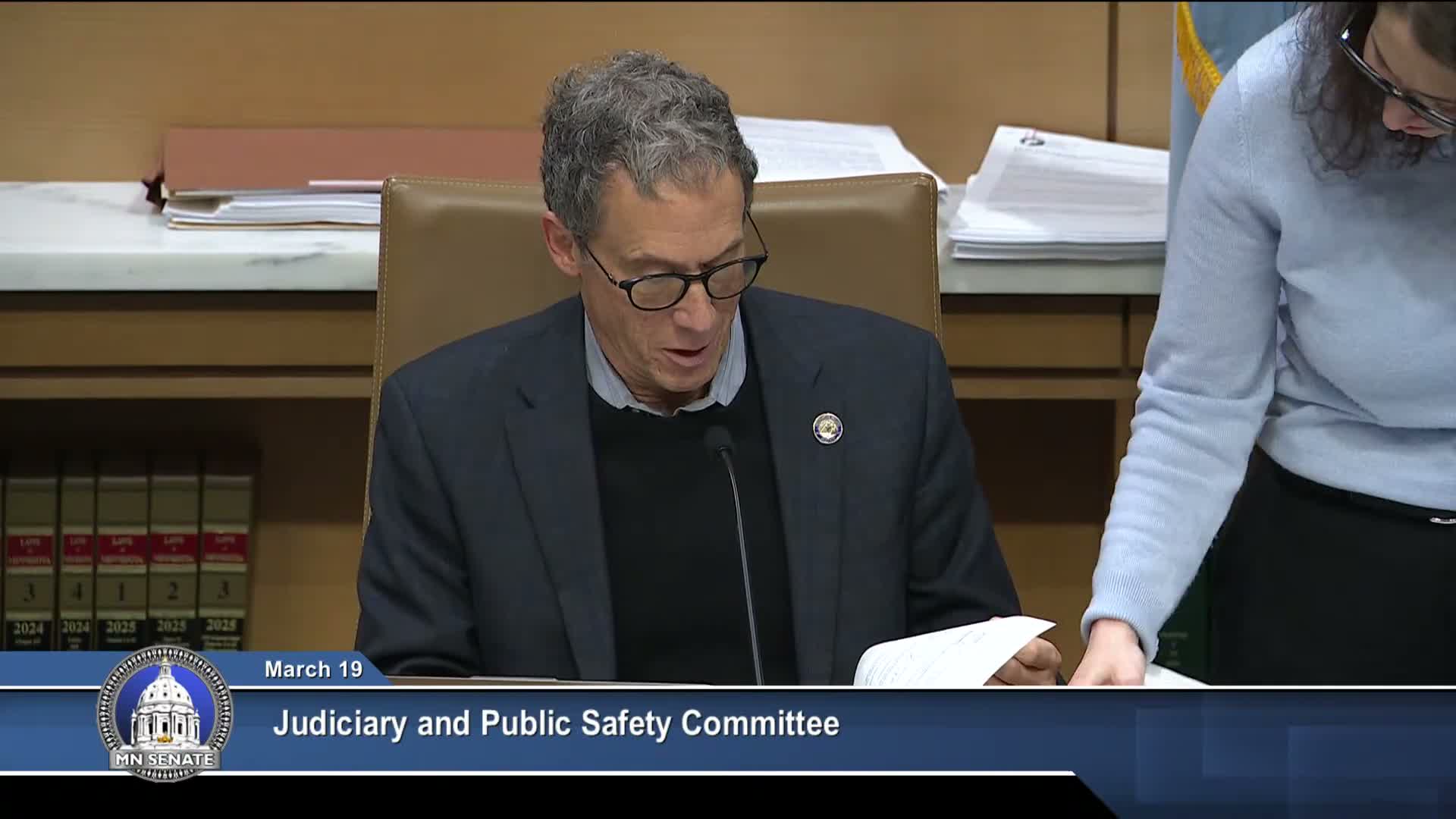
Senate File 41‑47, presented to the Judiciary Committee by the bill's author, would alter Minnesota corporate law to remove the power of corporate entities to engage in political spending within the state. The author framed the proposal as a "corporate reset" to return political spending to individual (human) voters and said the change would route any political spending through regulated political committees.
Tom Moore, senior fellow for democracy policy at the Center for American Progress, testified in support and described the constitutional theory the authors intend to rely on: states grant corporations their powers and may withhold the political‑spending power as a matter of state corporation law. Moore said the aim is not to regulate individual speech but to decline to grant corporations the charter power to spend in elections.
Committee members raised sharp constitutional and fiscal questions. Staff pointed to the Attorney General's fiscal note language warning of potential legal challenges and secondary costs (the AG section estimated potential legal costs starting around $300,000 depending on complexity). Members asked whether unions and nonprofits would be covered and how courts might respond; testifiers said the draft includes severability and non‑revival language to shape judicial remedies and discourage piecemeal re‑instatement of prior corporate powers.
An A4 amendment designed to address administration (Secretary of State) concerns about implementation was adopted. Supporters argued the approach is within state authority under the reserved powers doctrine; critics said Citizens United and federal caselaw raise real risk of litigation and fiscal exposure. The committee adopted the A4 amendment and later recommended the bill, as amended, to pass and to be re‑referred for further review.
The proposal drew sustained debate over the legal theory and practical enforcement; both proponents and opponents recommended further vetting by counsel and the fiscal office before floor votes.
Tom Moore, senior fellow for democracy policy at the Center for American Progress, testified in support and described the constitutional theory the authors intend to rely on: states grant corporations their powers and may withhold the political‑spending power as a matter of state corporation law. Moore said the aim is not to regulate individual speech but to decline to grant corporations the charter power to spend in elections.
Committee members raised sharp constitutional and fiscal questions. Staff pointed to the Attorney General's fiscal note language warning of potential legal challenges and secondary costs (the AG section estimated potential legal costs starting around $300,000 depending on complexity). Members asked whether unions and nonprofits would be covered and how courts might respond; testifiers said the draft includes severability and non‑revival language to shape judicial remedies and discourage piecemeal re‑instatement of prior corporate powers.
An A4 amendment designed to address administration (Secretary of State) concerns about implementation was adopted. Supporters argued the approach is within state authority under the reserved powers doctrine; critics said Citizens United and federal caselaw raise real risk of litigation and fiscal exposure. The committee adopted the A4 amendment and later recommended the bill, as amended, to pass and to be re‑referred for further review.
The proposal drew sustained debate over the legal theory and practical enforcement; both proponents and opponents recommended further vetting by counsel and the fiscal office before floor votes.
View the Full Meeting & All Its Details
This article offers just a summary. Unlock complete video, transcripts, and insights as a Founder Member.
✓
Watch full, unedited meeting videos
✓
Search every word spoken in unlimited transcripts
✓
AI summaries & real-time alerts (all government levels)
✓
Permanent access to expanding government content
30-day money-back guarantee
