Panel approves fix to keep civil adjudications from creating public criminal records
March 18, 2026 | 2026 Legislature ME, Maine
This article was created by AI summarizing key points discussed. AI makes mistakes, so for full details and context, please refer to the video of the full meeting. Please report any errors so we can fix them. Report an error »
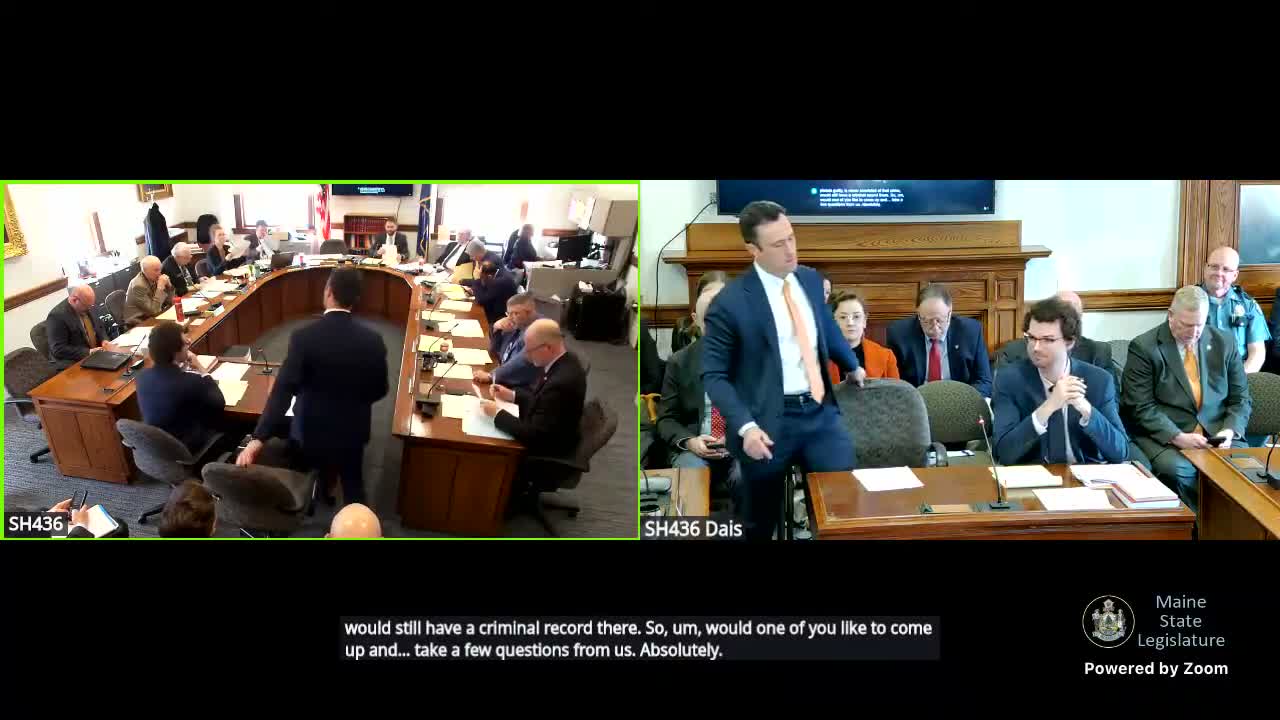
LD 1918, described by the bill's proponents as a technical fix, seeks to prevent civil admissions that were never convictions from being treated as public criminal records.
Matt Morgan, president of the criminal‑defense bar, told the committee the current interpretation by the state bureau of identification can cause a civil admission (for example a criminal speeding charge handled as a traffic infraction) to appear as a criminal record, even though the defendant never pleaded guilty to a crime. Morgan said the bill simply aligns record practice with statutory intent: "We admit civil violations. We plead guilty to criminal violations. As it's written, the statute is talking about a plea to a civil violation, which makes no sense. We're trying to fix that error."
Shara Burns of the Maine Prosecutors Association said the bill clarifies existing policy that adjudicated civil violations are confidential and not public criminal history; prosecutors and law‑enforcement agencies would retain necessary access for licensing and investigation purposes. The committee included a Department of Professional and Financial Regulation amendment to preserve licensing access to certain confidential records and discussed a later effective date to allow backend system changes by prosecutors' offices.
The committee voted 'ought to pass as amended' on the bill after the amendment; recorded committee tally was 6 in favor, 5 opposed and 2 absent. Members instructed staff to include language to preserve access for specified agencies and to set an administrative effective date to allow necessary data‑system adjustments.
Matt Morgan, president of the criminal‑defense bar, told the committee the current interpretation by the state bureau of identification can cause a civil admission (for example a criminal speeding charge handled as a traffic infraction) to appear as a criminal record, even though the defendant never pleaded guilty to a crime. Morgan said the bill simply aligns record practice with statutory intent: "We admit civil violations. We plead guilty to criminal violations. As it's written, the statute is talking about a plea to a civil violation, which makes no sense. We're trying to fix that error."
Shara Burns of the Maine Prosecutors Association said the bill clarifies existing policy that adjudicated civil violations are confidential and not public criminal history; prosecutors and law‑enforcement agencies would retain necessary access for licensing and investigation purposes. The committee included a Department of Professional and Financial Regulation amendment to preserve licensing access to certain confidential records and discussed a later effective date to allow backend system changes by prosecutors' offices.
The committee voted 'ought to pass as amended' on the bill after the amendment; recorded committee tally was 6 in favor, 5 opposed and 2 absent. Members instructed staff to include language to preserve access for specified agencies and to set an administrative effective date to allow necessary data‑system adjustments.
View the Full Meeting & All Its Details
This article offers just a summary. Unlock complete video, transcripts, and insights as a Founder Member.
✓
Watch full, unedited meeting videos
✓
Search every word spoken in unlimited transcripts
✓
AI summaries & real-time alerts (all government levels)
✓
Permanent access to expanding government content
30-day money-back guarantee
