Committee tightens rules on school‑investigations, notification and nondisclosure agreements
March 20, 2026 | 2026 Legislature ME, Maine
This article was created by AI summarizing key points discussed. AI makes mistakes, so for full details and context, please refer to the video of the full meeting. Please report any errors so we can fix them. Report an error »
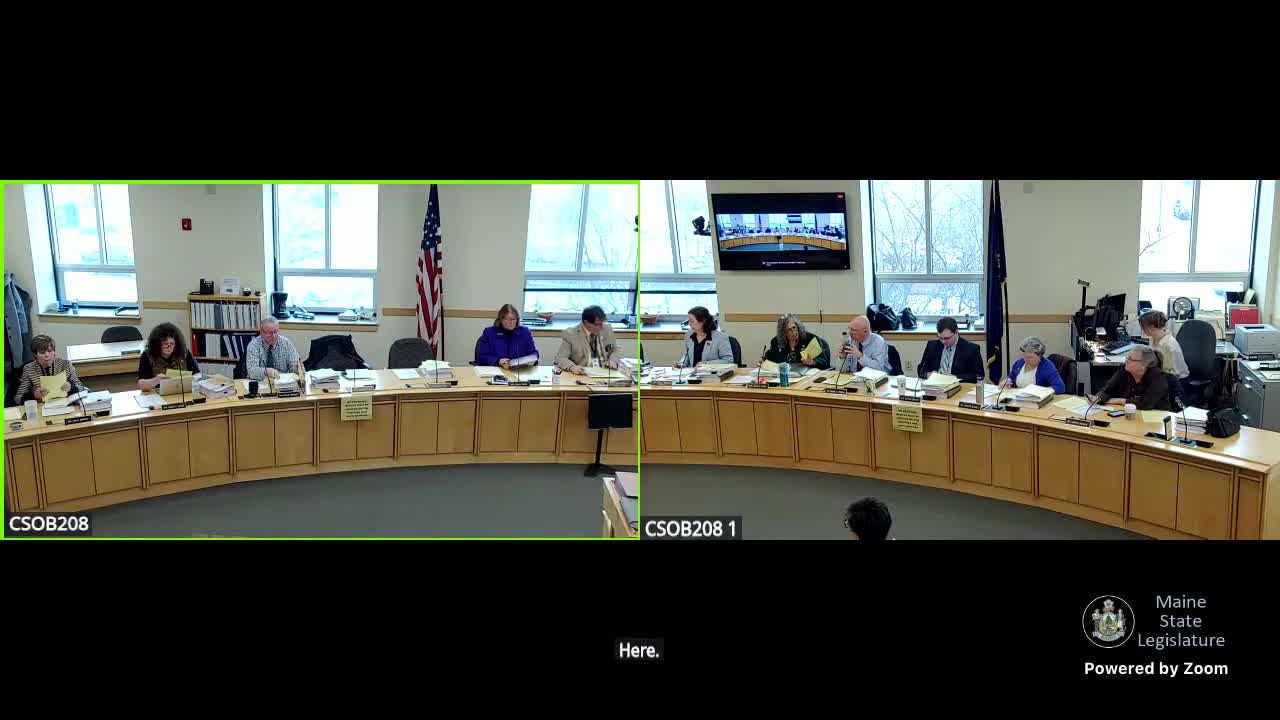
The education committee reviewed amendments to LD 21‑92 on March 23 that would tighten school investigative procedures for complaints against credentialed employees and expand reporting to the Department of Education.
Staff explained the amendment inserts a new section requiring a superintendent to conduct a preliminary investigation upon receipt of a complaint and to notify the Department of Education when the investigation begins so DOE can trigger follow‑up steps. "As soon as an investigation begins, the DOE is notified," staff said while explaining the intended trigger for subsequent reporting requirements.
Under the draft amendment, a school must place a credential holder who is the subject of a covered investigation on paid leave, and the school must complete the investigation even if the subject resigns, is terminated or otherwise leaves employment. Committee members asked whether the requirement to complete the investigation should also cover cases where the subject dies; members agreed to explore language that would ensure investigations do not evaporate if the subject of inquiry is deceased, noting victims’ needs for closure and records.
The amendment would also bar nondisclosure agreements or resignation agreements that prevent disclosure of investigative findings when a covered investigation determines the credential holder engaged in the misconduct. Staff recommended including both terms—nondisclosure agreement and resignation agreement—to close common drafting loopholes.
DOE staff described how the agency could flag a person under investigation in its certification system and said the department likely could share that status with an inquiring superintendent, subject to further legal review with the Attorney General’s office.
Members also discussed whether principals or superintendents should perform preliminary steps and agreed the bill as drafted centers responsibility on the superintendent; the working group established by the bill will be asked to review process clarity, training for investigators, counts of investigations reported to DOE, and reporting timelines. The committee suggested making the working‑group report due in January 2027 rather than November 2026 to avoid lame‑duck timing.
Next steps: Staff will refine drafting to clarify when notification to DOE is required, whether principals should be included in initial steps, and language covering special cases (death or resignation of the subject). The working group will be asked to supply more detailed reporting and training recommendations.
Staff explained the amendment inserts a new section requiring a superintendent to conduct a preliminary investigation upon receipt of a complaint and to notify the Department of Education when the investigation begins so DOE can trigger follow‑up steps. "As soon as an investigation begins, the DOE is notified," staff said while explaining the intended trigger for subsequent reporting requirements.
Under the draft amendment, a school must place a credential holder who is the subject of a covered investigation on paid leave, and the school must complete the investigation even if the subject resigns, is terminated or otherwise leaves employment. Committee members asked whether the requirement to complete the investigation should also cover cases where the subject dies; members agreed to explore language that would ensure investigations do not evaporate if the subject of inquiry is deceased, noting victims’ needs for closure and records.
The amendment would also bar nondisclosure agreements or resignation agreements that prevent disclosure of investigative findings when a covered investigation determines the credential holder engaged in the misconduct. Staff recommended including both terms—nondisclosure agreement and resignation agreement—to close common drafting loopholes.
DOE staff described how the agency could flag a person under investigation in its certification system and said the department likely could share that status with an inquiring superintendent, subject to further legal review with the Attorney General’s office.
Members also discussed whether principals or superintendents should perform preliminary steps and agreed the bill as drafted centers responsibility on the superintendent; the working group established by the bill will be asked to review process clarity, training for investigators, counts of investigations reported to DOE, and reporting timelines. The committee suggested making the working‑group report due in January 2027 rather than November 2026 to avoid lame‑duck timing.
Next steps: Staff will refine drafting to clarify when notification to DOE is required, whether principals should be included in initial steps, and language covering special cases (death or resignation of the subject). The working group will be asked to supply more detailed reporting and training recommendations.
Don't Miss a Word: See the Full Meeting!
Go beyond summaries. Unlock every video, transcript, and key insight with a Founder Membership.
✓
Get instant access to full meeting videos
✓
Search and clip any phrase from complete transcripts
✓
Receive AI-powered summaries & custom alerts
✓
Enjoy lifetime, unrestricted access to government data
30-day money-back guarantee
