Tax panel debates barring commercial data centers from BEDI and Dirigo incentives
March 20, 2026 | 2026 Legislature ME, Maine
This article was created by AI summarizing key points discussed. AI makes mistakes, so for full details and context, please refer to the video of the full meeting. Please report any errors so we can fix them. Report an error »
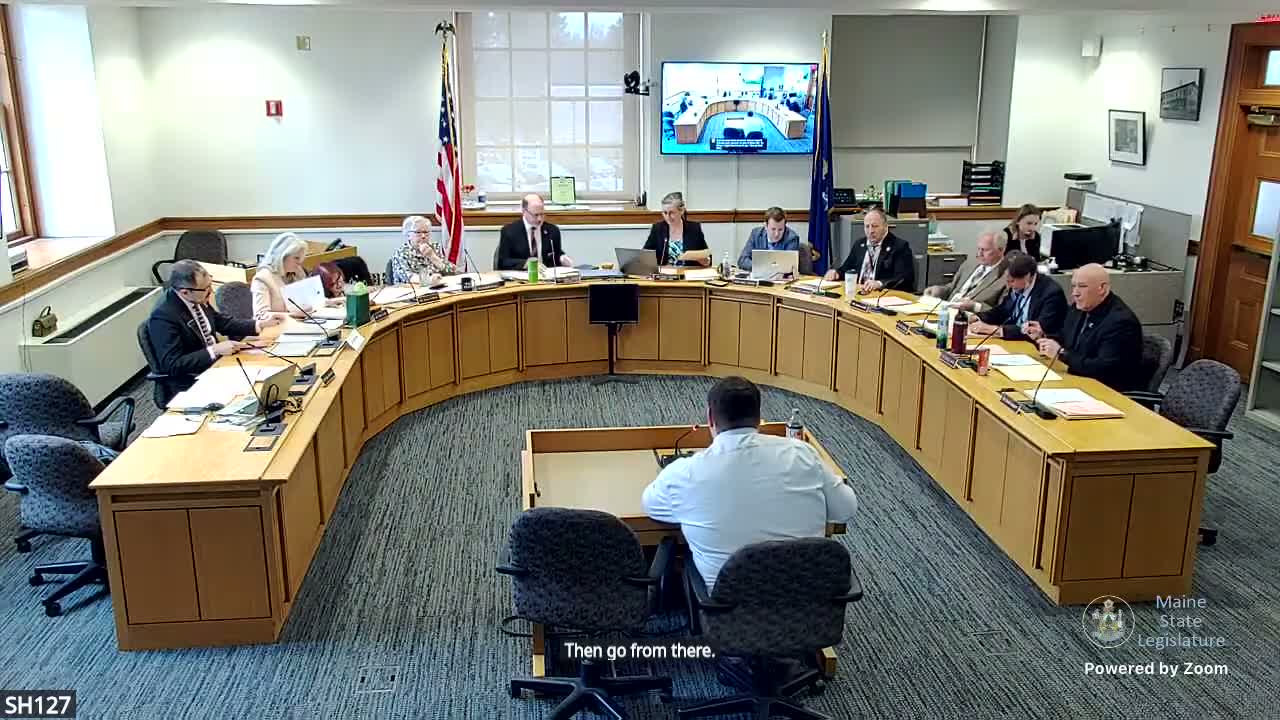
The Joint Standing Committee on Taxation opened a work session on LD 713, a carryover concept draft amended to prevent certain data centers from qualifying for Maine business tax incentives under the business equipment tax exemption (BEDI) and the Dirigo business incentive program.
Steve Langland, analyst for the committee, told members the amendment would bar property "located in a data center that begins operations on or after July 1" from BEDI and Dirigo and would define "begins operations" as a site that has "installed operational computer and networking equipment and is performing data processing, storage, cloud, or related computer services." Langland said the draft excludes construction, site preparation and equipment installation from that trigger.
Sponsor Nicole Rohowsky said the change is intended to target "purpose‑built" commercial compute providers while preserving incentives for businesses that use servers in support of their primary operations. "If it's not your primary function to be a data center, but you are doing computing as part of your bigger work, then you would be exempted from this definition," Rohowsky said, pressing for a drafting approach that protects existing local businesses.
Committee members pressed for precision. Representative White and others asked whether a business that added a large data center onto an existing facility could still claim BEDI benefits. Representative Sayre and Senator Bickford debated whether the operative phrase should be "ancillary to the primary business operations" or a different term such as "supportive," with members warning the choice would determine whether mid‑sized or vertically integrated firms remain eligible.
Maine Revenue Services' Associate Commissioner for Tax Policy Mike Allen cautioned that other states have used metrics such as electricity usage or facility size and said drafting an effective exclusion is legally and technically complicated. "Some other states have tried to define data center, and some of them seem to focus on size, like using a certain amount of electricity," Allen said. He urged care so the statute protects legitimate in‑house computing while excluding stand‑alone compute providers.
Senator Bruce Bickford moved an "ought not to pass" motion, arguing potential large fiscal consequences for municipalities hosting large data‑center investments. He illustrated potential local valuation effects with hypothetical multi‑hundred‑million dollar investments and urged caution. The motion prompted additional debate and a counterproposal from the sponsor to send a report back to the committee with revised language that would replace "ancillary" with a clearer term and seek DECD analysis of incentive exposure.
The committee recorded members who were in favor and opposed to the "ought not to pass" motion and agreed to requests for reports and language review rather than immediate passage. The committee left the amendment in a reportable posture and directed analysts to work further with Maine Revenue Services and other stakeholders.
Next steps: staff will refine drafting alternatives and the committee asked DECD to study how various incentives could apply to data centers and report back for the next legislative session.
Steve Langland, analyst for the committee, told members the amendment would bar property "located in a data center that begins operations on or after July 1" from BEDI and Dirigo and would define "begins operations" as a site that has "installed operational computer and networking equipment and is performing data processing, storage, cloud, or related computer services." Langland said the draft excludes construction, site preparation and equipment installation from that trigger.
Sponsor Nicole Rohowsky said the change is intended to target "purpose‑built" commercial compute providers while preserving incentives for businesses that use servers in support of their primary operations. "If it's not your primary function to be a data center, but you are doing computing as part of your bigger work, then you would be exempted from this definition," Rohowsky said, pressing for a drafting approach that protects existing local businesses.
Committee members pressed for precision. Representative White and others asked whether a business that added a large data center onto an existing facility could still claim BEDI benefits. Representative Sayre and Senator Bickford debated whether the operative phrase should be "ancillary to the primary business operations" or a different term such as "supportive," with members warning the choice would determine whether mid‑sized or vertically integrated firms remain eligible.
Maine Revenue Services' Associate Commissioner for Tax Policy Mike Allen cautioned that other states have used metrics such as electricity usage or facility size and said drafting an effective exclusion is legally and technically complicated. "Some other states have tried to define data center, and some of them seem to focus on size, like using a certain amount of electricity," Allen said. He urged care so the statute protects legitimate in‑house computing while excluding stand‑alone compute providers.
Senator Bruce Bickford moved an "ought not to pass" motion, arguing potential large fiscal consequences for municipalities hosting large data‑center investments. He illustrated potential local valuation effects with hypothetical multi‑hundred‑million dollar investments and urged caution. The motion prompted additional debate and a counterproposal from the sponsor to send a report back to the committee with revised language that would replace "ancillary" with a clearer term and seek DECD analysis of incentive exposure.
The committee recorded members who were in favor and opposed to the "ought not to pass" motion and agreed to requests for reports and language review rather than immediate passage. The committee left the amendment in a reportable posture and directed analysts to work further with Maine Revenue Services and other stakeholders.
Next steps: staff will refine drafting alternatives and the committee asked DECD to study how various incentives could apply to data centers and report back for the next legislative session.
Don't Miss a Word: See the Full Meeting!
Go beyond summaries. Unlock every video, transcript, and key insight with a Founder Membership.
✓
Get instant access to full meeting videos
✓
Search and clip any phrase from complete transcripts
✓
Receive AI-powered summaries & custom alerts
✓
Enjoy lifetime, unrestricted access to government data
30-day money-back guarantee
