Maine Judiciary Committee rejects measures to abolish 72‑hour gun waiting period and to repeal new 'red flag' law
March 20, 2026 | 2026 Legislature ME, Maine
This article was created by AI summarizing key points discussed. AI makes mistakes, so for full details and context, please refer to the video of the full meeting. Please report any errors so we can fix them. Report an error »
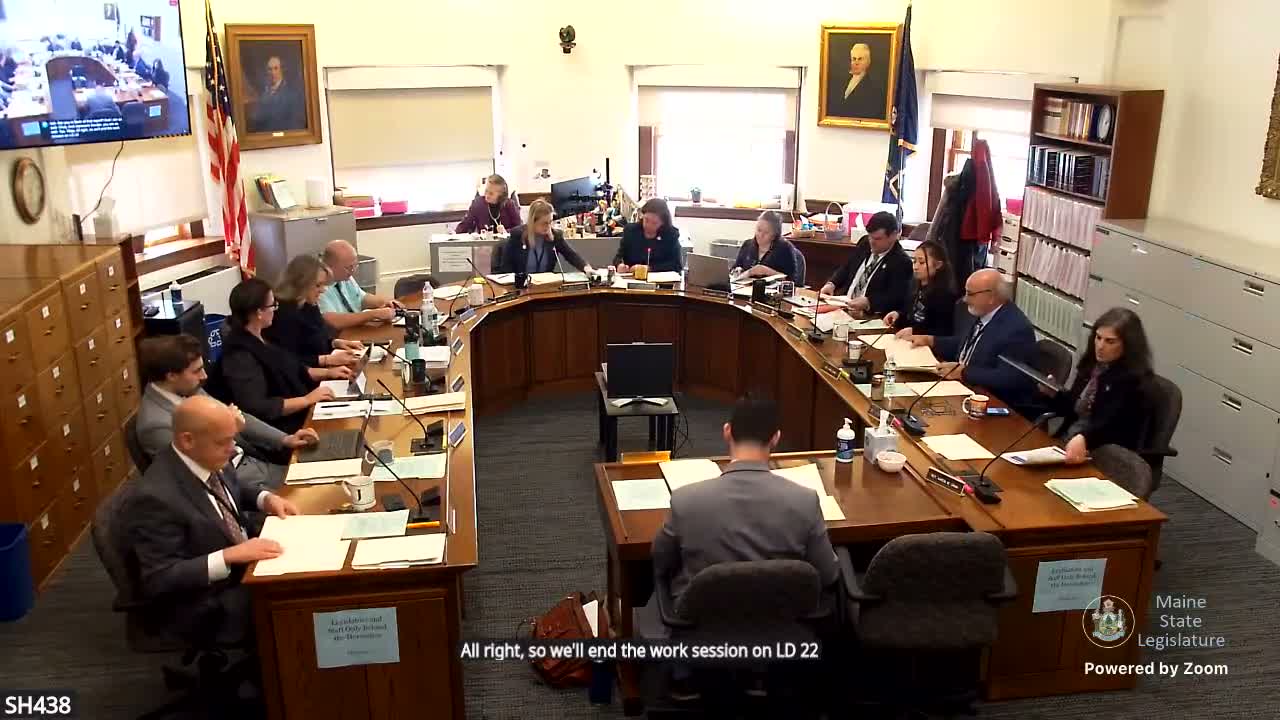
The Joint Committee on Judiciary on Tuesday rejected two related proposals aimed at rolling back post‑purchase firearm restrictions, voting 5–7 on each measure with two members absent. Lawmakers and staff framed the decisions around competing concerns: respect for a voter-approved statute, officer safety and whether new repeal language had received a public hearing.
Representative Jennifer Poirier moved the committee to report LD 2208 'ought to pass' — a bill to eliminate the 72‑hour waiting period for firearm purchases — and later presented sponsor amendments to LD 1230 that would repeal the recently enacted Extreme Risk Protection Order Act (commonly described during debate as the 'red flag' law). "I don't believe those rights should be delayed," Poirier said while moving the measure. Committee staff told members the bills had been carried over last session because litigation was pending in the First Circuit.
Opponents repeatedly pointed to the November referendum that enacted the red‑flag statute, arguing that overturning a law approved by roughly 63% of participating voters required broader public input. "If there was a repeal, I think the public testimony we would get would be very different because it would have to do with overturning the will of the people," Representative Coom said. Several members urged caution because the repeal language had been introduced late in the session without a new public hearing.
Other members emphasized law‑enforcement safety and operational concerns. Senator Dave Hagen said officers 'really, really, really did not want' the red‑flag provisions and praised the existing 'yellow flag' procedures as a safer response tool. "Red flag will put lives on the line," Hagen said. Representative Caruso, citing law‑enforcement groups and unions, added she could not support legislation that she believed would 'endanger our law enforcement.'
Clerks recorded the roll calls for both measures; in each case, the clerk announced five members voting in the affirmative, seven in the negative and two absent. The clerk recorded those tallies as the committee votes. The transcript records a subsequent statement by a sponsor describing an alternate 'resolve' to direct the attorney general to monitor the Beckwith First Circuit case and report back by Jan. 15, 2027, but the committee's roll‑call record immediately prior identifies the official committee outcome as the negative vote.
Why it matters: The votes leave in place both the 72‑hour waiting period and the newly enacted Extreme Risk Protection Order statute for now. Supporters framed the repeal efforts as restoring Second Amendment protections; opponents argued the changes would undercut a voter decision and risk officer safety. Committee members also raised procedural objections about taking up substantial repeal language without a new public hearing.
What’s next: With committee opposition and recorded 'ought not to pass' reports, both measures would need further action to advance. Sponsors and members discussed alternatives, including directing the attorney general to monitor pending litigation; the transcript records discussion of that option but does not show it adopted as a committee action following the recorded roll calls.
Representative Jennifer Poirier moved the committee to report LD 2208 'ought to pass' — a bill to eliminate the 72‑hour waiting period for firearm purchases — and later presented sponsor amendments to LD 1230 that would repeal the recently enacted Extreme Risk Protection Order Act (commonly described during debate as the 'red flag' law). "I don't believe those rights should be delayed," Poirier said while moving the measure. Committee staff told members the bills had been carried over last session because litigation was pending in the First Circuit.
Opponents repeatedly pointed to the November referendum that enacted the red‑flag statute, arguing that overturning a law approved by roughly 63% of participating voters required broader public input. "If there was a repeal, I think the public testimony we would get would be very different because it would have to do with overturning the will of the people," Representative Coom said. Several members urged caution because the repeal language had been introduced late in the session without a new public hearing.
Other members emphasized law‑enforcement safety and operational concerns. Senator Dave Hagen said officers 'really, really, really did not want' the red‑flag provisions and praised the existing 'yellow flag' procedures as a safer response tool. "Red flag will put lives on the line," Hagen said. Representative Caruso, citing law‑enforcement groups and unions, added she could not support legislation that she believed would 'endanger our law enforcement.'
Clerks recorded the roll calls for both measures; in each case, the clerk announced five members voting in the affirmative, seven in the negative and two absent. The clerk recorded those tallies as the committee votes. The transcript records a subsequent statement by a sponsor describing an alternate 'resolve' to direct the attorney general to monitor the Beckwith First Circuit case and report back by Jan. 15, 2027, but the committee's roll‑call record immediately prior identifies the official committee outcome as the negative vote.
Why it matters: The votes leave in place both the 72‑hour waiting period and the newly enacted Extreme Risk Protection Order statute for now. Supporters framed the repeal efforts as restoring Second Amendment protections; opponents argued the changes would undercut a voter decision and risk officer safety. Committee members also raised procedural objections about taking up substantial repeal language without a new public hearing.
What’s next: With committee opposition and recorded 'ought not to pass' reports, both measures would need further action to advance. Sponsors and members discussed alternatives, including directing the attorney general to monitor pending litigation; the transcript records discussion of that option but does not show it adopted as a committee action following the recorded roll calls.
Don't Miss a Word: See the Full Meeting!
Go beyond summaries. Unlock every video, transcript, and key insight with a Founder Membership.
✓
Get instant access to full meeting videos
✓
Search and clip any phrase from complete transcripts
✓
Receive AI-powered summaries & custom alerts
✓
Enjoy lifetime, unrestricted access to government data
30-day money-back guarantee
