Committee backs tax relief amendment for scam victims, agrees to look‑back option
March 20, 2026 | 2026 Legislature ME, Maine
This article was created by AI summarizing key points discussed. AI makes mistakes, so for full details and context, please refer to the video of the full meeting. Please report any errors so we can fix them. Report an error »
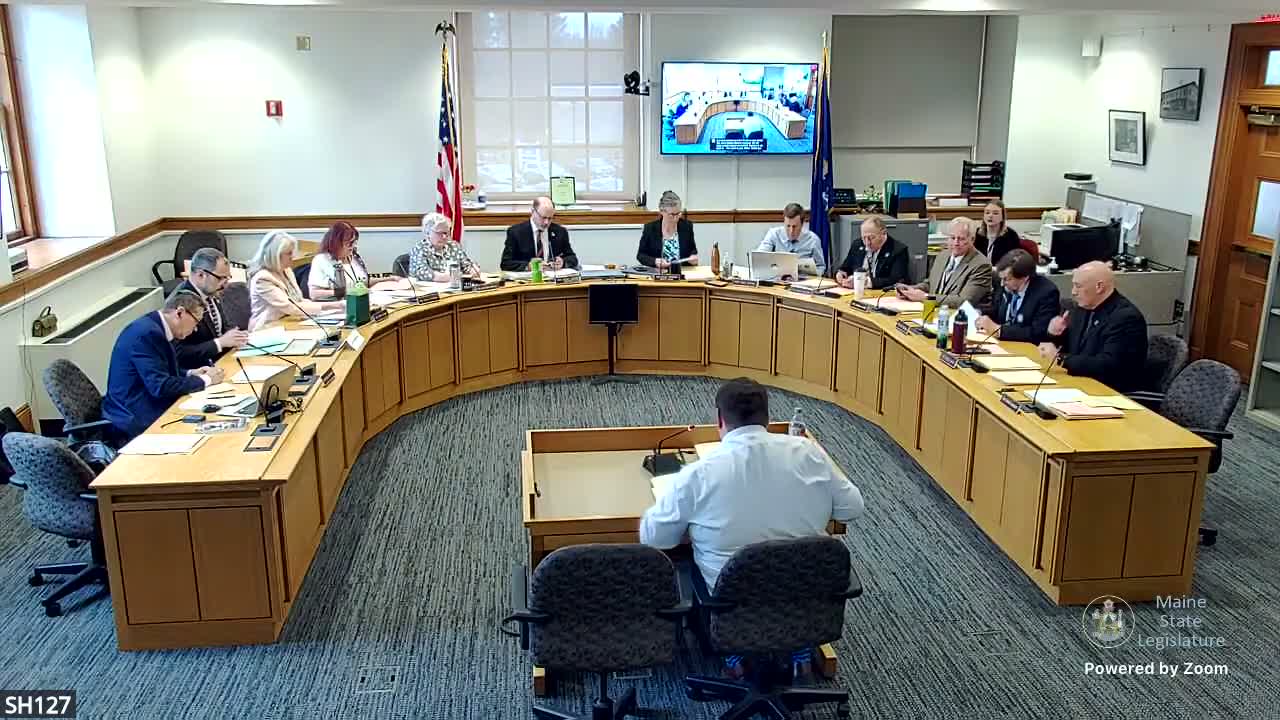
The taxation committee advanced LD 714 in a work session, agreeing to an amendment that would prevent Maine from taxing money stolen from victims of certain criminal scams if the taxpayer can take a federal theft deduction under Internal Revenue Code §165.
Analyst Steve Langland said the amendment ties state treatment to the federal deduction: "If a person has their tax forgiven for that purpose, federally, then the state will essentially adhere to that as well." Dan Pittman, associate tax policy counsel, explained the federal guidance that forms the bill’s backbone and said the measure is narrowly tailored to cases that result from criminal conduct classified as theft and where the taxpayer has no reasonable prospect of recovery.
Committee members pressed on scope and retroactivity. Representative Rudnicki and others urged a multi‑year look‑back to help elderly victims who often discover scams late. Pittman said the year of the federal deduction is the year of discovery and that amended returns would be required for retroactive relief — a practical, but not impossible, process.
Representative Friedman moved the Sayre amendment with a look‑back to Jan. 1, 2023; Representative White seconded. After members recounted testimony about high scam losses and concerns for seniors, the committee voted unanimously of those present to pass the amendment as changed and closed the work session on LD 714.
Next steps: Analysts will work with MRS on implementation details and the language of retroactivity; the committee closed the LD 714 work session with the amendment in place.
Analyst Steve Langland said the amendment ties state treatment to the federal deduction: "If a person has their tax forgiven for that purpose, federally, then the state will essentially adhere to that as well." Dan Pittman, associate tax policy counsel, explained the federal guidance that forms the bill’s backbone and said the measure is narrowly tailored to cases that result from criminal conduct classified as theft and where the taxpayer has no reasonable prospect of recovery.
Committee members pressed on scope and retroactivity. Representative Rudnicki and others urged a multi‑year look‑back to help elderly victims who often discover scams late. Pittman said the year of the federal deduction is the year of discovery and that amended returns would be required for retroactive relief — a practical, but not impossible, process.
Representative Friedman moved the Sayre amendment with a look‑back to Jan. 1, 2023; Representative White seconded. After members recounted testimony about high scam losses and concerns for seniors, the committee voted unanimously of those present to pass the amendment as changed and closed the work session on LD 714.
Next steps: Analysts will work with MRS on implementation details and the language of retroactivity; the committee closed the LD 714 work session with the amendment in place.
View the Full Meeting & All Its Details
This article offers just a summary. Unlock complete video, transcripts, and insights as a Founder Member.
✓
Watch full, unedited meeting videos
✓
Search every word spoken in unlimited transcripts
✓
AI summaries & real-time alerts (all government levels)
✓
Permanent access to expanding government content
30-day money-back guarantee
