Committee rejects amendment to allow capped compensatory damages for intentional education discrimination
March 20, 2026 | 2026 Legislature ME, Maine
This article was created by AI summarizing key points discussed. AI makes mistakes, so for full details and context, please refer to the video of the full meeting. Please report any errors so we can fix them. Report an error »
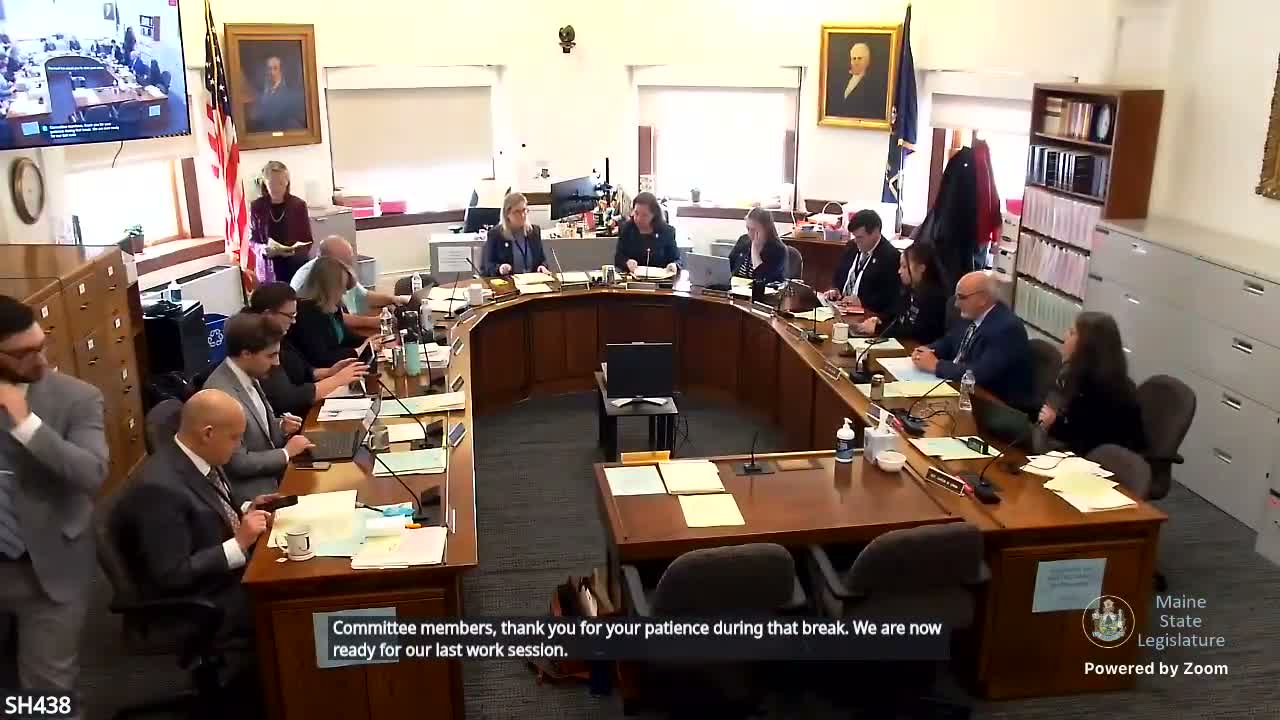
The Joint Committee on Judiciary voted 5–7, with two absences, against a yellow amendment to LD 1647 that would have made compensatory damages available for proven intentional education discrimination but capped damages at $100,000 and required that the complaining party provide 'actual notice' to the educational institution before seeking compensatory relief.
Senator Kat Kearney, presenting the amendment, said the change would restore limited relief after a shift in federal court interpretations removed a route to uncapped compensatory awards. "It would make available compensatory damages for intentional education discrimination capped at $100,000," she told members, adding the amendment aimed to push complainants and institutions to use internal reporting and resolution mechanisms before litigation.
Discussion probed how the amendment would interact with existing federal administrative routes and special-education processes. Several members questioned whether the 'actual notice' requirement duplicated or conflicted with other notice regimes, such as the Maine Human Rights Commission filing requirements and federal IEP procedures; Eli Murphy cited the relevant statute for unlawful education discrimination (Title 5, §4602) and confirmed the amendment would still require exhaustion of administrative remedies.
Representative Adam Lee noted that compensatory damages are more common in employment discrimination actions in Maine than in education cases, and some members said they were uncomfortable creating a new damages remedy without clearer rulemaking and sponsor presence. The clerk recorded the roll call as five in favor, seven opposed and two absent; the committee reported the amendment as 'ought not to pass.'
Why it matters: The amendment sought to give victims of intentional education discrimination a state‑law damages remedy that would not be constrained by recent federal court rulings. Opponents raised concerns about legal alignment, unintended consequences for special education (IEPs) and whether the state's human‑rights framework already provides appropriate administrative pathways.
What’s next: The committee's recommendation against the amendment means the Legislature would not advance the capped‑damages approach as drafted; sponsors and supporters may revisit the issue in future sessions or through different draft language.
Senator Kat Kearney, presenting the amendment, said the change would restore limited relief after a shift in federal court interpretations removed a route to uncapped compensatory awards. "It would make available compensatory damages for intentional education discrimination capped at $100,000," she told members, adding the amendment aimed to push complainants and institutions to use internal reporting and resolution mechanisms before litigation.
Discussion probed how the amendment would interact with existing federal administrative routes and special-education processes. Several members questioned whether the 'actual notice' requirement duplicated or conflicted with other notice regimes, such as the Maine Human Rights Commission filing requirements and federal IEP procedures; Eli Murphy cited the relevant statute for unlawful education discrimination (Title 5, §4602) and confirmed the amendment would still require exhaustion of administrative remedies.
Representative Adam Lee noted that compensatory damages are more common in employment discrimination actions in Maine than in education cases, and some members said they were uncomfortable creating a new damages remedy without clearer rulemaking and sponsor presence. The clerk recorded the roll call as five in favor, seven opposed and two absent; the committee reported the amendment as 'ought not to pass.'
Why it matters: The amendment sought to give victims of intentional education discrimination a state‑law damages remedy that would not be constrained by recent federal court rulings. Opponents raised concerns about legal alignment, unintended consequences for special education (IEPs) and whether the state's human‑rights framework already provides appropriate administrative pathways.
What’s next: The committee's recommendation against the amendment means the Legislature would not advance the capped‑damages approach as drafted; sponsors and supporters may revisit the issue in future sessions or through different draft language.
View the Full Meeting & All Its Details
This article offers just a summary. Unlock complete video, transcripts, and insights as a Founder Member.
✓
Watch full, unedited meeting videos
✓
Search every word spoken in unlimited transcripts
✓
AI summaries & real-time alerts (all government levels)
✓
Permanent access to expanding government content
30-day money-back guarantee
