Tax committee extends attorney credit, tasks court/designee to define ‘underserved’ areas
March 20, 2026 | 2026 Legislature ME, Maine
This article was created by AI summarizing key points discussed. AI makes mistakes, so for full details and context, please refer to the video of the full meeting. Please report any errors so we can fix them. Report an error »
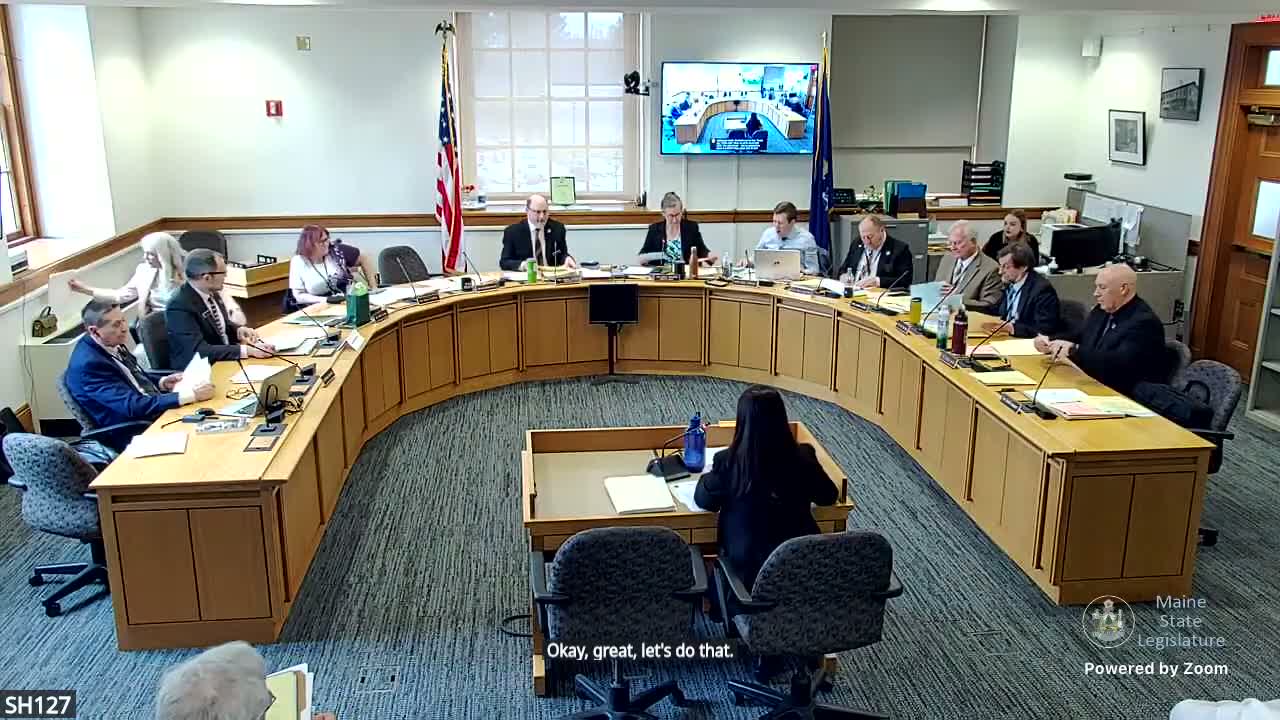
The committee considered LD 883, an amendment proposing a new tax credit of up to $18,000 per year to encourage newly practicing attorneys to locate in underserved areas. Analysts explained the amendment would define "underserved area" using an attorney access index metric (e.g., attorneys per 10,000 people) and would require five years of full‑time practice in the designated area.
Members raised technical concerns. Several lawmakers and analysts said the National Center for Access to Justice index referenced in the draft either measures attorneys per 10,000 low‑income residents or reports at a level not readily available by county. Representative Quinn and others warned that using a coarse county metric could unintentionally make much of the state eligible (or conversely exclude pockets of need). "You couldn't gerrymander the geography because it's by county," an analyst noted, but members still asked for more precise, implementable measures and better data.
Witnesses and advocates suggested implementation options. John Brodigan of Legal Services for Maine Elders and Hannah Sanders of the same organization explained current certification is largely self‑reported and urged clearer definitions and better data about demand; the Maine Justice Foundation recommended metrics such as PDS hours or pro bono thresholds (50 hours) and suggested the access‑to‑justice committee or court could help certify eligibility.
Because questions remained about the metric, uptake and fiscal effect, the committee moved to extend the current access‑to‑justice credit's sunset by one year and to instruct the court or its designee to submit a report by Jan. 15, 2027 recommending (1) a statutory definition of 'underserved area,' (2) a list of locations that would qualify, (3) commentary on the incentive level and cap, and (4) any other information helpful to the legislature. The motion passed unanimously of those present.
Next steps: the court (or a designee such as the Maine Justice Foundation) will report back with recommended definitions and locations; analysts will review fiscal implications and potential rulemaking or certification processes.
Members raised technical concerns. Several lawmakers and analysts said the National Center for Access to Justice index referenced in the draft either measures attorneys per 10,000 low‑income residents or reports at a level not readily available by county. Representative Quinn and others warned that using a coarse county metric could unintentionally make much of the state eligible (or conversely exclude pockets of need). "You couldn't gerrymander the geography because it's by county," an analyst noted, but members still asked for more precise, implementable measures and better data.
Witnesses and advocates suggested implementation options. John Brodigan of Legal Services for Maine Elders and Hannah Sanders of the same organization explained current certification is largely self‑reported and urged clearer definitions and better data about demand; the Maine Justice Foundation recommended metrics such as PDS hours or pro bono thresholds (50 hours) and suggested the access‑to‑justice committee or court could help certify eligibility.
Because questions remained about the metric, uptake and fiscal effect, the committee moved to extend the current access‑to‑justice credit's sunset by one year and to instruct the court or its designee to submit a report by Jan. 15, 2027 recommending (1) a statutory definition of 'underserved area,' (2) a list of locations that would qualify, (3) commentary on the incentive level and cap, and (4) any other information helpful to the legislature. The motion passed unanimously of those present.
Next steps: the court (or a designee such as the Maine Justice Foundation) will report back with recommended definitions and locations; analysts will review fiscal implications and potential rulemaking or certification processes.
View the Full Meeting & All Its Details
This article offers just a summary. Unlock complete video, transcripts, and insights as a Founder Member.
✓
Watch full, unedited meeting videos
✓
Search every word spoken in unlimited transcripts
✓
AI summaries & real-time alerts (all government levels)
✓
Permanent access to expanding government content
30-day money-back guarantee
