Maine Veterans Homes CEO says funding shortfall threatens services, asks legislature to reallocate supplemental lines
March 21, 2026 | 2026 Legislature ME, Maine
This article was created by AI summarizing key points discussed. AI makes mistakes, so for full details and context, please refer to the video of the full meeting. Please report any errors so we can fix them. Report an error »
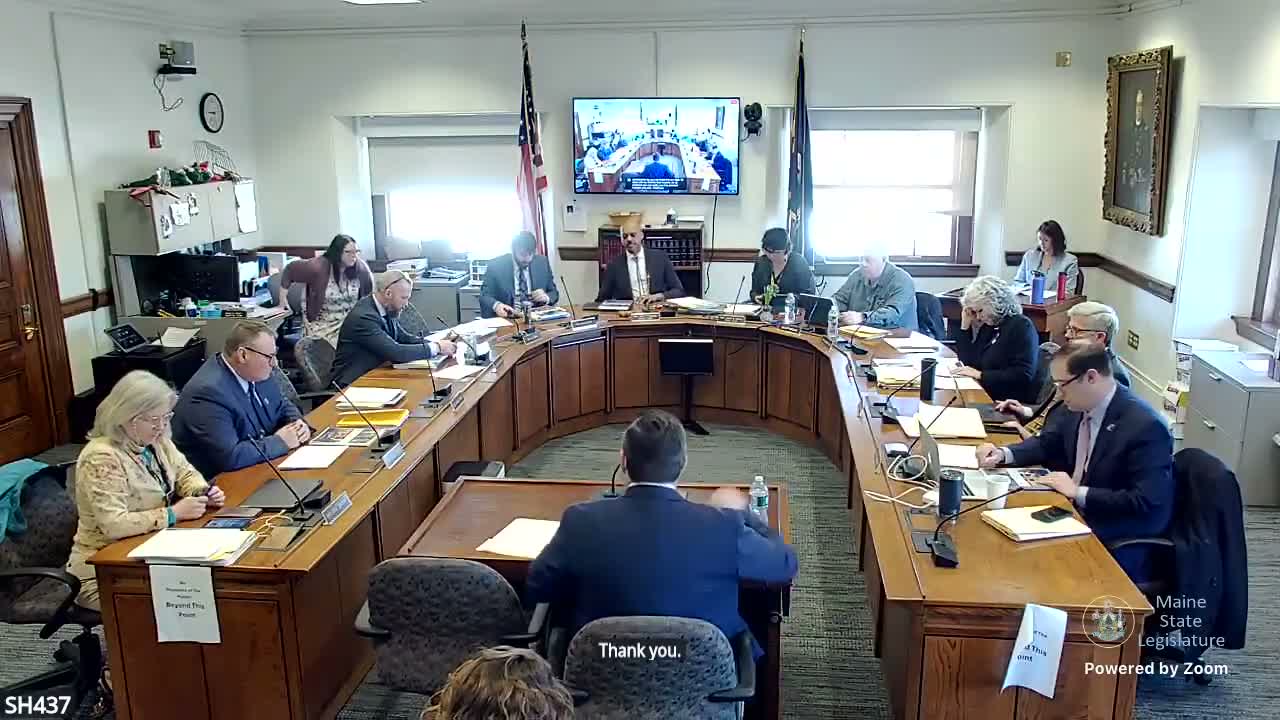
Brad Clawwater, chief executive officer of Maine Veterans Homes, told the Joint Standing Committee on Veterans and Legal Affairs that the system’s 2025 financial results were aided by retroactive federal and state payments but that MVH still faces a structural funding shortfall.
“We received $18,100,000 in one-time funding that was largely comprised of retroactive pay,” Clawwater said during the committee’s March session. Without those receipts, he said, MVH was forced to withdraw “over $20,000,000 from its capital fund” to support operations.
The CEO said MVH provides care in six homes — Augusta, Bangor, Caribou, Machias, Scarborough and South Paris — serving a 2025 census of about 1,215 residents (roughly 78% veterans) and employing approximately 1,218 staff. He told lawmakers MVH’s payer mix is roughly 55% MaineCare, 25% VA per diems and stipends, and the remainder from Medicare, self-pay and commercial payers.
“The reimbursements we receive from MaineCare and the VA is approximately $100 less than the cost of care per patient per day,” Clawwater said, and added that while MVH is pursuing cost savings and new revenue sources, it cannot “continue to absorb these losses.”
Clawwater outlined cost-control steps taken in 2025: a temporary compensation freeze (no COLAs or merit increases), reduction of agency staffing and enterprise-wide procurement consolidation. He said consolidation of procurement under a single prime vendor produced immediate savings — the switch to Medline was estimated to save about $400,000 annually — and leasing half of MVH’s home office to Brookfield Renewables generates roughly $200,000 a year in revenue while lowering utilities by about $60,000.
The CEO also described several workforce pressures. He confirmed that roughly 200 positions were posted (which he said needs cleanup) and acknowledged staff attrition tied in part to the compensation pause. On the cost of raises, Clawwater told the committee that “every 1% in raises that we provide equals $600,000 across the enterprise” and said MVH plans to move toward a merit-based system when raises resume.
On capital and longer-term stability, Clawwater asked the committee to consider a small technical change to the governor’s supplemental budget: move general-fund payments now coded to line 0147 into line 0148 (the nursing-facilities line) so that the dollars generate federal match and become annual rather than one-time. He said that change, using already‑budgeted dollars, would “get the biggest bang for our buck with our federal match as well as the dollars become annual.”
Lawmakers pressed for context and documentation. Senator Jeff Timberlake and others questioned Clawwater’s comparison of Maine’s per-resident state appropriation (which he quoted as about $13,500) to an asserted national average (he cited $125,000); Clawwater said his comparison used state budget line items only, excluding federal funds, and offered to provide the committee with his state-by-state charts and the underlying budget line citations.
Several members acknowledged MVH’s quality recognitions and the difficulty of nursing-home finances statewide. Representative Anne Fredericks said she appreciated MVH’s efforts to reduce agency staffing and improve procurement accountability. Representative Annie Graham and others offered to assist with rate‑reform conversations and with fundraising outreach for Memorial Day and Veterans Day campaigns.
Clawwater also described technology initiatives — a pilot AI admissions reviewer and plans to replace an outdated electronic health record with a federally funded system that includes clinical alerts and real-time documentation checks — and said these investments are intended to improve clinical quality and reduce backdated documentation.
The committee did not take a formal vote on MVH’s request during the session. Clawwater said he would provide further fiscal and comparative materials to the committee staff and thanked members for ongoing support. He also told the committee MVH is pursuing philanthropic and grant opportunities and has engaged a philanthropy consultant and a grant writer to diversify revenue.
What happens next: Clawwater asked lawmakers to consider the proposed reclassification in the supplemental budget so MVH can capture sustained federal matching funds; the committee signaled interest in reviewing additional documentation and fiscal details before any appropriation action.
“We received $18,100,000 in one-time funding that was largely comprised of retroactive pay,” Clawwater said during the committee’s March session. Without those receipts, he said, MVH was forced to withdraw “over $20,000,000 from its capital fund” to support operations.
The CEO said MVH provides care in six homes — Augusta, Bangor, Caribou, Machias, Scarborough and South Paris — serving a 2025 census of about 1,215 residents (roughly 78% veterans) and employing approximately 1,218 staff. He told lawmakers MVH’s payer mix is roughly 55% MaineCare, 25% VA per diems and stipends, and the remainder from Medicare, self-pay and commercial payers.
“The reimbursements we receive from MaineCare and the VA is approximately $100 less than the cost of care per patient per day,” Clawwater said, and added that while MVH is pursuing cost savings and new revenue sources, it cannot “continue to absorb these losses.”
Clawwater outlined cost-control steps taken in 2025: a temporary compensation freeze (no COLAs or merit increases), reduction of agency staffing and enterprise-wide procurement consolidation. He said consolidation of procurement under a single prime vendor produced immediate savings — the switch to Medline was estimated to save about $400,000 annually — and leasing half of MVH’s home office to Brookfield Renewables generates roughly $200,000 a year in revenue while lowering utilities by about $60,000.
The CEO also described several workforce pressures. He confirmed that roughly 200 positions were posted (which he said needs cleanup) and acknowledged staff attrition tied in part to the compensation pause. On the cost of raises, Clawwater told the committee that “every 1% in raises that we provide equals $600,000 across the enterprise” and said MVH plans to move toward a merit-based system when raises resume.
On capital and longer-term stability, Clawwater asked the committee to consider a small technical change to the governor’s supplemental budget: move general-fund payments now coded to line 0147 into line 0148 (the nursing-facilities line) so that the dollars generate federal match and become annual rather than one-time. He said that change, using already‑budgeted dollars, would “get the biggest bang for our buck with our federal match as well as the dollars become annual.”
Lawmakers pressed for context and documentation. Senator Jeff Timberlake and others questioned Clawwater’s comparison of Maine’s per-resident state appropriation (which he quoted as about $13,500) to an asserted national average (he cited $125,000); Clawwater said his comparison used state budget line items only, excluding federal funds, and offered to provide the committee with his state-by-state charts and the underlying budget line citations.
Several members acknowledged MVH’s quality recognitions and the difficulty of nursing-home finances statewide. Representative Anne Fredericks said she appreciated MVH’s efforts to reduce agency staffing and improve procurement accountability. Representative Annie Graham and others offered to assist with rate‑reform conversations and with fundraising outreach for Memorial Day and Veterans Day campaigns.
Clawwater also described technology initiatives — a pilot AI admissions reviewer and plans to replace an outdated electronic health record with a federally funded system that includes clinical alerts and real-time documentation checks — and said these investments are intended to improve clinical quality and reduce backdated documentation.
The committee did not take a formal vote on MVH’s request during the session. Clawwater said he would provide further fiscal and comparative materials to the committee staff and thanked members for ongoing support. He also told the committee MVH is pursuing philanthropic and grant opportunities and has engaged a philanthropy consultant and a grant writer to diversify revenue.
What happens next: Clawwater asked lawmakers to consider the proposed reclassification in the supplemental budget so MVH can capture sustained federal matching funds; the committee signaled interest in reviewing additional documentation and fiscal details before any appropriation action.
Don't Miss a Word: See the Full Meeting!
Go beyond summaries. Unlock every video, transcript, and key insight with a Founder Membership.
✓
Get instant access to full meeting videos
✓
Search and clip any phrase from complete transcripts
✓
Receive AI-powered summaries & custom alerts
✓
Enjoy lifetime, unrestricted access to government data
30-day money-back guarantee
