Judiciary Committee advances and reviews language on tenant protections, tribal working group and data‑privacy pilot
March 20, 2026 | 2026 Legislature ME, Maine
This article was created by AI summarizing key points discussed. AI makes mistakes, so for full details and context, please refer to the video of the full meeting. Please report any errors so we can fix them. Report an error »
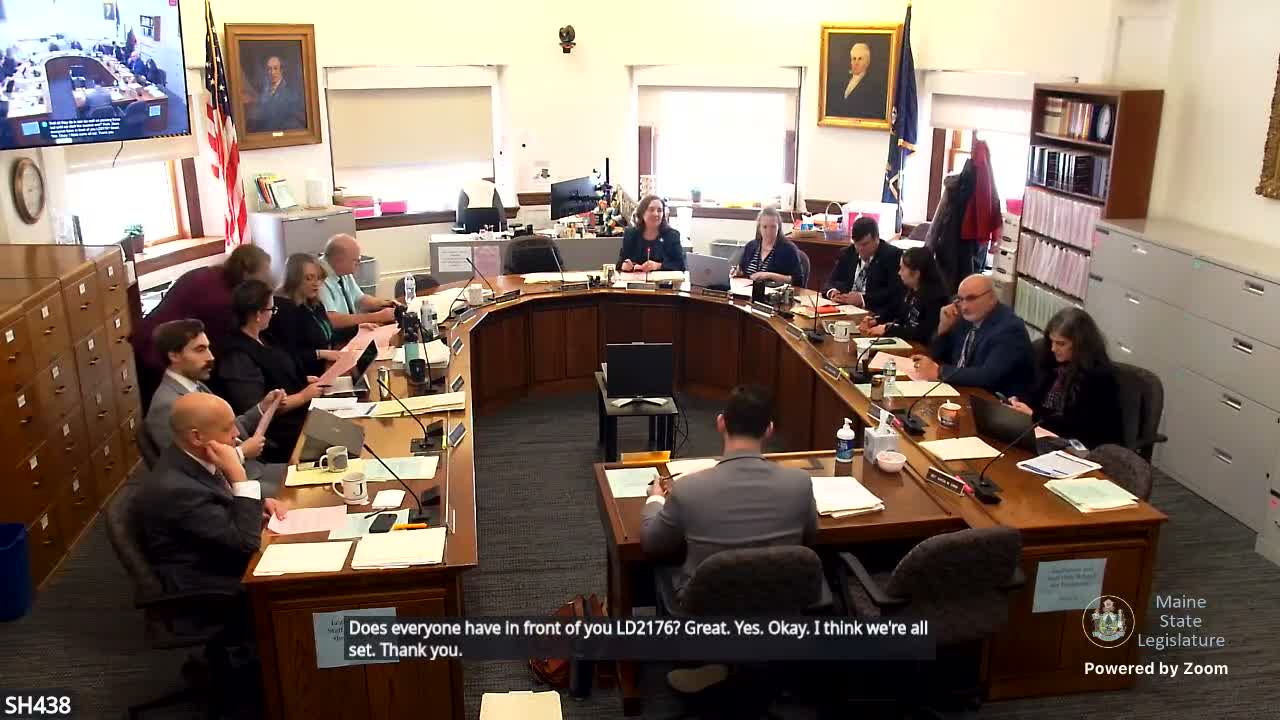
Beyond the headline votes on firearm and education measures, the Joint Committee on Judiciary spent significant time on statutory drafting and language reviews.
LD 2176 (tenant privacy/protection): Staff and members reviewed two committee amendments that clarified definitions (including adding 'authorized' before 'occupant') and debated whether to add a fire inspector or 'similar municipal officer' to a statutory exception; after a motion to pass as amended, the committee recorded five members in favor, six opposed and three members absent and recorded the result as the committee's majority report.
LD 395 (Wabanaki working group): Committee members reviewed preliminary language that would replace bill text with a resolve establishing a working group to develop recommendations for extending federal beneficial laws to the Wabanaki nations. Members asked sponsor and staff to revisit three items — the emergency preamble text, the consensus rule for working-group recommendations and whether the reporting obligation should be 'shall' or 'may' — and the chair agreed to circulate revised language and bring it back for further review.
LD 2121 (privacy pilot): Staff reported a corrected fiscal note to fund a two‑year opt‑in pilot for removing certain personal information from public records for qualifying officials; members signaled acceptance of the corrected numbers and agreed to include an appropriation section for the pilot project if the majority report is adopted.
Why it matters: Language reviews shape how statutes are applied; the committee used preliminary and final language-review steps to surface drafting ambiguities and fiscal corrections before votes or final action.
What’s next: Sponsors and staff plan to circulate revised language for LD 395 and return to language review in the committee's next meeting window.
LD 2176 (tenant privacy/protection): Staff and members reviewed two committee amendments that clarified definitions (including adding 'authorized' before 'occupant') and debated whether to add a fire inspector or 'similar municipal officer' to a statutory exception; after a motion to pass as amended, the committee recorded five members in favor, six opposed and three members absent and recorded the result as the committee's majority report.
LD 395 (Wabanaki working group): Committee members reviewed preliminary language that would replace bill text with a resolve establishing a working group to develop recommendations for extending federal beneficial laws to the Wabanaki nations. Members asked sponsor and staff to revisit three items — the emergency preamble text, the consensus rule for working-group recommendations and whether the reporting obligation should be 'shall' or 'may' — and the chair agreed to circulate revised language and bring it back for further review.
LD 2121 (privacy pilot): Staff reported a corrected fiscal note to fund a two‑year opt‑in pilot for removing certain personal information from public records for qualifying officials; members signaled acceptance of the corrected numbers and agreed to include an appropriation section for the pilot project if the majority report is adopted.
Why it matters: Language reviews shape how statutes are applied; the committee used preliminary and final language-review steps to surface drafting ambiguities and fiscal corrections before votes or final action.
What’s next: Sponsors and staff plan to circulate revised language for LD 395 and return to language review in the committee's next meeting window.
Don't Miss a Word: See the Full Meeting!
Go beyond summaries. Unlock every video, transcript, and key insight with a Founder Membership.
✓
Get instant access to full meeting videos
✓
Search and clip any phrase from complete transcripts
✓
Receive AI-powered summaries & custom alerts
✓
Enjoy lifetime, unrestricted access to government data
30-day money-back guarantee
