Committee advances language reviews for LD 1847: testing reimbursements, audit program and procurement language debated
March 21, 2026 | 2026 Legislature ME, Maine
This article was created by AI summarizing key points discussed. AI makes mistakes, so for full details and context, please refer to the video of the full meeting. Please report any errors so we can fix them. Report an error »
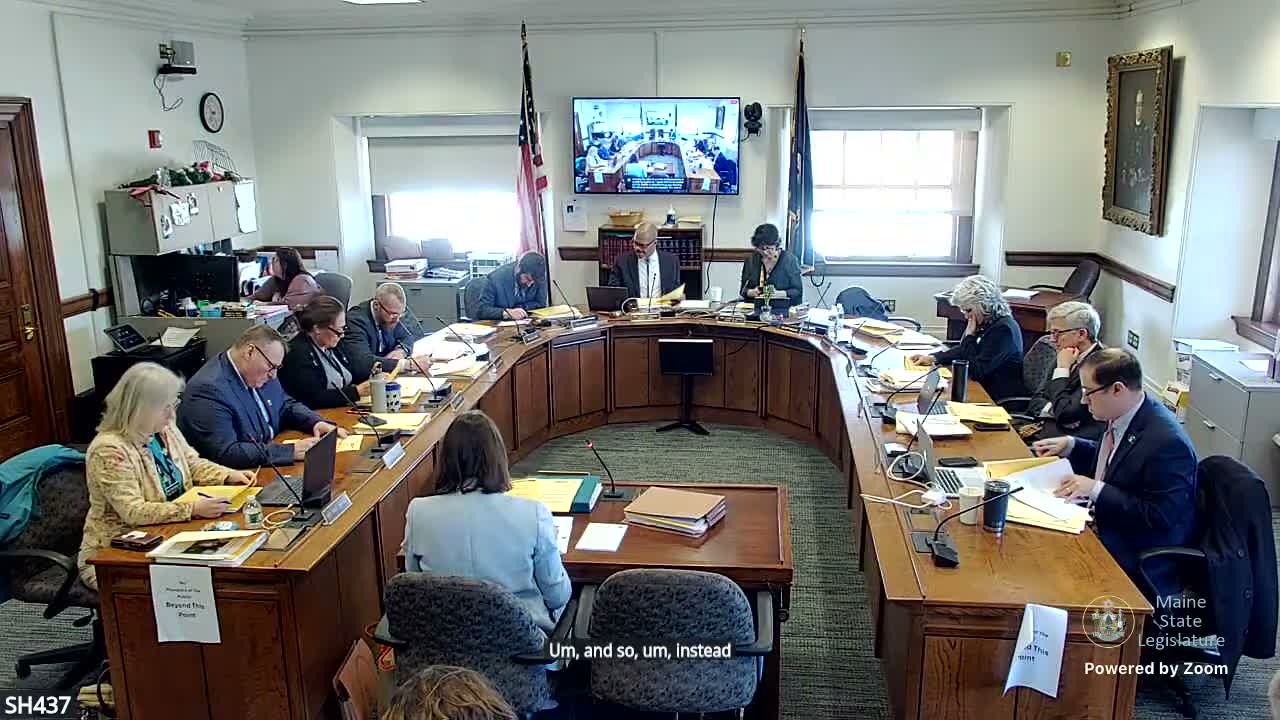
The Veterans and Legal Affairs Committee spent substantial time reviewing draft language for LD 1847, the adult-use cannabis omnibus bill, focusing on mandatory testing, an audit-testing program and how the office should procure and track inventory.
Analyst Rachel Olsen walked members through a revised majority report and a revised minority report. She said the majority rewrite moves previously unallocated reimbursements into statute and adds a new paragraph to allow reimbursements to qualifying registrants for a portion of batch-testing costs required under the statutory testing provision (section 24 30 p). Olsen read the qualifying registrant definition into the record: a registrant subject to mandatory testing under section 24 30 p, with gross annual revenue from authorized conduct under $125,000 and annual testing costs that exceed 10% of gross revenue. The proposed reimbursement was $100 per batch tested for the qualifying year.
Olsen also clarified audit-testing mechanics. She said that if a registrant fails an audit test they must resume mandatory testing, submit additional samples per subsection 6 and could ultimately face suspension or revocation if subsequent tests continue to exceed maximum contamination levels. The committee asked Olsen to redraft language to make the resumption, notification and additional-sampling steps explicit and to require re-testing after any remediation before product can enter the market.
Members also debated unallocated language that would direct the agency to cost out an in-state electronic inventory tracking system and require an RFP process. Gabby Bearby Pierce, policy director for the Office of Cannabis Policy (who said she was seeing the language that morning), warned that highly prescriptive procurement language “would likely bump up against constitutional issues, could result in litigation, and may also be contrary to state procurement law and rules.” The chair and members discussed whether the committee should be prescriptive or use broader statutory direction to the agency.
To avoid reopening the bill, the chair directed deletion of two specific back-page provisions (items 2 and 3 in the draft minority update). The committee agreed to revert to the more general RFP language from the majority report and to retain an explicitly included research-fund provision where previously discussed.
Olsen warned members that all three proposals before the committee include excise-tax changes that will prompt fiscal notes and that the audit-testing and inspection language could require added agency positions (for example chemists or inspectors). She told the committee fiscal notes will be prepared once the committee finalizes draft language and urged members to expect staff to circulate language and fiscal notes by email (48-hour review windows, shortened as session deadlines approach) and to request permission to reconvene if the committee needs to review fiscal notes in person.
Committee action taken in session was procedural: staff will incorporate agreed clarifications on testing, remediation and notification timing, replace prescriptive procurement prescriptions with the majority report’s RFP wording (minus items 2 and 3), and circulate final language and fiscal notes to members for 48-hour review. Members did not vote on final statutory language in the session reported.
What happens next: The analyst will redraft the clarified provisions (audit/mandatory testing flow, remediation retesting, effective dates) and the updated language and fiscal notes will be distributed to the committee for review; the committee reserved the option to reconvene if fiscal notes require further in-person review.
Analyst Rachel Olsen walked members through a revised majority report and a revised minority report. She said the majority rewrite moves previously unallocated reimbursements into statute and adds a new paragraph to allow reimbursements to qualifying registrants for a portion of batch-testing costs required under the statutory testing provision (section 24 30 p). Olsen read the qualifying registrant definition into the record: a registrant subject to mandatory testing under section 24 30 p, with gross annual revenue from authorized conduct under $125,000 and annual testing costs that exceed 10% of gross revenue. The proposed reimbursement was $100 per batch tested for the qualifying year.
Olsen also clarified audit-testing mechanics. She said that if a registrant fails an audit test they must resume mandatory testing, submit additional samples per subsection 6 and could ultimately face suspension or revocation if subsequent tests continue to exceed maximum contamination levels. The committee asked Olsen to redraft language to make the resumption, notification and additional-sampling steps explicit and to require re-testing after any remediation before product can enter the market.
Members also debated unallocated language that would direct the agency to cost out an in-state electronic inventory tracking system and require an RFP process. Gabby Bearby Pierce, policy director for the Office of Cannabis Policy (who said she was seeing the language that morning), warned that highly prescriptive procurement language “would likely bump up against constitutional issues, could result in litigation, and may also be contrary to state procurement law and rules.” The chair and members discussed whether the committee should be prescriptive or use broader statutory direction to the agency.
To avoid reopening the bill, the chair directed deletion of two specific back-page provisions (items 2 and 3 in the draft minority update). The committee agreed to revert to the more general RFP language from the majority report and to retain an explicitly included research-fund provision where previously discussed.
Olsen warned members that all three proposals before the committee include excise-tax changes that will prompt fiscal notes and that the audit-testing and inspection language could require added agency positions (for example chemists or inspectors). She told the committee fiscal notes will be prepared once the committee finalizes draft language and urged members to expect staff to circulate language and fiscal notes by email (48-hour review windows, shortened as session deadlines approach) and to request permission to reconvene if the committee needs to review fiscal notes in person.
Committee action taken in session was procedural: staff will incorporate agreed clarifications on testing, remediation and notification timing, replace prescriptive procurement prescriptions with the majority report’s RFP wording (minus items 2 and 3), and circulate final language and fiscal notes to members for 48-hour review. Members did not vote on final statutory language in the session reported.
What happens next: The analyst will redraft the clarified provisions (audit/mandatory testing flow, remediation retesting, effective dates) and the updated language and fiscal notes will be distributed to the committee for review; the committee reserved the option to reconvene if fiscal notes require further in-person review.
View the Full Meeting & All Its Details
This article offers just a summary. Unlock complete video, transcripts, and insights as a Founder Member.
✓
Watch full, unedited meeting videos
✓
Search every word spoken in unlimited transcripts
✓
AI summaries & real-time alerts (all government levels)
✓
Permanent access to expanding government content
30-day money-back guarantee
