Committee advances bill to require evidence‑based school safety policies and an advisory council
March 18, 2026 | 2026 Legislature MN, Minnesota
This article was created by AI summarizing key points discussed. AI makes mistakes, so for full details and context, please refer to the video of the full meeting. Please report any errors so we can fix them. Report an error »
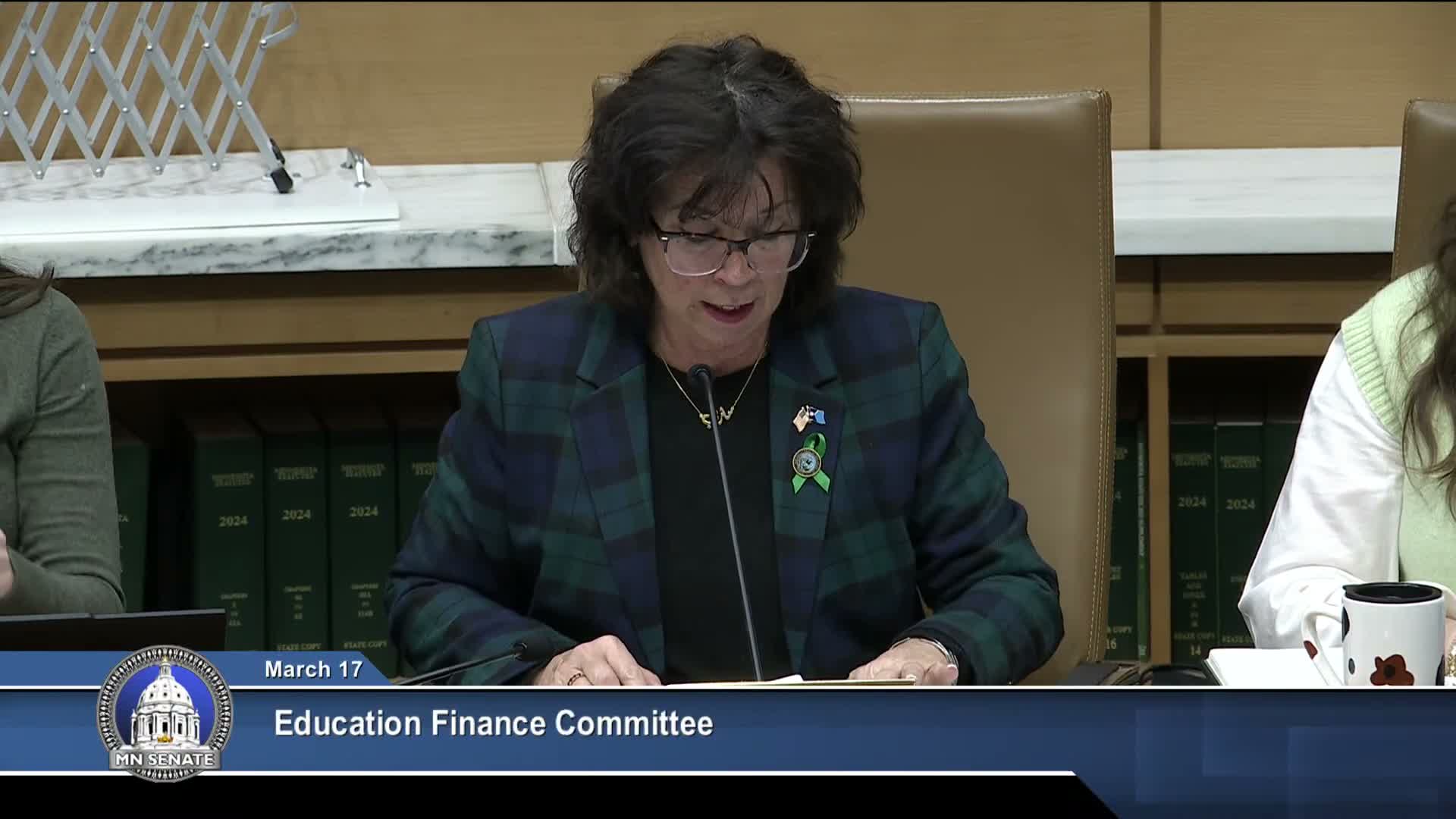
Senate File 3996, sponsored in committee by Senator Westland, drew bipartisan support and was recommended to pass as amended and referred to the committee on Judiciary and Public Safety. The bill directs the Minnesota School Safety Center (housed in the Department of Public Safety) to develop model evidence‑based school safety policies, requires local boards and charter schools to submit policies for review and approval, establishes a school safety advisory council that includes students and survivors of school or community violence, and anticipates an appropriation (left blank in the draft).
Advocates framed the change as a way to ensure school safety planning is grounded in research and student experience. Aurora Vasquez, senior vice president of state policy at Sandy Hook Promise, said the bill would help schools move from 'guesswork' to proven approaches and urged the committee to act: “Have 100% of Minnesota schools grounded their responses to human‑caused safety incidents in evidence‑based approaches? If the answer is no, then the response to SF3996 must be yes,” she told members.
Children’s Defense Fund Minnesota’s Alexandra Fitzsimmons and other child‑welfare advocates said the bill emphasizes prevention, mental‑health supports and student voice. The bill sets a deadline for local submission of evidence‑based policies (committee discussion cited May 1, 2028) and requires the safety center to report which schools adopt approved policies.
School operations and safety professionals praised the intent but urged clearer definitions and implementation details. Rick Kaufman, Bloomington Public Schools’ executive director of emergency management, said the statute does not yet define required policy elements, raising uncertainty about compliance and alignment with existing crisis management laws. Kaufman also warned that shifting to a state‑approval model could change the relationship from technical assistance to a compliance process and recommended including additional implementation experts on the advisory council.
Staff and the sponsor said some language—such as 'to the extent practical' and appeals processes—was intended to provide flexibility but acknowledged the committee would need to refine rollout, membership and potential fiscal impacts. Committee members voted to recommend the bill as amended to pass and referred it to Judiciary & Public Safety for further work.
Advocates framed the change as a way to ensure school safety planning is grounded in research and student experience. Aurora Vasquez, senior vice president of state policy at Sandy Hook Promise, said the bill would help schools move from 'guesswork' to proven approaches and urged the committee to act: “Have 100% of Minnesota schools grounded their responses to human‑caused safety incidents in evidence‑based approaches? If the answer is no, then the response to SF3996 must be yes,” she told members.
Children’s Defense Fund Minnesota’s Alexandra Fitzsimmons and other child‑welfare advocates said the bill emphasizes prevention, mental‑health supports and student voice. The bill sets a deadline for local submission of evidence‑based policies (committee discussion cited May 1, 2028) and requires the safety center to report which schools adopt approved policies.
School operations and safety professionals praised the intent but urged clearer definitions and implementation details. Rick Kaufman, Bloomington Public Schools’ executive director of emergency management, said the statute does not yet define required policy elements, raising uncertainty about compliance and alignment with existing crisis management laws. Kaufman also warned that shifting to a state‑approval model could change the relationship from technical assistance to a compliance process and recommended including additional implementation experts on the advisory council.
Staff and the sponsor said some language—such as 'to the extent practical' and appeals processes—was intended to provide flexibility but acknowledged the committee would need to refine rollout, membership and potential fiscal impacts. Committee members voted to recommend the bill as amended to pass and referred it to Judiciary & Public Safety for further work.
View the Full Meeting & All Its Details
This article offers just a summary. Unlock complete video, transcripts, and insights as a Founder Member.
✓
Watch full, unedited meeting videos
✓
Search every word spoken in unlimited transcripts
✓
AI summaries & real-time alerts (all government levels)
✓
Permanent access to expanding government content
30-day money-back guarantee
